Feeling like I belong in Buffalo, N.Y.

Birthday cake that says Happy Birthday, Ilene in Arabic

Most of my posts so far have been about my transition to life in Kuwait since October 1984, and I haven’t mentioned much about my life from March 29, 1956 until 1984. I believe it’s important at this point in my blog posting to tell you about my 64th birthday celebration to give a perspective about why I feel at home in Buffalo, NY where I grew up, and, as I have been writing about in previous posts, I also feel I belong in Kuwait.

I return to Buffalo several times each year and stay at least a few weeks each visit. Although my parents sold my childhood home in 1978 when my they decided to move to south of the city and also coincided with me leaving home for grad school. It doesn’t matter that the physical space is different because I still feel at home wherever my mother is, wherever my family is. I feel I belong here because it’s familiar; I feel accepted and appreciated.

Yesterday was my 64th birthday. I usually don’t make much of a fuss over it since, 1. I’m reaching an age where every day is a blessing and 2. Most of my family is scattered all over the world, so there’s nobody in Kuwait to celebrate with me except my husband and a close friend. But this year, due to Covid-19, I am still in Buffalo, NY with my mother. A short visit that has turned into a much longer one. So you may be wondering if/how I celebrated and that’s what today’s post is about.

The answer to ‘if” I celebrated is yes; no cake but lots of virtual birthday wishes. The answer to “how” I celebrated is the focus of this post. Last week, while Skyping with my brother, a retired rabbi in Atlanta, he mentioned the idea of the family (his family, my sister (Buffalo), my daughter and son-in-law (Boston, MA), my oldest son and his husband (Chiang Mai, Thailand), my younger son and daughter-in-law (Pittsburgh) could meet virtually to wish me a happy birthday. I loved the idea and immediately messaged my children about it. They set a time and sent a calendar invite to everyone.

At the appointed time, my mother and I signed into Zoom along with all of my close family members (minus my husband in Kuwait because it was the middle of the night there). I cannot tell you how wonderful the whole experience was for me since family is one of the most important things in my life. And, upon reflection, it was an amazing experience for our whole family because it would not have been possible years ago, not only because of a lack of connectivity. Each member of my family is very different and has led a different life path. This has led to conflict over the years and periods of misunderstanding, but we each worked hard to ensure that our relationships remain the focus and not the differences in our lifestyles, personalities, or problems communicating. Last night we all came together on Zoom and had 90 minutes of catching up, laughter, checking in, and memories. They all sang “Happy Birthday” to me and celebrated milestones like my younger son’s recent marriage (also virtually).

As I reflected today on this most memorable birthday, I realized what a milestone it was in our family’s history. A momentous occasion, not because it celebrated me, but because it celebrated all of us and how much we mean to each other. It underscored the work we have all put into making sure our relationships are filled with love, honesty, communication, and most importantly, respect. Why is respect so important? It shows that we accept that each one of us is different, but we put our love and caring for each other above those differences. We accept each other because we care. I hope that now you can understand why I feel at home in Buffalo. I am blessed to feel like I belong in both of my “homes” which are thousands of miles apart.

In case you are wondering what gifts I received, here’s a photo of my mother’s gift. It is perfect for this post and for representing my feeling of belonging in Buffalo AND Kuwait.

Small pillow that says, the love between a Mother & Daughter knows no distance and a heart near Kuwait and a heart near Buffalo, NY

Note:
I know how stressed everyone is feeling right now due to the global crisis we are all facing and being “stuck” at home for an uncertain amount of time. We must use this time to focus on improving your relationships with those we live with and those who are dear to us, even if they live far away. On Twitter, I sent out my birthday wish which was for each person to reach out to someone they hadn’t contacted in a while. I received so many replies from my PLN thanking me. No, I thank each of you for fulfilling my wishes, and I am sending a virtual hug to each of you.

Does remote learning have to be exactly like school?

Children helping parents
with baking
Photo by Elly Fairytale from Pexels

Today’s post is related to the ongoing COVID19 crisis and #StayAtHome physical distancing rules. Schools are closed all over the world and this has worried educators, parents, and students. #remotelearning, #onlinelearning, #distancelearning are all trending. Stress levels are high among all stakeholders and a there is so much confusion, questions of inequity, and uncertainty. How can we deal with it all? Today, I am sharing some of my own experiences which I hope will help those who are reading this post and going through the same emotions and doubts that my family and I did during the Gulf War in 1990-91 and the war in Iraq in 2003. During both of these difficult times in our lives, education was interrupted for long periods of time. What did we do? And what did those living in Kuwait do?

On August 2, 1990 the Iraqi army invaded Kuwait and the country ceased to function as normal. Students were going to return to school in early September, but tens of thousands of citizens and residents were outside Kuwait for summer vacation and many families evacuated the country within the first month. Checkpoints were set up all around Kuwait, so leaving your house was unsafe. All work, except essential services, was cancelled including the 1990-1991 school year. Some families, including mine, sent their school age children to schools where they were living. In our case, my oldest child was enrolled in a British primary school and my middle child attended a Spanish nursery school in Fuengirola, Spain. My daughter was three months old and born just before the invasion. Enrolling them in school wasn’t a top priority for my husband and me, but they needed to get out of our very small apartment, and taking care of their baby sister consumed a lot of my time. We made the decision when it was obvious they needed more than staying inside all day. If they had been in Kuwait, they would have been learning Arabic and basic skills at the neighborhood Kindergarten. We were also preoccupied with the news and finding out what was happening in Kuwait and whether we would ever return. There was so much uncertainty and we didn’t want the boys to be around that during the day. So I wasn’t worried about their education. I was worried about their socialization with other children and allowing them time to play and discover.

In Kuwait, education ceased. From one day to the next, families didn’t know if they would ever be liberated from the invaders. Life was scary and stories began to spread about arrests and atrocities involving neighbors and relatives. This continued for seven months until February 26th when allied forces entered Kuwait and the country was liberated from the aggressors. There was a lot of damage to buildings due to the war and also being occupied by the Iraqi army. In addition, they looted supplies and resources from almost every government building and schools suffered the same fate. When we finally were able to return to Kuwait at the beginning of June, 1991 the Ministry of Education had decided to combine two years of curriculum into one school year, so students could catch up to the grade level they were supposed to be in by the end of 1991-92. It was a daunting task, but somehow they did it. There was much discussion in the education community and among parents about whether this would affect their learning and outcomes later on. We now have the ability to look back at that time, and it didn’t have a negative impact on them. I believe this is due to the life skills they learned like grit and resilience and courage and persistence. They saw their relatives and neighbors resist an invading force. They saw the world come together and stand up to say, “This will not stand”. The children who lived through the invasion suffered trauma which is still affecting them today, but they are also a passionate group of eco-warriors and self-made entrepreneurs. They want to see progress in Kuwait and speak out about topics that will affect progress.

The invasion wasn’t the only time that schools were shut down in Kuwait. In 2003, the United States went to war with Iraq. We weren’t sure when it would start, so this caused a great deal of anxiety among the large foreign population who were worried about their safety. Teachers in foreign schools began to ask if schools were going to remain open and what would happen if they decided to leave. In late February, it was apparent that war was imminent and pressure began to build for schools to close until the war was over. The U.S. government assured Kuwait that the war wouldn’t be on their land, but nobody could guarantee that U.S. troops on bases in Kuwait wouldn’t be targeted. Ultimately, American and British private school owners were forced to close down for two months to allow teachers to evacuate if they wanted to. In 2003, the internet was used for email and instant messaging. Skype was fairly new and bandwidth was not very up to date. So when the schools closed, students just stayed home. When schools reopened in mid-April, not all of the teachers returned. AP exams were rescheduled and school calendars extended by several weeks. But we all survived and children were able to keep themselves occupied. My children were in grades 12, 10, and 7. My son, a senior, was able to graduate but without a quarter of his class who decided to continue their studies where they evacuated to. My children read books and reviewed work they had done already. They kept in touch with their friends and played Nintendo. We did worry about when school would resume, but we were more focused on our emotional well-being. Warning sirens went off whenever a missile headed toward the country. One time it was 2:30 a.m. and we all gathered in a safe room we prepared in case there was a chemical weapon attack. We waited each time until the “all clear” signal and then went back to what we were doing before the siren went off. This increased our anxiety, but the missiles were, thankfully, off the coast of the country and none hit inside.

-What can we learn from my life experiences and those of many others who have experienced lengthy school disruptions from natural disasters or wars? We can calm down and realize that if daily lessons don’t continue, we are still alright and so are our children. We can replace curriculum with real life lessons such as helping plan meals, sharing chores around the house, and encouraging them to play and pretend. We can help them stay connected with their extended family and friends by email or snail mail if we don’t have access to Skype, Teams, or apps.

Mother and child practicing yoga together
Photo by Valeria Ushakova from Pexels

My wish for all is to stay safe and healthy. That’s our priority right now.

Please follow me on Twitter @IleneWinokur where I am retweeting ideas and solutions to #StayAtHome for our children.

Dealing with a crisis: personal reflections

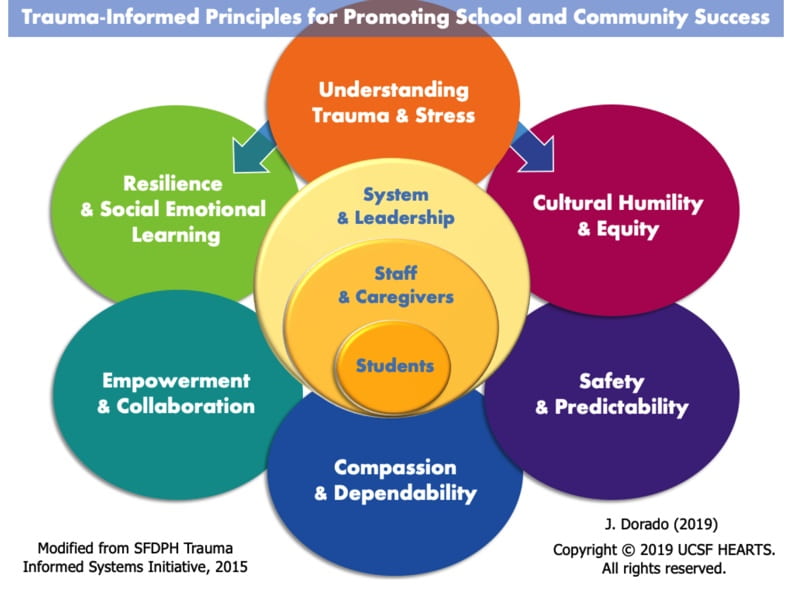
Trauma informed responses.

With gratitude:
We are living in a strange and unusual situation right now that nobody expected and few were prepared for. But educators are a special group of people who immediately stepped up to the plate and began sharing their knowledge, expertise, and resources on social media. I’ve retweeted and shared numerous posts from those I saw in order to amplify the effect of their generosity. I want to be sure to give credit to all who are trying to ease the stress and strain of this epic moment in our history. I also want to note the number of companies and apps that have offered their services for free in support of educators around the globe. If we all work together, we will get through this and be better than before.

My post today is not about the content and curriculum of school. I want to focus on how we’re all feeling and what we can do to support each other and our students/children who are suddenly separated from their friends and peers. My family and I experienced something similar to the COVID19 crisis in 2003 when the United States declared war on Iraq. I am sharing this very personal and professional story with you all to try and put things in perspective and also focus on SEL and self care.

In January 2003, the major news networks and regional news in the Persian Gulf were reporting that the U.S. was planning to move into Iraq and step up its presence in the Gulf. Rumors began spreading in Kuwait that if this occurred, we would be in danger of any fall out from a war in Iraq since American troops staged from Kuwait on bases set up after the Gulf War in 1991. A sense of uneasiness set in at that point among the population but especially with foreigners who were worried they’d get stuck in Kuwait or be in extreme danger. These conversations continued for a few weeks while news continued about an impending war.

At the end of January, with the news still a bit uncertain about a war, my two sons traveled with other students from their school to the Hague. They were part of a Model United Nations team and were attending an international MUN conference. They traveled on a Wednesday and were expected to return early Sunday morning. On Friday, my sons called me, and I could tell something was wrong by the tone of their voices. “We heard they are closing schools and don’t know when they’re going to reopen, mama! Have you heard anything?”

Of course, I had heard about it since I was elementary principal of another American school in Kuwait, and we had already discussed contingency plans and timelines in case a war actually started. I have always been honest with my children and I told them that nothing was confirmed yet, but there was some truth to that rumor. My oldest son started to panic and began asking me what that would do to his senior year of high school and would he graduate, when I reassured them and said, “Find out what you can from your classmates and the teacher chaperones, and we’ll have a family meeting to discuss everything when you return. In the meantime, I will find out more from my school management and other schools about their plans.”

By early the following week, it was obvious the foreign, mostly Western staff of private schools were beginning to panic about getting stuck in Kuwait if there was a war. The war seemed to be imminent although the timing was unclear. My sons returned from their trip and went to school to find out they were planning to close in March and reopen as soon as the hostilities were over. The school they attended was closely associated with the U.S. Embassy, so we also received guidance from that source. The notice went out to embassy wardens that the it was recommending their non-essential staff to leave Kuwait and once that news went out, the panic among foreign staff began. “When will we be allowed to leave Kuwait since we are concerned about our safety”, they asked. Schools needed to make some difficult decisions.

Private school owners met with each other to discuss plans and then returned to meet with school administration to discuss options. My school decided to close for the week of the National Day holiday at the end of February and then reassess the situation to decide if the closure should be extended. However, by the middle of February it was clear that the war would probably begin in early or mid-March and flights might be canceled at that point. Teachers were receiving messages and calls from their families in the U.S. and Canada insisting that they return home before anything started. The writing was on the wall, as they say. Private schools needed to close and allow their staff to travel if they wanted to.

Once my sons knew the schools would be closed indefinitely, we met as a family to decide whether it would be wiser to stay in Kuwait and hope the war would be short, as predicted, or to leave so my son could finish his senior year in the U. S. I had called my mother and she found out that in order for him to attend school in New York, he had to have specific courses required by the state regents which meant adding time to his projected graduation of June, 2003. As a result, we decided to stay in Kuwait and hope schools wouldn’t close for an extended amount of time. It was a difficult and stressful decision since my son had already been accepted to university for Fall 2003 and any delay would impact him greatly.

The emotional toll on everybody was considerably high. Students from kindergarten to grade 12 were at home and needed to be cared for. Parents had to decide about childcare if they went to work. Suddenly, children were at home, away from their friends and out of their routines. In 2003, the internet of things was much less sophisticated, so that wasn’t a way to continue their studies. Some schools asked teachers to send home packets of worksheets for students to complete, but the lack of teacher guidance and the fact that worksheets are not an ideal learning method left students with disrupted education. In my school, the seniors asked if they could continue their studies with teachers who were still in Kuwait. I was the only principal who stayed in Kuwait, so I went o to school a few times a week and the seniors and their math and history teachers were able to continue their lessons. I did what I could to teach 12th grade English.

My own senior suffered from several episodes of depression due to the situation. He was stressed about graduating and felt so far from his peers. At one point, he stood in our kitchen and emotionally told me he felt lost without school and seeing his friends. The only way they stayed in contact was by Yahoo chat which was a poor substitute for the daily face to face contact they had in school. In addition, as the month wore on, he found out there were several of his closest friends who left Kuwait and weren’t returning to graduate with the class when school finally reopened, including the class valedictorian. My reply may seem harsh, but it was true. I told him, “It’s a difficult time for you, I know. I wish it was different, but think of it this way; your class has been the ‘golden class’.” He looked confused. “I mean, your class hasn’t ever experienced any adversity. You have the best grades and are accepted at the top universities. The school lauds you all for your accomplishments and teachers compliment you often. You are going out on your own in a few months and will be making adult decisions. If you never failed or experienced disappointment, life will be very difficult when that comes your way for the first time without your support system nearby.” He slowly looked up and nodded his head. He knew I was right even though it was so hard.

Schools did close at the end of February, 2003 and didn’t reopen until the middle of April. When they reopened, some teachers were unable to return due to a lack of flights which meant that school administrators had to find temporary subs. Many seniors in my son’s graduating class left Kuwait to continue their studies and decided not to return to graduate. But we got through it and we did it as a family, as a school community, and as a local community. In these most difficult times, we need to remember that if we work together and support each other, we will get through a crisis.

Some personal advice: Continue passing along positive messages to each other, express yourself with kind words and make sure to check on each other; our family members, our colleagues, and our community. In 2003, I was able to keep in touch with my staff and others by email. Now you can stay in touch so many ways. Please do that. Let your everyone know you care about them. Make sure we all feel like we belong.

A virtual wedding in the midst of COVID-19

Wedding cake by Talal from zafaf.net (not our actual family wedding cake)

In one of my recent posts, I discussed how I live in a virtual world. Today I experienced a personal virtual experience I’d like to share with everyone. It involves COVID-19 (Corona virus), a family wedding, and family members all over the globe.

The backstory:
My son and his fiancee are graduate students at Carnegie Mellon University in Pittsburgh, Pennsylvania. They are both Kuwaiti and had planned to get married in Kuwait this week. The following series of events led to cancelling the event:
My oldest son lives in Chiang Mai, Thailand. About two weeks ago we began to get concerned he might not be able to attend the wedding due to worries about increased numbers of corona cases there. Kuwait is a very small country that is very concerned about infectious diseases due to having its population almost wiped out in the late 1800s due to a smallpox outbreak. They take quarantines seriously and began putting certain countries on mandatory quarantine lists.
My son and his fiancee began to worry they might arrive in Kuwait and be unable to return to the U.S. to complete their final term before graduation.
If the number of people with the virus increased in Kuwait, would we be able to have the wedding celebrations where about 100-150 family members and friends were expected to gather?

Fast forward to today, March 9, 2020:
After many phone calls, paperwork, and logistical coordination, my son and his fiancee got married today in Pittsburgh. How is all this virtual?
I flew to Buffalo, New York to visit my mother a week earlier than planned. Today, she and I were able to Skype into the wedding ceremony at the Islamic Center of Pittsburgh.
My oldest son in Thailand was able to be part of the Skype as well as my daughter in Boston, Massachusetts, and my brother and sister-in-law in Atlanta, Georgia. In addition, there was a whole group on a separate Skype from Kuwait that included my husband and my future daughter-in-law’s family. We were able to hear them cheer with excitement after the bride’s father told the imam he agreed to the marriage and my son accepted. (the traditional “I do’s” Islamic style).
Both families were able to celebrate their happiness and pass along our blessings virtually.

My mother is 95 and has health conditions that warrant us being extremely careful about who she comes in contact with. If not for virtual connections, she and I would be totally isolated. And as everyone copes with the increasing number of people infected by the virus and many schools are closed throughout the world, online and virtual are the main ways to continue the learning. Nobody is sure how much longer the situation will continue, but I am grateful for being able to connect with everyone, including my PLN. In fact, I shared the wonderful news about my son and daughter-in-law. Although I haven’t met most of them face to face, I have a special feeling about sharing such news with them. We all share our personal and professional news with each other. We are truly a virtual family which feels like a real family.

I encourage all educators to get used to including technology and apps in their planning, even if they are unsure how to get started or what technology will enhance their lessons. For those who need assistance trying to figure out how, why, and when to use technology and/or apps, I suggest looking into the SAMR method (Schoology has a great article explaining SAMR and gives examples: https://www.schoology.com/blog/samr-model-practical-guide-edtech-integration).

Many educators have posted on social media to share resources for teaching online during school closures. Reach out and ask if you’re looking for a specific subject area or grade level.

Celebrating in Kuwait

I started writing this post last week but world events interfered with my concentration and I finally have a few clear headed moments to complete it and post it. Suffice it to say, concerns about the corona virus led to a family decision to postpone my son’s wedding in Kuwait. He and his fiance are studying in the U.S. and my other children were supposed to fly in from the U.S. and Thailand. You can fill in the rest.

And now for my post:

The 59th Kuwait National Day and 29th Liberation Day celebrations

Kuwait celebrated its 59th year of independence and 29 years since its liberation from the Iraqi invasion on February 25 and 26. I have many memories of celebrating with my husband and children including touring the city to see all the buildings lit up in red, green, and white (the colors of the Kuwaiti flag). We also went to local museums and watched videos about Kuwait’s history. I wanted my children to have a sense of their Kuwaiti identity and how to be a responsible citizen who is mindful of how we can be ambassadors of our culture and heritage which goes back to the late 1600s.

Photo of Kuwait’s flag. Photo by jsddesign

Citizens and residents of Kuwait are reminded of the important role we all play in the future of this small but important country. Kuwait’s rulers are known for their diplomatic finesse as well as for their generosity. The Emir of Kuwait was recognized for his support of many philanthropic initiatives by the United Nations in 2014. He was named the Humanitarian Leader by the former Secretary-General Ban Ki-Moon.

Kuwait Fund for Economic Development-photo by www.gramho.com

In addition, the Kuwait Fund for Arab Economic Development, established in Kuwait in 1961 has provided funding and expertise for infrastructure projects, hospitals, schools, and others around the Middle East and Africa. Over the past 59 years, the Kuwait Fund has provided low cost loans for housing projects, hospitals, wastewater facilities, road construction, and many other infrastructure projects in the Middle East and North Africa (MENA). There are hospitals, streets, and schools named after Kuwait and Kuwaitis in many MENA countries.

Lately, volunteerism has increased with regular visits for local beach clean ups and support of NGOs involved in Syrian refugee warmth and education campaigns. A growing number of citizens and residents are involved in sustainable future initiatives such as organic farming, creating and selling natural products that reduce the use of plastic, and reducing food waste. Kuwait supports the Sustainable Development Goals (SDGs) and has partnered with the local UNDP office to ensure they meet targets. Youth are spearheading many of these entrepreneurial endeavors. There is a general trend to instill a sense of responsibility to keep the country clean and participate in the Kuwait 2035 vision by supporting volunteer initiatives.

Of course, I celebrate America’s independence every year and hope it continues to be an example of freedom of speech, inclusivity and respect for all. Living in both democracies has given me an appreciation and respect for other opinions and an awareness that we must all learn to listen to each other and find a way to work for a better future for ourselves and our children, for the “common good”, globally. We will not survive if we don’t work together.

I proudly sing the national anthems of the United States and Kuwait. It is hard to explain how I feel such an attachment to both cultures, but I am grateful for my strong feelings of belonging.

Check out my new podcast and be sure to subscribe “Journeys to Belonging” on your favorite podcast platform. https://anchor.fm/ilenew