The Impact #oneword Can Have

Ilene’s #oneword 2020 poster shows the word Community and some app logos like Flipgrid, Buncee, Wakelet

Over the past few years, I’ve participated in the #oneword movement. Each year since 2019, I have chosen a word after reflecting on the past year and my year ahead. As the year passes, I refer to my word and check in about how it resonates with me and relates to events in my life.  For me, it’s a better guide than a New Year resolution and continues reverberating years later. I intentionally chose each #oneword to ensure they connect from year to year, which means they can be an even more powerful guide to me.


Here are my #onewords in yearly order: 

2020: Transition

2021: Belonging

2022: Journey 

2023: Bittersweet 

2024: Bridge

#oneword 2022, Journey

I will share an example of how these words can be a powerful guide. 

Since the early 2000s, I have passionately supported educators and education leaders with training, coaching, and mentoring. My work included attending and presenting at local, regional, and international conferences and providing these services to local Kuwaiti private schools through a consultancy I established in 2012. I attended and presented at conferences such as ISTE, ASCD, TESOL International, TESOL Arabia, INACOL, and BettMENA on various topics. It was something that was a part of my soul. I continued to do it even after I retired from full-time work as an administrator in 2019. It was a way to stay connected with people during the pandemic and stay busy in my retirement. I never thought I’d set this work aside. Until…

In Spring 2022, my son and daughter-in-law announced they were expecting a baby that Fall. A week or so later, my daughter and son-in-law announced they were expecting twins a few weeks before them. I was elated! I’d waited years to become a Nana, and now I would be a Nana three times! How awesome is that? Then reality set in. Both couples lived in different states on the Eastern coast of the U.S. at the time. I consulted with them and decided to travel from Kuwait to be with my daughter since she was due before my daughter-in-law. I also knew she would need help with the twins. When my daughter-in-law’s mother left to return to Kuwait in November, I arranged to spend time helping her and my son. 

Fast forward to September 10, 2023, and the unexpected early birth of the twins by C-section. I immediately bought an air ticket to travel at the earliest available date. The babies were premature at 28 weeks, so they were hospitalized in the NICU for a month. My daughter was recovering from pre-eclampsia and the surgery, so she stayed in the hospital for a week. That gave me time to finish what I needed to do in Kuwait, pack, and head West. So began a year-long balance of life in the U.S. and Kuwait. All thoughts about my professional life were put on the back burner as I put systems in place to support my daughter and son-in-law as they navigated parenthood with two preemies. As I told them when I arrived, my goal was to support, not take over. They were going through a significant transition, and I was staying in their home. Decisions about what, how, and when to do things would come from them. Only when I was asked for suggestions would I make any. On the rare occasion when I felt strongly about something, I asked if I could give advice based on my experience. They appreciated that my role was supportive so they could set up a new life situation that worked for them. As a result, my relationship with them deepened.

However, I had to cancel 2023 conference appearances at ISTE, EDIT Summit, TESOL, and a local TESOL conference that I had committed to doing. As the year went on, I struggled every time I received a call for proposals from an organization I belonged to until I finally unsubscribed from most of them. In 2022 and 2023, I was focused on self-care (I’m not as young as I was when I had my kids, so taking care of babies with lots of needs at all times of day and night took a toll on me after a couple of months) and focused on my family. I was honest with my children and their spouses about making sure my health stayed a priority so I could keep helping them. That meant staying in the U.S. for a couple of months, then returning to Kuwait, where my husband awaited my short visits. Then, flying back to the U.S. to help out again. I did that five times in the space of ten months. I am privileged because I retired and have the time and financial means to do that. 

It might surprise you that even after all this time and my devotion to my children and grandchildren, I struggled with giving up my passion for training and supporting teachers to have more time to focus on my family, especially my grandchildren. I also wanted to be available for my mother (she’s 99, reasonably self-sufficient, but needs me now and then). There was no time to work on presentations or submissions, and I had to withdraw from the conferences I’d already committed to. I have organized events and conferences, which creates more work for the organizers if someone changes their mind. That impacted me emotionally. 

Now, back to my #oneword series. 

In 2019, I transitioned from full-time work as a very involved administrator who worked long hours to retirement. Transition was a perfect word for that year as I navigated my life without a daily schedule.

In 2020, my #oneword was belonging. I focused on freelance consulting and presenting wherever and whenever I could. It helped my transition to retirement and supported my sense of belonging. 

In 2021, advocate (verb and noun) was my #oneword. The world was still in the midst of the pandemic, and politics was dealing heavy blows to DEIJB initiatives. I grew up believing in people and their humanity. It was time for me to speak out about issues and listen to understand why, after many years of effort by people and organizations to bring equity and social justice to every individual, we were failing. 

In 2022, my #oneword was journey. All of life is a journey, and I began to feel the need to view life in transition and my search for belonging as a path on my journey. 

Last year, my #oneword was bittersweet. I felt the bittersweetness of leaving my freelance work (the bitter) and looking for other paths, like writing children’s books and spending time with my family (the sweetness), which was connected with belonging. I allowed myself to be available when my family needed me. 

This year, I reflected on the past few years and looked forward. I realized that the year would still be a bit bitter with some sweetness and that I could be the bridge if I fully accepted the changes in my life. I also consider myself a bridge between people and cultures; people who’ve met me have mentioned the same. The main character of my first picture book is Aziza. She is a bi-racial Arab American living in Kuwait and navigating a world where difference makes it difficult for her to be included by her peers. Although she is bilingual (Arabic/English), she has a detectable accent when she speaks Arabic, and her classmates notice it. She is also much shorter than her peers, which makes her look younger than her age. I hope Aziza’s story will create a bridge between the perceptions of differences of her classmates and create a sense of belonging and community through their shared life experiences. 

As you can see, I remain true to my passion: supporting children’s sense of belonging. Only this time, through storytelling, teachers can read to their students and discuss topics like inclusion and diversity. I’m also planning to write books for older children steeped in the history and culture of the Arabian Gulf region to broaden the perspective of readers from around the world.

My #oneword continues to guide my life. It’s only March, and I already see how “bridge” impacts my thinking about a future without conferences and consulting but filled with writing and imagining. It also pushes me to reach out virtually to the many educators I will no longer see in person. I want to keep those connections alive.

 

Reflections on my #oneword2023 – Bittersweet

This year, as I delve into the complexities of my #oneword2023 – bittersweet, I find myself caught in a delicate dance between the joy encapsulated in my family’s moments and the bitter reality of our world. The contrast is stark, and as I witness the innocence of my grandchildren against the backdrop of global strife, the word ‘bittersweet’ takes on a profound meaning.

The bittersweet symphony of my personal life, documented in the laughter and growth of Luna, Nova, and Lulwa, seems almost surreal when juxtaposed with the harsh realities that plague our world. In a time where geopolitical tensions are palpable, with conflicts in Gaza, DR Congo, Sudan, and beyond, the sweetness of familial love becomes a refuge—a sanctuary against the bitter storms raging beyond our homes.

As I consider the videos and photographs that bring me immeasurable joy, a poignant question lingers: What kind of world are we shaping for future generations? The bittersweet undertones intensify as I contemplate the challenges and complexities that Luna, Nova, and Lulwa might confront as they navigate the intricacies of a world marred by conflicts and a seeming lack of humanity.

The contrast becomes even more pronounced as I reminisce about my professional life before their arrival. The decisions to step back, unsubscribe, and reassess my priorities carry the weight of sacrifice, yet in the same breath, I acknowledge the unparalleled joy that my family brings. It’s a bittersweet acknowledgment that life, in its multifaceted nature, demands trade-offs, and the path not taken is often paved with nostalgia and a tinge of regret.

In the professional realm, the bittersweet dance continues. Unsubscribing from familiar organizations symbolizes a shift, a departure from a familiar path. The prospect of missed opportunities and unmet virtual friends amplifies the bitter notes. However, in that moment of reflection, the realization strikes—these decisions are made not in isolation but against the backdrop of the best gifts in the world, my family.

The overarching question persists: How can I shield my loved ones from the harshness of a world seemingly devoid of compassion and empathy? Or, perhaps more importantly, How can I become an example for them to follow? The tragedies unfolding in various corners of the globe—the conflicts, the suffering, the disparities—cast a shadow that is hard to ignore. Yet, within this complexity, the bittersweet connection between personal joy and global anguish is not lost.

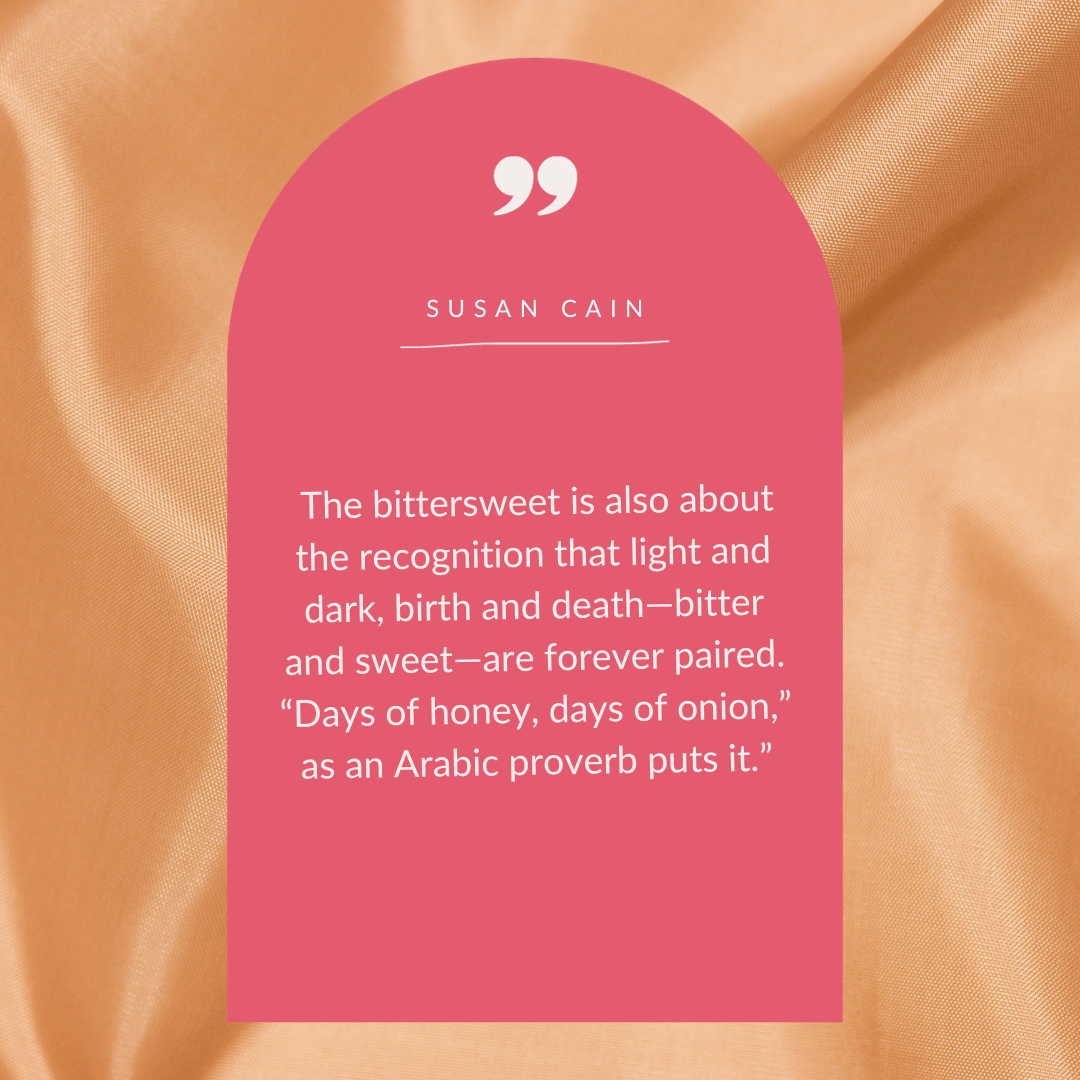
"The Bittersweet is also about the recognition that light and dark, birth and death -bitter and sweet - are forever paired. "Days of honey. Days of onion" as an old Arabic proverb puts it."

Perhaps, it is in acknowledging this duality that compassion for humanity blossoms. The bittersweet experiences of our personal lives can become a catalyst for fostering compassion and understanding of the collective human experience. The call for positive change echoes in this intersection of joy and sorrow.

As I navigate the interplay of sweet family moments and the bitter realities of the world, I am reminded that life, in all its bittersweet glory, is an ongoing journey. It is a journey where the compassion we cultivate within our families can extend beyond, influencing the broader narrative of humanity. In the face of adversity, it becomes imperative to turn bittersweetness into a force for positive change—one that shapes a world where future generations can inherit not only love but also a legacy of empathy and compassion.

"The place you suffer, in other words, is the same place you care profoundly-care enough to act."

**Call to Action: Cultivate Compassion and Act Locally**

In the tapestry of bittersweet reflections on my #oneword2023, I invite you to join me in transforming contemplation into action. The world may be rife with challenges, but within our spheres of influence, there are tangible steps we can take to create a ripple effect of positive change.

1. **Foster Compassion in Your Community:**
Share the bittersweet stories that shape your life. Engage in conversations that bridge the gaps between personal joy and global challenges. You contribute to a more empathetic and understanding community by fostering compassion in your immediate circles.

2. **Support Local Initiatives:**
While the global stage may seem overwhelming, focusing on local initiatives allows us to make a meaningful impact. Support organizations and projects in your community that work towards positive change in education, healthcare, or social justice.

3. **Stay Informed and Advocate for Change:**
Knowledge is a powerful tool. Stay informed about global events and issues. Advocate for change by raising awareness, participating in relevant discussions, and supporting organizations that align with your values.

4. **Embrace the Power of Connection:**
Leverage the digital age to connect with like-minded individuals globally. Join online communities that advocate for positive change and share resources, ideas, and experiences. The collective strength of a connected world can amplify our efforts.

5. **Inspire the Next Generation:**
Whether you’re a parent, grandparent, teacher, or mentor, play a role in shaping the perspectives of the next generation. Instill values of empathy, compassion, and global awareness in young minds, ensuring they grow up with a sense of responsibility towards the world.

6. **Document Your Journey:**
Share your own bittersweet reflections. Whether through blogs, social media, or local gatherings, your personal experiences can inspire others to reflect on their lives and the impact they can have on the world around them.

In the midst of life’s bittersweet moments, let us find strength in our shared humanity. By taking small, intentional steps, we can contribute to a world that balances the scales toward compassion and understanding. The journey towards positive change begins with us, in our homes, communities, and the stories we tell. Together, let’s turn the bittersweet symphony of our lives into a harmonious melody of hope and action.

Open AI and Satya Nadella: Contrasts in Effective Leadership

It’s been a rollercoaster ride for the past few days as we watched and waited for the board members of Open AI to come up with a reason for their abrupt decision to fire Sam Altman, CEO and co-founder. However, the reason is still unclear despite our cumulative shock at how it was handled. But this isn’t the subject of my post today. My post focuses on leadership or lack thereof. 

I wanted to post as soon as I heard about the news on November 17th. However, I’m glad I waited because now I can contrast the good and bad of decision-making and leadership between Altman’s previous employer, OpenAI, and Microsoft.

Here is some background for those who haven’t been following the news.

In 2015, Sam Altman co-founded OpenAI, a non-profit research organization focused on artificial general intelligence, with 10 others, including Elon Musk and Greg Brockman. Brockman became a board member, and Musk left in 2018 after a disagreement about who should run the company: Altman or Musk. OpenAI aimed to offer artificial intelligence to “all of humanity.” 

The company grew and, in 2019, decided to begin using Generative Pre-trained Transformers (GPTs). GPTs are similar to a neural network or a machine learning model, which functions like a human brain and is trained on input, such as large data sets, to produce outputs, meaning answers to users’ questions. The downside is that it needs a lot of costly infrastructure and doesn’t fit a non-profit business model. So the founders decided to into two organizations: a ‘capped-profit’ organization called OpenAI Global LLC and OpenAI Inc, the non-profit and sole controlling shareholder in OpenAI Global LLC, according to an article published by the Guardian and written by John Naughton, an Irish academic, journalist and author. At that point, Altman convinced Microsoft to invest $1 billion in exchange for an agreement to license and commercialize some of OpenAI’s technology. The primary goal for Altman and Brockman was altruistic; however, several board members, including Ilya Sutskever (a co-founder and AI researcher), expressed concern about the danger of AI being used for illegal or lethal means by bad actors. Many believe this rift is the main reason Altman was fired. 

Now that you have some background, we can focus on why actions in this situation exemplify poor leadership versus exemplary leadership. 

Basic facts that OpenAI’s previous board members should have considered:

  1. Not valuing/trusting your employees/management team.

Altman had become the face of OpenAI, as evidenced by his November 6 hosting of the first OpenDev event. At the event, he announced several major enhancements for developers, including GPT 4-Turbo, an improved version of GPT-4 that can analyze text or text and images, and the ability to build GPTs and add them to a GPT store, among other innovations.

  1. Overlooking loyalty and team spirit

Brockman resigned from the company as a board member.

      2. Poor communication

Many employees at OpenAI trust Altman, which has implications for their loyalty to a board that decided to fire him without prior notice to shareholders, employees, and Altman.

     3. A lack of empathy

Microsoft, the major shareholder in OpenAI, was blindsided by the announcement. Satya Nadella, Microsoft’s CEO, was not consulted by OpenAI’s board. He was told only briefly before the Board made the public announcement.

According to David Goldman of CNN, “Involving Microsoft in the decision, informing employees, working with Altman on a dignified exit plan…all of those would have been solutions more typically employed by a board of a company OpenAI’s size – and all with potentially better outcomes.

Employees immediately began to leave the company or threatened to leave, and investors were angry they weren’t consulted. Board members had second thoughts about their decision and considered inviting Altman back. However, Microsoft beat them to it. On November 20th, Nadella announced that Altman agreed to be CEO of a new AI research department at Microsoft. Brockman will be joining him, as well as several other OpenAI researchers.  In the meantime, OpenAI announced xxxxx as interim CEO.  

Microsoft announced it will remain an investor in OpenAI and provide them with cloud services. However, most OpenAI employees have threatened to leave after losing confidence in its management. Microsoft has already hired several of them. 

Nadella has noted in multiple interviews and speeches that he believes there are three important concepts behind great leadership: clarity, empathy, and a growth mindset. A prime example of his beliefs is the email he wrote in January 2023 to Microsoft employees when announcing the layoff of 10,000 employees. 

As reported by Forbes magazine, Nadella’s email included the following:

“The senior leadership team and I are committed that as we go through this process, we will do so in the most thoughtful and transparent way possible. First, we will align our cost structure with our revenue and where we see customer demand. Today, we are making changes that will result in the reduction of our overall workforce by 10,000 jobs through the end of FY23 Q3. [Nadella doesn’t make readers wait to learn the headline news. He brings it up front].

Second, we will continue to invest in strategic areas for our future, meaning we are allocating both our capital and talent to areas of secular growth and long-term competitiveness for the company, while divesting in other areas. [Nadella also announces the $1.2 billion charge Microsoft will take to cover severance payments].

And third, we will treat our people with dignity and respect, and act transparently. [Nadella details the “above market” severance and benefits Microsoft is committing to affected workers]”.

A high-level employee who had been laid off noted after hearing the news that “he had the opportunity to hold various positions, including launching new ad types on Bing!, supporting international customers on Azure, and launching a new language for customers in Indonesia, thereby opening up a new market. In the past two years, he had focused on diversifying Microsoft’s supply chain and reducing onboarding costs while improving efficiency.

The challenges he faced had helped him to grow both professionally and personally, and he could not express enough love and gratitude for being part of the company. When the news was announced, the immediate leadership response was not to rush the transition but to check in on everyone and ensure they were doing okay. He was heartened to see that even those who were not directly affected showered him with respect, empathy, and support.

                                       Contrasting Leadership Decisions

Satya Nadella OpenAI Board 
Clarity and Communication Listening is an important skill 

Bring clarity when there is uncertainty

No communication of the decision to fire Altman to anyone 

Infighting among board members about the direction of OpenAI

Teamwork and Empathy Empathy is key to innovation

Collaboration is key for companies to thrive

Lack of awareness of employee loyalty to Altman and his vision

Worries that profits would override ethics and safety 

Growth-mindset A culture of learning from mistakes 

Risk-taking while being mindful of what lies ahead

Fears of OpenAI’s rapid growth 

Risk-aversion 

By contrasting the management of the same situation, we can see which one was more effective. In addition, the relationship Altman and Nadella have forged is key to whether it will end successfully or not. 

Sam Altman posted on X (formerly Twitter) on November 20:

satya and my top priority remains to ensure openai continues to thrive

we are committed to fully providing continuity of operations to our partners and customers the openai/microsoft partnership makes this very doable

The essence of effective leadership is evident in how it all turned out (within an extremely short timeline of 5 days).

Update as announced on X on November 22, 2023

OpenAI: (@OpenAI)

“We have reached an agreement in principle for Sam Altman to return to OpenAI as CEO with a new initial board of Bret Taylor (Chair), Larry Summers, and Adam D’Angelo.

We are collaborating to figure out the details. Thank you so much for your patience through this.”

Sam Altman: (@sama)

“i love openai, and everything i’ve done over the past few days has been in service of keeping this team and its mission together. when i decided to join msft on sun evening, it was clear that was the best path for me and the team. with the new board and w satya’s support, i’m looking forward to returning to openai, and building on our strong partnership with msft.”

Satya Nadella: (@satyanadella)

“We are encouraged by the changes to the OpenAI board. We believe this is the first essential step toward more stable, well-informed, and effective governance. Sam, Greg, and I have talked and agreed they have a key role to play along with the OAI leadership team in ensuring OAI continues to thrive and build on its mission. We look forward to building on our strong partnership and delivering the value of this next generation of AI to our customers and partners.”

This story was evolving as I wrote this post. I think you can see the result has satisfied everyone. Based on reporting by CNBC, I believe that Altman and Nadella were involved in all aspects of this solution

 Clarity through Communication. Empathy. Growth mindset.

   Selfie posted by Greg Brockman on X 

More information in this Wakelet collection

Detours, Discoveries, and Digital Delights

A graphic that depicts happy students and their teacher working in a group and learning together.

Courtesy of Firefly

As I shared in my recent video, stepping back into my consulting work after a year-long hiatus spent cherishing special moments with my kids and grandkids has been invigorating and enlightening. While I was busy changing diapers and cooking dinners, there was an astonishing surge in the realm of LLMs (Large Language Models) and generative AI. I couldn’t resist diving right into this new wave of innovation. It’s fascinating how our perspectives shift as time goes by – a year ago, I might have shied away from these novel technologies, but now, I stand as a staunch advocate of embracing the unfamiliar. It’s akin to a form of playful exploration that has rekindled my sense of creativity in ways I never thought possible.

My latest focus has been on crafting videos that spotlight the myriad of ways educators can cultivate a sense of belonging within their classrooms and educational institutions. I’ve been penning video scripts with a little help from my AI buddy, ChatGPT. I interacted with the chatbot by honing my prompts (which was part of the fun). Then, lights, camera, action – I’m using Streamyard to capture my thoughts on video, bringing them to life. After that, it’s all about the magical touch of Microsoft’s Clipchamp to polish up those videos. Adding eye-catching thumbnails that I created using Firefly with Adobe Express. Oh, and don’t forget those super cool Canva brand templates from Ed2Market that I can enhance and modify with apps like Text to Image. It’s like turning words into captivating visuals in the blink of an eye. One of my favorite parts of all of this is creating the prompts and figuring out how to word them to ensure I get the results I have in mind. The whole process of creating, editing, and jazzing up videos feels like a thrilling adventure, and it’s all because I’ve unlocked my sense of self-belonging.

Courtesy of Text to Image Canva app

If you’ve ever wondered, “Can I really wrap my head around all this new tech?” – the answer is a resounding yes! All it takes is a pinch of self-belief and a dash of confidence, and you’re ready to conquer any tech challenge that comes your way. Trust me, it’s an exhilarating ride, and you’re in for a treat! And you’ll have so much fun while you’re learning and doing! 

Whether you’re a tech newbie or a seasoned pro, remember this: finding your sense of belonging is the key. It’s what fuels your fearless exploration of the tech universe. So go ahead, embrace the unknown, and let your creativity and tech prowess shine bright. And encourage your students to do the same. You’ve got this, and I can’t wait to see the incredible things you’ll create!

Here’s the link to the video I created this week. And the IG reel version.


Journeys to Belonging podcast transcript for #oneword2023 ep. 3 (Bittersweet)

Hi everyone and welcome to another episode of Journeys to Belonging on today’s episode 3 of my #oneword2023 bittersweet or the feeling of bittersweetness. Today I’d like to talk a little bit about why bittersweet is my word for 2023. In the first two episodes, I talked a little bit about the journey of my life and my reflections on the bittersweetness that I’ve experienced already. But you might be wondering why I chose this word for 2023. Last September, my daughter had twins, a boy and a girl, and my son had a baby girl. So I’m a nana of three now and so excited to be a grandma, but the bittersweetness part is that I don’t live near either of them. My daughter lives in Boston and my son lives in New Jersey. That means I have to decide when I can spend time with them.

01:34.79
Of course, my home is in Kuwait and so I have family there. My husband is there most of the time although he sometimes travels and visits the grandchildren with me. So I think you begin to see why my feeling moving forward is bittersweetness. First of all, because I am constantly saying hello and goodbye to family. In addition, my mother is 98 and lives in Buffalo and I haven’t seen her since last July. Normally, I see her three or four times a year and usually spend quite a bit of time with her, but with the grandchildren now, my nana-ing has taken priority I talk to her several times a week on Zoom or Skype, but it’s not the same as being with her. Luckily, she has terrific neighbors, friends, and my sister and nephew live nearby, so she has people coming by and she has company, but it’s not the same as when I stay with her for several weeks or months at a time. I’m hoping to visit her soon since I’m currently in Boston with the twins, and I’ll be spending a couple of long weekends with my granddaughter in New Jersey.

So again, you know it’s balancing who I visit; the sweetness of being with them, and then the bitterness of having to say goodbye. Missing milestones of the babies and then coming back again and of course, missing Kuwait where I’ve lived since 1984 and I you know it’s it’s ah it’s a constant now in my life. This bittersweetness. And so besides that, there’s also bittersweetness in relation to balancing my personal life and my new role as a nana with my professional role. My second book is about to be launched by Edumatch Publishing on February 21st. It’s called Pathways to Belonging in Education and is a companion resource to Journey to Belonging: Pathways to Well-Being that was published in 2021. My latest book has a number of lessons and contributions from amazing educators and I have also added some lessons, tips, and stories.

04:34.93

I miss the professional part a bit but not completely because I have committed my time to being present with the babies and supporting my children as they kind of go through the parenting journey. I want to support my daughter as she heads back to work at the end of February and my son-in-law as he begins his PhD. journey. My professional journey is really important, so I have expectations that I’ll be back in the game over the summer. But again, that’s the bittersweetness: What I love is part of my life and my passion is the thing I work on in terms of education and supporting educators. But there’s a time and place for everything, so I think that bittersweet is the best #oneword for this year. It helps me stay focused on exactly where I’m supposed to be and what I’m supposed to be doing right now.

06:09.48

There are things that I maybe can’t have right now or have chosen not to be involved in right now and when I see others who are very active on social media and doing lots of things that I’ve decided not to do right now so I have to kind of keep reflecting and putting things in perspective because I’ve made the choice to really focus on being a nana and supporting my children. I feel so blessed to be able to do that right now because I’m retired and I don’t have full-time obligations, which is wonderful. Not every Nana can do that. Also, I’m grateful that I have the financial means to be able to travel back and forth to be there for my kids and my grandkids. It’s exciting and daunting and as I said I’m hoping to get back into the swing of things more actively in the next few months.

08:41.22
So this will be the last episode for now about my #oneword bittersweet although I will probably revisit it midyear and then I’ll reflect again at the end of 2023 on how Bittersweet affected my journey during this year. In the next few episodes, I will talk about my journey as a nana, especially in regard to belonging I mentioned in an earlier episode. I really want to emphasize how important it is to create a sense of psychological safety and a sense of belonging in even the youngest children. I’m talking about starting from the first days of life and creating an environment where they feel they can trust people and their surroundings.

10:13.48

So the next few episodes will be what my journey’s been like and how I have been able to or made an effort to create that sense of belonging through words and actions and just modeling that for my children, the new parents. I’m excited to share that with my listeners. I plan to record the first episode within the next week and publish it. Until then, stay well, and please keep in touch online by commenting about the episode and subscribing to your favorite podcast player.

Link to episode

Cultivating Teacher Leadership at All Levels

Perhaps you’ve already heard the difference between managing and leading. If not, the Harvard Business Review notes:

Management consists of controlling a group or a set of entities to accomplish a goal. Leadership refers to an individual’s ability to influence, motivate, and enable others to contribute toward organizational success. 

There is no mention of where in the hierarchy of an organization a leader emerges, so why do we usually think that a leader needs to be in a role on the top steps of the hierarchy? Schools are organizations with many examples of leaders at lower levels of the hierarchy, like teachers and staff, that demonstrate leadership. I think when we discuss who is a leader, we should consider their ability to influence, motivate, and enable others, as mentioned above. However, due to the normalization of leadership = higher position, many teacher leaders don’t view themselves that way or minimize their ability to rise to positions on the hierarchy of leadership. In this case, those in positions of leadership have a responsibility to take note of and mentor staff who don’t see themselves as leaders or have leadership potential. How can leaders already in positions of power on the hierarchy support those who have the potential but either don’t perceive themselves as having the skills or are fearful of taking on a leadership role or even leading a specific project?

When I was the elementary principal at a private, all-female American curriculum school in Kuwait, my team included teachers from all over the globe and had a variety of degrees from a variety of universities.  It was my responsibility to manage the day-to-day routines as well as to guide change and improvement in teaching and learning. There was no way I could do all that if I didn’t delegate some of my responsibilities to teachers and para-professionals who would benefit from the experience of taking a leadership role in some tasks. Some of the women I tapped on the shoulder asked me how I knew they would be able to lead a task or project. I told them I had observed them in their teaching role and also how they handled their students and worked with their team members. Some were fearful of failure if they led the task and politely told me they were not ready. I respected their decision even if I didn’t agree. Many who took up my challenge applied for positions as head of a department or as vice-principal. Para-professionals I mentored returned to complete their undergraduate degrees or complete a teacher certification and then applied for teaching positions. 

So, what key traits did I notice in my team members that showed me they had leadership potential? 

Here are my top 5:

They are…

  1. Self-motivated 
  2. Long-term thinkers who don’t fear change
  3. Relationship-builders and team players
  4. Empathetic and Compassionate 
  5. Decisive after listening to and considering alternatives

Self-motivation is key to leading. You can’t wait for someone else to come up with an idea or push you forward. You need to wake up in the morning ready for action and be organized enough to make things happen.

Being a forward-thinker means seeing into the future while being grounded in the present and understanding the past. It also means being able to plan short-term to reach a long-term goal. Finally, it means beingn’t afraid of change because you are planning for it. 

Building healthy professional relationships is also key to effective leadership. Leading isn’t a solo endeavor. It’s a team effort. Little can be accomplished if you don’t have a supportive team around you but building a team takes the right kind of person. It needs a combination of skills such as communication, collaboration, trust, respect, and valuing the potential of human capacity. 

Empathy and compassion are often used interchangeably; however, empathy is important for making connections with others so they feel valued, and compassion helps them feel validated.  Empathy means you understand their feelings, and compassion means you’re ready to step up and do something to help them resolve a problem. 

Decision-making is an art and a science. The art is knowing when the science you have is enough to make a decision. In simpler terms, gathering all the information and data, delegating tasks to your team members, receiving feedback from your team, and then making an informed decision are the art and science of decision-making.

School leaders have a responsibility to cultivate and mentor other school leaders, especially if they want sustainability in programs and systems. I’ve found that the best place to start is with our teachers and staff. 

Want to Learn More?

The Essential Handbook for Highly Effective School Leaders: How school leaders maximize teacher commitment, engagement, performance, and retention by Tim Nolan.

Leaders in Succession: Rotation in International School Administration by Patrick Lee


Setting Boundaries and Starting Your Journey to Belonging

In many parts of the world, school is just getting started. In others, school is about mid-way through the year. It doesn’t matter at what point in the academic year you are as an educator, you may need to read/hear this right now. 

I’m checking in to see how you’re all doing. It’s been a difficult few years, more than previous years. Are you feeling any of these?

  • I am prone to self-doubt. 
  • When I finish the school day, I only or mostly think about what went wrong
  • It’s hard for me to take time for myself, even on the weekends. 
  • I have trouble setting boundaries between my work and spending time with my friends and family.
  • When I hear about “self-care”, I cringe because I don’t have time to spend on myself.

If you agree with any or all of these statements, possibly with a resounding YES!, then you need to focus more on self-belonging. What is self-belonging?

It’s…

  • Self-confidence
  • Self-esteem
  • Self-acceptance,
  • Self-love
  • Self-concept 

I think you get the idea.

Let’s look at how we can reframe the statements above, so you can begin your journey to self-belonging.

  • I use positive self-talk.
  • When I finish the school day, I reflect on what went well and celebrate my success(es). Then I reflect on what didn’t go well and list ways I can improve the next time.
  • I carve out time for myself in the evening and on weekends. I realize that work will always be there and boundaries are important to my mental health and well-being.
  • My family and friends deserve my full attention and I know that being present is important for them and for me.
  • The meaning of self-care is _______________ (list your passions/ what fills you with joy).

As you read each statement in the first set, how did you feel? 

  • Helpless at the thought of changing anything? 
  • Annoyed (perhaps at yourself or others)? 
  • Wishing you could do something about it? 

As you read each statement in the second set, how did you feel? 

  • Overwhelmed because you’re not there yet?
  • Excited to get started?
  • Wondering how to get started? 
  • Need some help or support?

I used to feel the same way about the first set and never thought I’d get to experience the second set. First, I had to reframe how I viewed my self-value to take the first steps on my journey to self-belonging. I was exhausted from work and beginning to lose my passion for it. It was scary to think that something I loved doing for so many years was now the source of my low mood and inner pain. I hated feeling that way. I had regrets about telling my friends I was “too busy” to attend the events they planned. In fact, they eventually stopped inviting me since I always said “no”. After my kids all left home to pursue their lives, my husband spent most of his time outside of the house. When I asked him why he told me that he thought I was busy with work. That was a wake-up call! 

When I was a teacher, I brought my work home. I planned my lessons on the weekends and prepared for the next day’s lessons after I returned home each day. Now that I think back to those days, I realize that most of my colleagues were leaving their work at school and still managed to prepare for the day during their prep periods. Were they less elaborate than mine? Probably. Did the students suffer as a result? Not that I could see. They had set boundaries; I had not. Perhaps you don’t have enough time during prep periods. Perhaps you’d like to teach using projects. How can you get started without adding to your workload? 

When I was an administrator, I realized I had control over how much time I spent at work. Work was always going to take more time than my scheduled day. I began by setting healthy boundaries for myself. Work stayed at my office and I ignored emails from my work colleagues unless they were time-bound and needed to be answered before work the next day. This was a small percentage of my emails, so that was manageable and didn’t impede on my personal time. I also committed to being present and available when my family and friends invited me or needed me. 

Creating boundaries is an important first step. What are boundaries? 

  1. Physical Boundaries: Your physical boundaries refer to the rules that define your personal space and touch (i.e. hugs vs. handshakes) in the workplace. 
  2. Emotional Boundaries: Your emotional boundaries refer to your emotions, and they distinguish your emotions from someone else’s at work to help you build a stronger sense of identity. Your emotional boundaries might cause you to say no to certain asks at work, for example, and you won’t allow others’ attitudes about it to easily influence your own.
  3. Mental Boundaries: Your mental boundaries refer to your thoughts, values and opinions on matters in the workplace. For example, you might have your opinion on how things should operate at work and value your morning meetings — and you won’t allow someone else’s ideas of how things should go to influence your own.

Source: https://fairygodboss.com/career-topics/setting-boundaries-at-work

Here are additional suggestions for organizing your work with boundaries in mind:

https://educationtothecore.com/2021/12/27-ways-teachers-are-setting-boundaries/

https://mint.intuit.com/blog/remote-work/setting-boundaries-at-work/

Communicating boundaries:

https://www.forbes.com/sites/carolinecastrillon/2019/07/18/10-ways-to-set-healthy-boundaries-at-work/?sh=f76699374970

Practical ideas for teachers on setting boundaries:

https://www.weareteachers.com/work-boundaries/

I hope you found this post helpful. For more information, check the resources on my website www.ilenewinokur.com Feel free to reach out to me and be sure to sign up for my upcoming monthly newsletter while you’re there. 

Need support from someone? Perhaps someone to help you jumpstart your journey?


Reading Culture or Reading Program?

Young children listen to the teacher as she read a book aloud.  Photo credit: Yan Krukov

Staffroom podcast episode 105: Setting Up a Culture of Reading

Last week, I listened to the latest Staffroom Podcast episode with Chey Cheyney and Pav Wander. Their posts on Twitter about the episode immediately caught my attention because of my experience in Kuwait teaching English language learners. I have strong opinions about how children learn how to read based on my teaching experience with third-grade English learners. When I began teaching, I needed to know more about teaching English language learners, so I read the current research. I also know what worked and didn’t work for my own children and for me when I was learning to read.

As I listened to Chey and Pav’s lively discussion that included topics such as a culture of reading or a reading program, a balanced literacy approach, and the science of reading, I remembered something that happened to my son. Chey mentioned whether being astutely proficient or having been taught all of the reading skills was necessary for every student. That is, do we have to know every reading skill to read at a proficient level? And where does a love of reading fit in? Pav responded that reading doesn’t come naturally according to the research. This topic resonated with me deeply and I have a personal story about my son’s experience in middle school. I will share his story and then some of the most recent science about learning how to read. 

7th grade   

By the time my son started 7th grade, he was a prolific reader. The Hobbit, Lord of the Rings Trilogy, any new book by Brian Jacques; all of them over 300 pages. Although his father’s first language is Arabic and we live in Kuwait, my son has always been more fluent in English and speaks, writes, and reads like a native speaker. Or, so I thought until he came home in November of that year with a “D” on his most recent essay. My philosophy about supporting my children with their homework was hands-off once they were in middle school and could ask me for help if they needed it, so this was the first time I’d seen his essay. It was also the first time he’d received such a poor grade on any of his school work. Once I read through his essay, I knew what the problem was. He had only a superficial understanding of the book he had read. This was definitely a revelation for me. I had always assumed that my son understood at a high level of comprehension and now I found out he didn’t. 

I sat down to discuss the problem with my son and we looked at a few passages from the book. I asked him some deeper questions about the characters and plot which he struggled to answer! I told him I wanted to call his school and meet with his teacher. My son agreed that it was a good idea. When I sat down with his English teacher, she told me that my son was a very good student overall. I asked her how a native speaker like my son could reach 7th grade with such a poor level of comprehension. She told me that the majority of the students in his grade level were weak in their English skills and she was teaching to the majority of the class. She blamed it on the lack of English language support staff in the middle school. Of course, that was not the answer I wanted to hear, nor was it acceptable as far as I was concerned. I arranged a meeting with the middle school principal and he repeated what the teacher had told me. I could see I wasn’t going to get anywhere with the school and realized I needed to get involved with my son’s schoolwork, especially in the area of reading comprehension. His level of vocabulary was way above his classmates, but he was only reading superficially. 

From that time, and until he entered high school, I would ask him questions about what he was reading in various subjects. We started with the basics such as plot, characters, and themes. In subjects other than English, he used his prior knowledge to inform, analyze, and synthesize his new learning. If he was interested in discussing his pleasure reading with me, I was happy to chat with him about it; however, I didn’t want to make it seem like another task. If you’re familiar with  Bloom’s taxonomy, you will recognize how I prompted my son to think at higher cognitive levels than understanding which is one of the lowest forms of cognition. My son’s responses to my questions over time showed me that his reading comprehension had improved by leaps and bounds. In fact, his verbal scores on the SAT were in one of the highest percentiles. He is now in his early 30s and working in a job that requires him to think strategically and creatively. His love of reading has not abated and you rarely see him without his Kindle. 

Mother reading and showing a book to her baby daughter. Photo credit: William Fortunato

Explicit instruction, pleasure reading, and creating a culture of reading

Reading instruction that is developmentally appropriate has been studied for many years. However, it is only recently that we have the fMRI technology of brain scans to understand how the brain learns to read. Speaking comes naturally to us, but reading must be taught. How it is taught is very important. According to research cited in a 2019 article in Education Week, “Decades of research have shown that explicit phonics instruction benefits early readers, but particularly those who struggle to read.” It goes on to say that children who are not explicitly taught sound/letter recognition (in an alphabetically-based language like English or Spanish), will struggle with comprehension later on due to the lack of automaticity in decoding text. This is something that I learned in relation to struggling English language learners in Kuwait and is supported by the research. The slower you read and the longer it takes you to decode a sentence, the more likely you are to struggle with comprehension of what you read. 

However, not all phonics instruction is equally successful. It must be systematic, according to the National Reading Panel (2000), and supported by other research reviews: 

A systematic phonics program teaches an ordered progression of letter-sound correspondences. Teachers don’t only address the letter-sound connections that students stumble over. Instead, they address all of the combinations methodically, in a sequence, moving on to the next once students demonstrate mastery. Teachers explicitly tell students what sounds correspond to what letter patterns, rather than asking students to figure it out on their own or make guesses.

An experiment by a neuroscientist at Stanford (2015) with a made-up language supports the systematic approach of teaching phonics rather than expecting students to guess at the words after being instructed using sight words. English learners and students with disabilities benefit from systematic phonics instruction at the kindergarten and grade 1 levels. The association between phonics instruction and reading comprehension is clear. 

In terms of balanced literacy which was another topic mentioned by Chey and Pav during the episode, the research has shown that using context clues or other cues to decode a word slows the reader down. I’m not sure this is totally the case since there are times when students, especially language learners, need extra help from the text to determine meaning, thus supporting their comprehension. It’s also another way for them to engage with the text because they have to focus all the time on what they’re reading. 

The Education Week article (2019) relies heavily on the National Reading Panel Executive Summary (2000) that underlines the importance of teaching phonemes and graphemes (systematic phonics) in grade 1 and other reading skills that support automaticity of decoding and comprehension. For more detail, a link to the article is in the references below. However, Bowers (2020) has done a meta-analysis of numerous studies over a period of 20 years that showed studies noted, “Nevertheless, despite this strong consensus, I will show that there is little or no evidence that systematic phonics is better than the main alternative methods used in schools, including whole language and balanced literacy”.  Hence, something known as the “reading wars”. 

In support of systematic phonics instruction, one meta-analysis of reading intervention studies finds that phonics-focused interventions were most effective through grade 1; in older grades—when most students will have mastered phonics—interventions that targeted comprehension or a mix of reading skills showed bigger effects on students’ reading skills. (Suggate, 2010) Another study, however, has looked at the three main approaches to teaching reading: systematics phonics instruction, whole language, and balanced literacy which is a combination of whole language and non-systematic phonics instruction, and Bowers (2020) concluded it “should not be that we should be satisfied with either systematic phonics or whole language, but rather teachers and researchers should consider alternative methods of reading instruction”.  

All in all, the science of reading supports the need for explicit instruction at an early age at the appropriate stage of development. My experience, although non-scientific, supports a combination of systematic instruction along with reading for meaning within the context and using how words are formed. So for early years including preschool and kindergarten, “the National Early Literacy Panel found that both reading books to young children and engaging in activities aimed at improving their language development improved their oral language skills (2008).” 

Spoken language is also important in the very early years and research shows that the more vocabulary young children are exposed to and the more able they are to communicate verbally, the better they are at reading and comprehending. When books are read aloud or print is pointed out to them (such as signage, labels, etc.), they begin to associate sounds with letters and how the printed word works. They also begin to learn about books and print which increases their ability to learn grammar and syntax faster as they develop more skills in higher grades.  

The weekly Staffroom episodes discuss a variety of topics and always challenge my thinking. I really appreciate and enjoy the interaction by Chey and Pav during the show and the conversations on social media by other educators who are listening. 

Link to the show: https://www.cheyandpav.com

Link to Episode 105: https://www.cheyandpav.com and at https://voiced.ca/podcast_episode_post/203-chey-pav-and-the-staffroom-podcast 

References 

Bowers, J.S. (8 January 2020). Reconsidering the evidence that systematic phonics is more effective than alternative methods of reading instruction. Educational Psychology Review. https://link.springer.com/article/10.1007/s10648-019-09515-y

Early Literacy Panel. (2008). Developing early literacy: Report of the national early literacy panel. https://lincs.ed.gov/publications/pdf/NELPReport09.pdf

National Reading Panel. (2000). Teaching children to read: An evidence-based assessment of the scientific research literature on reading and its implications for reading instruction [Executive summary]

Schwartz, S. & Sparks, S.D. (2019). How do kids learn to read: What the science says. Education Week.https://www.edweek.org/teaching-learning/how-do-kids-learn-to-read-what-the-scence-says/2019/10

Suggate, S. P. (2010). Why what we teach depends on when: grade and reading intervention modality moderate effect size. Developmental Psychology. https://pubmed.ncbi.nlm.nih.gov/20873927

Youncheva, Y., Wise, J. & McCandliss, B. (16 May 2015). Hemispheric specialization for visual words Is shaped by attention to sublexical units during initial learning. Brain Language. 

For an interesting opinion piece on the science of reading and so-called reading wars: https://www.washingtonpost.com/education/2021/01/26/readingwars-scienceofreading-teaching​​

Is the Sky Falling or Are We All in Fight, Flight, or Shutdown? 

It surprises me a lot that we aren’t talking about the trauma we’re all suffering right now. Yes. This pandemic is traumatic and the effects of it will live on for a while. If we don’t start looking at it that way, we’re doomed to continue suffering from mental health issues including anxiety, depression, short tempers, and basically, a lack of ability to cope with daily life. 

If you think about it, many of us were already in crisis mode before the pandemic hit. We worried about who was running our governments and were frustrated with the state of education in light of the inequities in the system. Place a long period of pandemic, uncertainty, divisiveness and you have full-blown trauma. How people deal with it from day to day depends on their level of self-belonging. I’m not a psychologist or specialist in the science of the brain and body, but I’ve spent the past two years studying, reading, and internalizing the science. I’ve also learned about different views of home and belonging; different perspectives about life and how we live it. And I’ve also been reflecting on what has worked for me since I suffered from depression and anxiety for many, many years. 

First, I’m going to share a personal story with you about a traumatic experience I had and how I was able to cope, and then I will share some practical advice about how you can come to terms with what’s going on and move forward. 

In 2014, I was hired as director of a foundation-level program at a private university in Kuwait. I replaced the outgoing director whose style was autocratic and included favoritism towards some staff she believed to be loyal to her and a lot of control and surveillance of everyone else. The curriculum she implemented did not suit the needs of our students and for that reason, I was tasked by the board of trustees to overhaul the climate in the department and revise the curriculum. 

I think you can already see the obstacles I was facing when I entered my office on the first day. Although I had worked with many of the staff members as a fellow instructor for five semesters, there was distrust by those who had aligned with the previous director about the changes they assumed I was going to make. I am a democratic type of leader and ask for input from all of my staff, instructors, and teaching assistants because they’re the ones “in the trenches” so to speak. They know what is needed to ensure the students acquire the necessary skills and knowledge to begin the undergraduate program. I also had taught the curriculum and commented many times that it was not aligned with what the students needed to fulfill the requirements of English and math competencies before starting their undergraduate courses. 

A number of committees were formed with representation that involved every instructor and TA in the department. We reviewed the outcomes,  assessment philosophy, and textbooks/resources. Then each committee presented their findings. Based on best practices and the most recent research in remedial math and intensive English, a plan was created to write and implement most of the recommendations along with a timeline that took into account a switch over from the previous curriculum and assessments that aligned. We even searched for a better admissions test for English so we had data that would be used to evaluate the changes and help us determine if the changes we made improved outcomes over time. Along the way, staff members came to me with concerns and I dealt with each one.

There was a bit of grumbling from some staff about having to make the changes which meant new lesson plans, learning additional methods to ensure students met the benchmarks we created, but we had the support of the upper management, so I was confident we were on the right track. In March 2016, I was traveling in the U.S. to visit family and attend several conferences. While I was sitting at a gate to board my flight, I checked my work email and found a strange message from an unknown email address. The subject line was Unresolved Complaints About Doctor Ilene and had been sent to the university President, the Vice President for Academic Affairs (my immediate supervisor), and my entire staff. I came to know later that the email address used was encrypted so it couldn’t be traced. The body of the email referred to numerous accusations of my lack of leadership, staff being forced to “work for me” and that I hadn’t listened to complaints about certain problems “many” instructors were having. There was a bit of sarcasm and I was embarrassed for whoever wrote it because it was so unprofessional and had been sent to the management. 

Once I’d read through it a couple of times (in disbelief), I contacted the VP. He told me that he would try to find out who sent it and would send an email that would indicate his continued support of my efforts as director. He also said we would meet once I returned to work the following week. Long story short: the perpetrator(s) was never found because IT was unable to break the encryption. After a couple of months, I decided to take the situation into my own hands. I called a staff meeting and took attendance to ensure everyone was there. Then I presented my case, without referring to any specifics in the email since I didn’t want to show it had any importance to me. I spoke for a few minutes looking at each and every staff member as I said, “The train is on the tracks and is already moving forward. If you’re not happy about the journey and the destination, nobody is keeping you here. It’s almost the end of the year and you are free to leave if the direction we’re taking doesn’t suit you.” And then I finished up by saying, “I am now in my 60s and know myself very well. I don’t need anyone to tell me what I still need to work on.”

If I was sitting next to you right now, I bet I know what you’re thinking. ‘How did Ilene know how to handle that traumatic experience?’ If it had happened ten years before, I don’t think I would have been able to continue in my role as director knowing there were people who sought to undermine me and push me out of my job. However, I was in a different place in 2016 and my sense of self-belonging was and still is strong. I knew what I was tasked to do, and I was sure I had listened to every voice in the department before making joint decisions about changes. I also knew there were some who didn’t agree and would probably never agree, but they were the minority and had a choice about staying or leaving. When I stood up in front of the group, I knew what I had to do. I had to re-establish my “authority” for those who were on board with the changes but feared the others might diminish my ability to implement them. 

Why am I telling this story? I need to emphasize how traumatic experiences like the one I experienced, can impact how we view our jobs and ourselves. The email I received was a culmination of numerous covert attacks on my leadership the first 18 months as director. I was able to overcome constant attacks on my position and the email that was deliberately encrypted and sent to upper management because I developed my sense of self-belonging. I knew my strengths and what I still needed to work on. I also had the support of my supervisor to make the necessary changes in spite of the pushback by a small group of staff members. 

My message to educators and education leaders is: We need to have a strong sense of self-belonging and feel supported professionally. If not, we will succumb to the negativity, attacks on our self-esteem and self-confidence that make us feel we need to fight, flee, or shut down. That means the dark curtain will fall over us and color everything around us. That’s what is happening right now. I believe it’s a major reason so many educators are leaving the profession. It doesn’t have to be that way!

If you’re a school leader, support your staff in any way you can. If you’re a classroom teacher or support staff, make your voice heard. Share how you’re feeling. 

Here are some of my suggestions for how to handle the current crisis:

Daily check-ins with staff to find out how they are feeling 

Open your door to allow them to pass by and share their concerns, fears, and problems. 

Listen for understanding and jointly come up with a plan to make things better. 

Advocate for your staff and students with whoever is responsible for making those decisions. 

Advocate for your own mental health and well-being.

Make your, your staff’s, and your students’ well-being a priority. The content will be taught and learned once they feel included, heard, and valued.

Reach out to the community including parents and let them know they’re important also. 

Communicate regularly and encourage your staff to communicate with you and your parents often.

For more suggestions read this article from Edutopia.

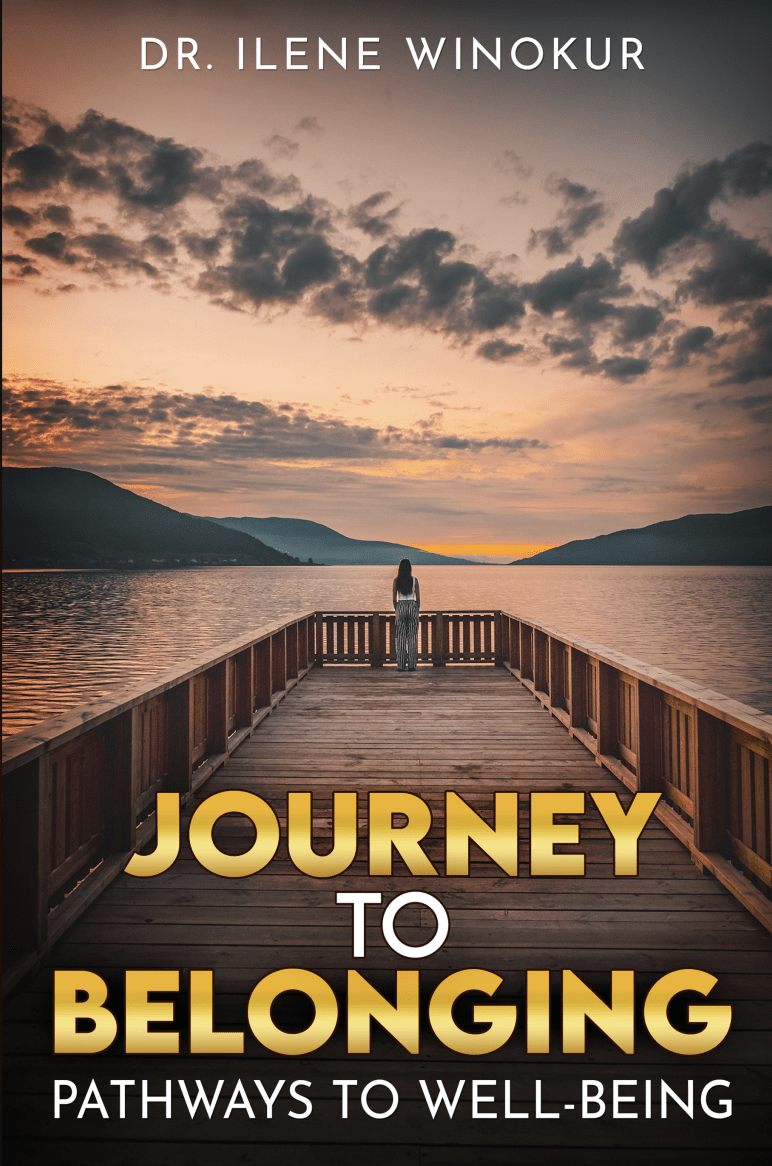
 You can read more about self-belonging and professional belonging in my book, Journey to Belonging: Pathways to Well-Being available in paperback and ebook.

Photo of Journey to Belonging: Pathways to Well-Being book cover

https://journeys2belonging.com/3C5Ojig

https://journeys2belonging.com/3kmuwUN

https://journeys2belonging.com/31eQF0s


Countering the Big “What If”

I’ve begun to realize that I need to share my own experiences with self-doubt, lack of self-confidence, and negative self-talk as a model for others who might be experiencing the same thing and some ways to overcome it. I will start with two personal examples from my 65 years to help you reflect on their own life experiences which may be holding you back from existing in the present and having a more fulfilling life.

The first story happened when I was in high school. I was studying Spanish as my foreign language requirement and was quite fluent in reading and writing but didn’t have much opportunity to improve my speaking in class. There was a student exchange program that was available to students who excelled in their language classes. Students needed to apply for the opportunity to live with a host family and attend school for a year in a Spanish-speaking country. It sounded like a wonderful opportunity that is really a “once-in-a-lifetime kind of thing. I should have been excited about it, but I was petrified at the thought of leaving my secure home environment and venturing out into the world. 

My negative self-talk took over:

What if I don’t get along with the family?

What if I’m not as good at Spanish as everyone thinks I am?

What if I don’t like the food or it doesn’t agree with me (I have a very sensitive stomach and I need to be careful what I eat).

What if I don’t do well in their school? 

You get the idea and can see how I was getting in my own way. In fact, it is one of the biggest regrets I have in my life because I would have loved to learn more languages and traveled the world when I was younger. Unfortunately, I didn’t feel a sense of self-belonging and couldn’t imagine that I’d be strong enough to overcome any challenges I might have faced. Classmates who had the courage to participate returned after a year and were fluent in the target language and shared stories and photos of their adventures far from home. Truly a missed opportunity!

A second example of getting in my own way due to a lack of self-belonging happened whenever I was in a social situation while I was growing up. Meeting new people was painful for me because I felt awkward telling people about myself. Again my negative self-talk would take over:

Why would they be interested in anything I have to say?

What if they don’t like me?

What if I say something that offends them?

What if they’re just talking to me because they want me to do something for them or help them with something?

As a result, I had very few friends and those I did have, I worried that I might lose them at any moment if I messed up by saying or doing something they didn’t like. 

By the time I was 35 years old, I was tired of being miserable and making everyone around me miserable. I was fed up with feeling lonely because I was afraid to get out of my comfort zone to make conversation with others. I was tired of hearing myself complain and then feeling guilty about burdening others with my troubles. My “aha” moment was the realization that I was the only person who could make a change; I had the ability to control how I reacted in different situations and whether my self-talk was negative or positive. Change doesn’t happen overnight but with a consistent and conscious effort on my part, I slowly began the process of pushing away self-doubt. I began to notice subtle changes in the way I felt when I was in social situations. I looked forward to meeting new people, getting to know them, and sharing my stories. I enjoyed traveling instead of worrying about planning every detail and then being disappointed because it didn’t go exactly as planned. 

You might be wondering how I got started and what my process was like. Here are 5 things you can do right away to take the first steps towards changing how you think about your situation and how you respond. 

  1. Make a mental or written list of accomplishments in your life. Think about how it/they make(s) you feel when you remember them. Savor those feelings and conjure them up when you feel yourself slipping back into self-doubt.
  2. What are your strengths/superpowers? What do you do well that other people ask your help for? Celebrate your superpowers and repeat the list to yourself when you begin feeling your confidence is slipping.
  3. What big emotions overwhelm you? Reflect on why they do. Make a pact to give yourself grace and try not to judge yourself harshly when you mess up.
  4. Think about a time that you did something spontaneously that turned out well in the end; something you didn’t plan or a change of plans that turned out better than what you had planned. Remind yourself that you don’t always have to be in control of every detail. 
  5. Share your apprehension(s) about making these changes with someone you can confide in and trust, someone who won’t judge you, who will listen for understanding, and act as a mirror. If you don’t have someone in your life like that, reach out to me. 

Remember that being aware of your lack of a sense of self-belonging is the first step to changing how you react and think. It’s the first step to better personal and professional relationships and well-being. My self-doubt pops into my head every now and then. It never goes away completely, but it does get better. For years I reminded myself about my “what if” moments that worked out and how I wasted my time worrying about them. Over time, your brain will begin to react on its own*. Give yourself grace while you’re working through it. Self-love is the greatest form of love there is. 

*For a more in-depth explanation of the relationship between the reactions of your autonomic nervous system and why it’s important to be mindful of our reactions, listen to my podcast episode beginning on December 1st. 


.