
#WorldWaterDay poster with statistics.
My blog today is in memory of my mother-in-law, Om Naji (mother of Naji). Today is World Water Day. You may be wondering what that has to do with Om Naji, so I’ll tell you a story to clarify.
When I first moved to Kuwait from Buffalo, New York in 1984, I was 29 and thought I had a pretty good idea about how to live life, take care of myself, and others. It’s funny that we think we know everything but find out later we had a perception of life based on our experiences. My experience was a privileged one in an older suburb of Buffalo with tree-lined streets and houses that ran on oil heat. We had four seasons: beautiful in Summer, leaves changing colors in Fall, and falling off the trees into Winter, snowy, cold winters, and rainy Spring that brought us beautiful flowers and singing birds.
Then I moved to Kuwait. The changes in seasons feel like there are only two, Summer and Winter, with summer being long and very hot while winter was short and sometimes felt like Fall. There were no leaves that changed color and fell because palm trees never drop leaves. In fact, it was rather boring for kindergarteners to tell about the weather during calendar time because most days were like the days before; sunny, warm, and dry. Let’s talk about the dry part. Kuwait is in the middle of a desert. Fresh, clean water is scarce. Of course, I knew this when I moved here, but I don’t think I realized the full impact of that until Om Naji saw me washing the dishes in her house one day and scolded me for letting the water run.
Om Naji (in Arabic but here’s the translation): “Ilene, you shouldn’t let the water run while you’re wiping the dishing with soap. Instead, turn the water off, wipe all the dishes in the sink, then turn the water on and rinse them at the same time.”
Me (a bit stunned that she corrected me which rarely happened): “But this is the way I’ve always washed dishes.”
Om Naji: “I grew up in Kuwait at a time when water was delivered to our house from ships that brought it from Basra, Iraq. Water is precious to us here in the desert, so we need to conserve it.”
At that moment, I realized how privileged I was while growing up thinking that I didn’t need to conserve water. In Kuwait, there are only a few freshwater wells. The Arabian Gulf is saltwater, so desalination plants were built to provide drinking water. However, according to the information available, there is a global shortage of clean water, especially in developing nations and we shouldn’t take that for granted. According to the World Bank, “estimates indicate that 40% of the world population live in water-scarce areas, and by 2025, about 1.8 billion people will be living in regions or countries with absolute water scarcity.” Climate change has had and will continue to have negative effects on water sources and we need to be mindful of what that will mean 5, 10, 20 years from now.
There are eleven indicators for Sustainable Development Goal # 6, including clean water, hygiene, wastewater treatment, water quality, water treatment, and water use efficiency to name several. Globally, we all need to be more mindful of how much water we use and make sure everyone is aware that we need to conserve. We are all part of the problem and solution, so let’s work together as a community for the common good.

Photo of Kuwait water towers landmark
Photo credit to Richard Bartz
Om Naji’s words come to my mind every time I brush my teeth and turn the faucet off as I swipe the toothbrush up and down. And, of course, while I wash the dishes. Kuwait’s landmarks are water towers.
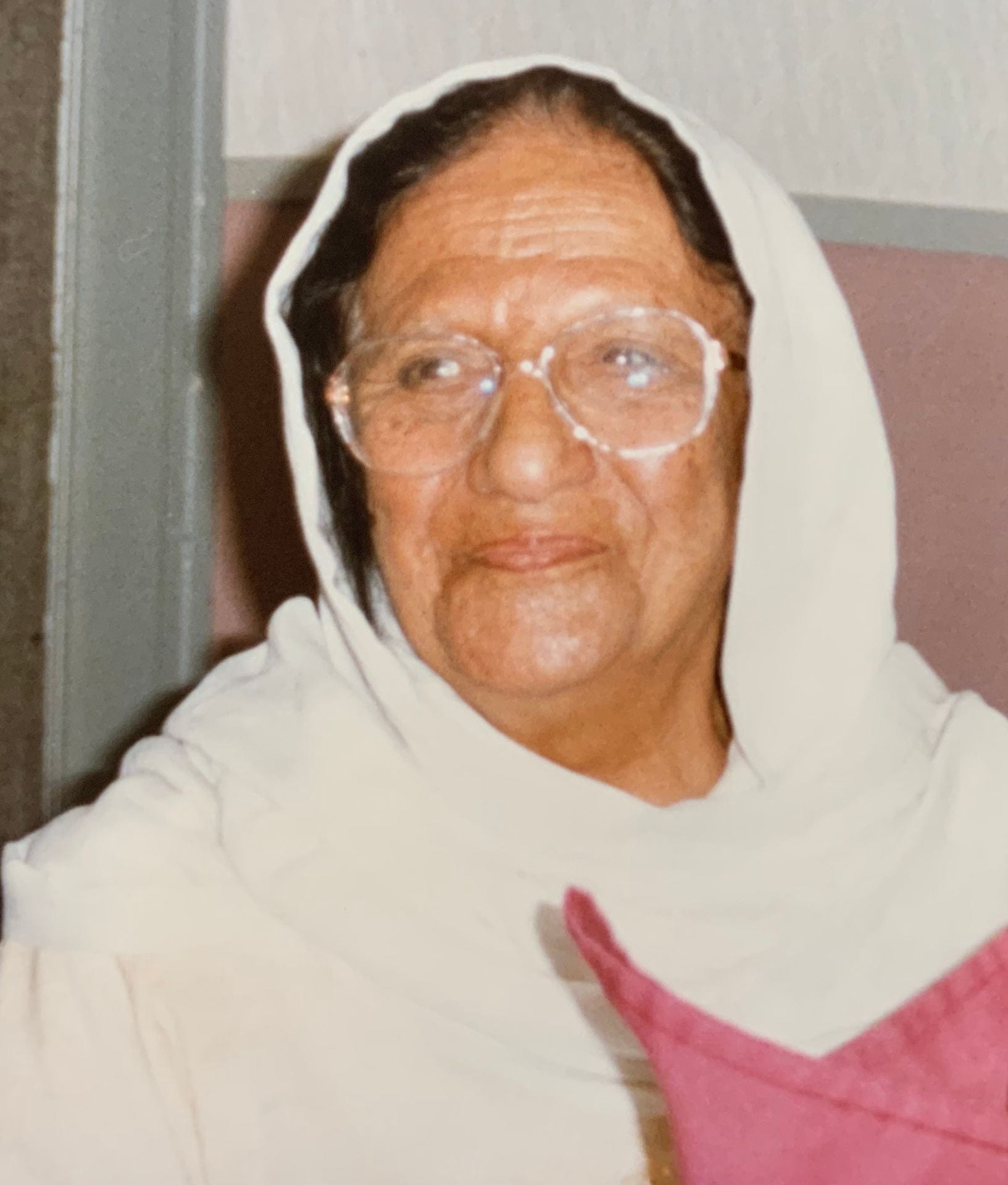
Photo from 1997 of my mother-in-law, Lateefah Al Ajeel