Awakening From the Trance of Unworthiness by Tara Brach

Today, I am featuring an article by Tara Brach in place of my weekly blog post. Tara outlines her interpretation of Buddhist practices that underline the need for self-belonging as the first step to wholeness and well-being. Her podcast is also a great resource for mindful practice and finding peace within ourselves.
(The following article originally appeared in the Spring 2001 issue of Inquiring Mind (vol. 17, number 2). www.inquiringmind.com

It’s here in all the pieces of my shame
That now I find myself again.
I yearn to belong to something, to be contained
In an all-embracing mind that sees me. . . .

-Rainer Maria Rilke
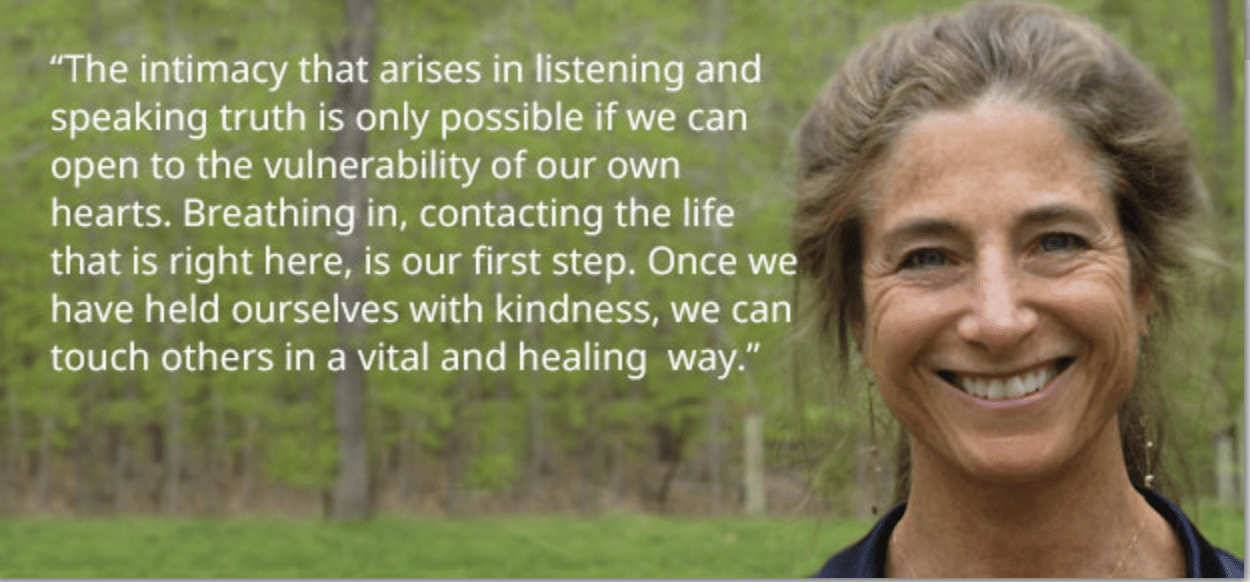
The intimacy that arises in listening and speaking truth is only possible if we can open to the vulnerability of our own hearts. Breathing in, contacting the life that is right here, is our first step. Once we have held ourselves with kindness, we can touch others in a vital and healing way. – Tara Brach

Our most fundamental sense of well-being is derived from the conscious experience of belonging. Relatedness is essential to survival. When we feel part of the whole, connected to our bodies, each other, and the living Earth, there is a sense of inherent rightness, of being wakeful and in love. The experience of universal belonging is at the heart of all mystical traditions. In realizing non-separation, we come home to our primordial and true nature.

The Buddha taught that suffering arises out of feeling separate. To the degree that we identify as a separate self, we have the feeling that something is wrong, something is missing. We want life to be different from the way it is. An acute sense of separation-living inside of a contracted and isolated self-amplifies feelings of vulnerability and fear, grasping and aversion. Feeling separate is an existential trance in which we have forgotten the wholeness of our being.

Never in the history of the world has the belief in a separate self been so exaggerated and prevalent as it is now in the twenty-first century in the West. In contrast to Asian and other traditional societies, our distinctive mode of identification is as individuals, without stable pre-existing contexts of belonging to families, communities, tribes or religious groups. Our desperate efforts to enhance and protect this fragile self have caused an unprecedented degree of severed belonging at all levels in our society. In our attempts to dominate the natural world, we have separated ourselves from the Earth. In our efforts to prove and defend ourselves, we have separated ourselves from each other. Managing life from our mental control towers, we have separated ourselves from our bodies and hearts.

With our Western experience of an extremely isolated self, we exemplify fully what the Buddha described as self-centered suffering. If we identify as a separate self, we become the background “owner” of whatever occurs. Ajahn Buddhadasa, a twentieth-century Thai meditation master, describes this conditioning to attach an idea of self to experience as “I-ing” and my-ing. Life happens emotions well up, sensations arise, events come and go and we then add onto the experiences that they are happening to me, because of me.

When inevitable pain arises, we take it personally. We are diagnosed with a disease or go through a divorce, and we perceive that we are the cause of unpleasantness (we’re deficient) or that we are the weak and vulnerable victim (still deficient). Since everything that happens reflects on me, when something seems wrong, the source of wrong is me. The defining characteristic of the trance of separation is this feeling and fearing of deficiency.

Both our upbringing and our culture provide the immediate breeding ground for this contemporary epidemic of feeling deficient and unworthy. Many of us have grown up with parents who gave us messages about where we fell short and how we should be different from the way we are. We were told to be special, to look a certain way, to act a certain way, to work harder, to win, to succeed, to make a difference, and not to be too demanding, shy or loud. An indirect but insidious message for many has been, “Don’t be needy.” Because our culture so values independence, self-reliance and strength, even the word needy evokes shame. To be considered as needy is utterly demeaning, contemptible. And yet, we all have needs-physical, sexual, emotional, spiritual. So the basic message is, “Your natural way of being is not okay; to be acceptable you must be different from the way you are.”

Almost two decades ago, author John Bradshaw and others enlarged our cultural self-awareness by calling attention to the crippling effect of shame. Since then, many have recognized the pervasive presence of shame much as we might an invisible toxin in the air we breathe. Feeling “not good enough” is that often unseen engine that drives our daily behavior and life choices. Fear of failure and rejection feeds addictive behavior. We become trapped in workaholism-an endless striving to accomplish-and we overconsume to numb the persistent presence of fear.

In the most fundamental way, the fear of deficiency prevents us from being intimate or at ease anywhere. Failure could be around any corner, so it is hard to lay down our hypervigilance and relax. Whether we fear being exposed as defective either to ourselves or to others, we carry the sense that if they knew . . . , they wouldn’t love us. A winning entry in a Washington Post T-shirt contest highlights the underlying assumption of personal deficiency that is so emblematic of our Western culture: “I have occasional delusions of adequacy.”

During high school, I consciously struggled with not liking myself, but during college I was distressed by the degree of self-aversion. On a weekend outing, a roommate described her inner process as “becoming her own best friend.” I broke down sobbing, overwhelmed at the degree to which I was unfriendly toward my life. My habit for years had been to be harsh and judgmental toward what I perceived as a clearly flawed self. My attachment to self-improvement transferred itself into the domain of spiritual practice. While I realized at the time that kindness was intrinsic to the spiritual path, in retrospect it is clear how feeling unworthy directly shaped my approach to spiritual life.

I moved into an ashram and spent twelve years trying to be more pure-waking up early, doing hours of yoga and meditation, organizing my life around service and community. I had some idea that if I really applied myself, it would take eight or ten years to awaken spiritually. The activities were wholesome, but I was still aiming to upgrade a flagging self. Periodically I would go to see a spiritual teacher I admired and inquire, “So, how am I doing? What else can I do?” Invariably these different teachers responded, “Just relax.” I wasn’t sure what they meant, but I didn’t think they really meant “relax.” How could they? I clearly wasn’t “there” yet.

During a six-week Buddhist meditation retreat, I spent at least twelve days with a stomach virus. Not only was there physical discomfort, but I found that I made myself “wrong” for being sick. Having already struggled with chronic sickness, this retreat made it clear just how harshly I had been relating to myself. Sickness had become another sign of personal deficiency. My assumption was that I didn’t know how to take care of myself. I feared that being sick reflected unworthiness and a basic lack of spiritual maturity.

In one of the evening dharma talks, a teacher said, “The boundary to what we can accept is the boundary to our freedom.” For me this rang incredibly true. I had been hitting that boundary repeatedly, contracted by the almost invisible tendency to believe something was wrong with me. Wrong if I was fatigued, wrong if my mind was wandering, wrong if I was anxious, wrong if I was depressed. The overlay of shame converted unpleasant experiences into a verdict on self. Pain turned into suffering. In the moment that I made myself wrong, the world got small and tight. I was in the trance of unworthiness.

Several years ago, at a meeting with a group of Western teachers, the Dalai Lama expressed astonishment at the degree of self-aversion and feelings of unworthiness reported by Western students. I know many friends and students who have found, as I did, that even after decades of spiritual practice, they are still painfully burdened by feelings of personal deficiency. Many assumed that meditation alone would take care of it. Instead, they found that deep pockets of shame and self-aversion had a stubborn way of persisting over the years.

Carl Jung describes a paradigm shift in understanding the spiritual path: Rather than climbing up a ladder seeking perfection, we are unfolding into wholeness. We are not trying to transcend or vanquish the difficult energies that we consider wrong-the fear, shame, jealousy, anger. This only creates a shadow that fuels our sense of deficiency. Rather, we are learning to turn around and embrace life in all its realness-broken, messy, vivid, alive.

Yet even when our intention in spiritual practice is to include the difficult energies, we still have strong conditioning to resist their pain. The experience of shame-feeling fundamentally deficient-is so excruciating that we will do whatever we can to avoid it. The etymology of the word shame is “to cover.” Rather than feel the rawness of shame, we develop life strategies to cover and compensate for its presence. We stay physically busy and mentally preoccupied, absorbed in endless self-improvement projects. We numb ourselves with food and other substances. We try to control and change ourselves with self-judgment or relieve insecurity by blaming others. We are so sufficiently defended that we can spend years meditating and never really include in awareness the feared and rejected parts of our experience.

Often those who feel plagued by not being good enough are drawn to idealistic cosmologies that highlight the sense of personal deficiency but offer the possibility of becoming a dramatically different person. The quest for perfection is based on the assumption that we are faulty and must purify and transcend our lower nature. This perception of spiritual hierarchy, of progressing from a lower to a higher self, can be found in elements of most Western and Eastern religions.

When we are in the process of trying to ascend, we never arrive and always feel spiritually insufficient. This was clearly the case during my first years of practice in pursuit of becoming a more perfect yogi. The temporary and passing states of peace or rapture were never enough to soothe my underlying sense of unworthiness. I felt continuously compelled to do more. An alternative face of such insecurity is spiritual pride. The very accomplishments-like improved concentration or periods of bliss-if owned by the self, reinforce a sense of a deficient self that is moving up the ladder. With either pride or shame, our awareness is identified as an entity that is separate and afraid of failure.

In my own unfolding, as well as with friends, clients and dharma students, an intentional spotlight on shame and unworthiness has been enormously revealing. Many people have told me that when they realize how pervasive their self-aversion is and how long their life has been imprisoned by shame, it brings up a sense of grief as well as life-giving hope. Fear of deficiency is a prison that prevents us from belonging to our world. Healing and freedom become possible as we include the shadow-the unwanted, unseen and unfelt parts of our being-in a wakeful and compassionate awareness.

* * *

For a child to feel belonging, he or she needs to feel understood and loved. We each feel a fundamental sense of connectedness when we are seen and when what is seen is held in love. We habitually relate to our inner life in the same way that others attended to us. When our parents (and the larger culture) don’t respond to our fears, are too preoccupied to really listen to our needs or send messages that we are falling short, we then adopt similar ways of relating to our own being. We disconnect and banish parts of our inner life.

Meditation practices are a form of spiritual reparenting. We are transforming these deeply rooted patterns of inner relating by learning to bring mindfulness and compassion to our life. An open and accepting attention is radical because it flies in the face of our conditioning to assess what is happening as wrong. We are deconditioning the habit of turning against ourselves, discovering that in this moment’s experience nothing is missing or wrong.

The trance of unworthiness, sustained by the movement of blaming, striving and self-numbing, begins to lift when we stop the action. The Buddha engaged in his mythic process of awakening after coming to rest under the bodhi tree. We start to cut through the trance in the moment that we, like the Buddha, discontinue our activity and pay attention. Our willingness to stop and look-what I call the sacred art of pausing-is at the center of all spiritual practice. Because we get so lost in our fear-driven busyness, we need to pause frequently.

The Buddha realized his natural wisdom and compassion through a night-long encounter with the forces of greed, hatred and delusion. We face the shadow deities by pausing and attending to whatever presents itself-judgment, depression, anxiety, obsessive thinking, compulsive behavior. Because shame and fear often are not fully conscious, we can deepen this attention by inquiring into what is happening. Caring self-inquiry invites the habitually hidden parts of our being into awareness.

If I pause in the midst of feeling even mildly anxious or depressed and ask, “What am I believing?” I usually discover an assumption that I am falling short or about to fail in some way. The emotions around this belief become more conscious as I further inquire, “What wants attention or acceptance in this moment?” Frequently I find contractions of fear under the story of insufficiency. I find that the trance is sustained only when I reject or resist experience. As I recognize the mental story and open directly to the bodily sense of fear, the trance of unworthiness begins to dissolve.

There are times that the grip of fear and shame is overt and vicelike. At a retreat I led a few years ago a young man named Ron came into an interview with me and announced that he was the most judgmental person in the world. He went on to prove his point, describing how scathing he was toward his every thought, mood and behavior. When he felt back pain, he concluded that he was an “out of shape couch potato, not fit for a zafu.” When his mind wandered, he concluded he was hopeless as a meditator. During the lovingkindness meditation, he was disgusted to find that his heart felt like a cold stone. In approaching an interview with me, he felt caught in the clutch of fear, embarrassed that he would be wasting my time. While others were not exempt, his most constant barrage of hostility was directed at himself. I asked him if he knew how long he had been turning so harshly on himself. He paused for quite a while, his eyes welling up with tears. It was for as long as he could remember. He had joined in with his mother, relentlessly badgering himself and turning away from the hurt in his heart.

The recognition of how many moments of his life had been lost to self-hatred brought up a deep sorrow. I invited him to sense where his body felt the most pain and vulnerability. He pointed to his heart, and I asked him how he felt toward his hurting heart at that moment. “Sad,” he responded, “and very sorry.” I encouraged him to communicate that to his inner life-to put his hand on his heart and send the message, “I care about this suffering.” As he did so, Ron began to weep deeply.

In Buddhist meditation, a traditional compassion practice is to see suffering and offer our prayer of care. Thich Nhat Hanh suggests that when we are with someone who is in pain, we might offer this deeply healing message: “Darling, I care about your suffering.” We rarely offer this care or tenderness to ourselves. We are definitely not used to touching ourselves, bringing the same tenderness that we might to stroking the cheek of a sleeping child, and gently placing a hand on our own cheek or heart. For the remaining days of the retreat, this was Ron’s practice. When he became aware of judging, he would consciously feel the vulnerability in his body-the place that for so long had felt pushed away, frightened, rejected. With a very gentle touch, he would place his hand on his heart and send the prayer of care. Ron was sitting in the front of the meditation hall, and I noticed that his hand was almost always resting on his heart.

When we met before the closing of the retreat, Ron’s whole countenance was transformed. His edges had softened, his body was relaxed, his eyes were bright. Rather than feeling embarrassed, he seemed glad to see me. He said that the judgments had been persistent but not so brutal. By feeling the woundedness and offering care, he had opened out of the rigid roles of judge and accused. He went on to tell me something that had touched him deeply. When he had been walking in the woods, he passed a woman who was standing still and crying quietly. He stopped several minutes later down the trail and could feel his heart hold and care for her sadness. Self-hatred had walled him off from his world. The experience of connection and caring for another was the blessing of a heart that was opening.

The Buddha said that our fear is great, but greater yet is the truth of our connectedness. Whereas Ron was able to rediscover connection and loosen the trance of unworthiness by tenderly offering kindness to his wounds, we might feel too small, too tight and aversive to open to the pain that is moving through us. At these times it helps to reach out, to discover an enlarged belonging through our friends, sangha, family and the living Earth. A man approached the Dalai Lama and asked him how to deal with the enormous fear he was feeling. The Dalai Lama responded that he should imagine he was in the lap of the Buddha.

Any pathway toward remembering our belonging to this world alleviates the trance of separation and unworthiness. After his night under the bodhi tree, the Buddha was very awake but not fully liberated. Mara had retreated but not vanished. With his right hand, the Buddha touched the ground and called on the Earth goddess to bear witness. By reaching out and honoring his connectedness to all life, his belonging to the web of life, the Buddha realized the fullness of freedom.

We are not walking this path alone, building spiritual muscles, climbing the ladder to become more perfect. Rather, we are discovering the truth of our relatedness through belonging to these bodies and emotions, to each other, and to this whole natural world. As we realize our belonging, the trance of unworthiness dissolves. In its place is not worthiness; that is another assessment of self. Rather, we are no longer compelled to blame or hide or fix our being. When we turn and embrace what has felt so personal, we awaken from feelings of separateness and find that we are in love with all of life.
The link to this article: https://www.tarabrach.com/articles-interviews/inquiring-trance

Tara Brach is a teacher and founder of the Insight Meditation Community of Washington, D.C.,and teaches throughout the United States and Europe. She is a clinical psychologist and author of Radical Acceptance: Embracing Your Life with the Heart of a Buddha,True Refuge: Finding Peace and Freedom in Your Own Awakened Heart, and Radical Compassion: Learning to Love Yourself and Your World with the Practice of R.A.I.N.

More resources about self-belonging including Tara’s article can be found on my website.

The be-longing within us all

True belonging doesn’t require you to change who you are; it requires you to be who you are. -Brene Brown

The phrase “Maslow Before Bloom” has become very popular these days in light of the increasing focus on social and emotional learning (SEL) and trauma informed pedagogy. Most educators know about Abraham Maslow’s hierarchy of needs, but many may not be aware that Maslow’s pyramid was deeply influenced by the teachings of the Blackfoot tribe after he spent time with them during the summer of 1938. According to his biographer, Edward Hoffman, Maslow had high respect for their beliefs. I found this out recently after seeing a post on Twitter showing a graphic of the pyramid on one side and the Blackfoot tipi on the other. If you look at them next to each other (see figure 1), you will see that Maslow put self-actualization at the top level to reach whereas the Blackfoot believed it was the first level and the basis for everything else.

Maslow’s hierarchy of needs on the right side and the Blackfoot tipi on the left side.
Figure 1.

I was curious to know more, so I began looking for research supporting Maslow’s theory. I discovered that he didn’t gather any case studies except those from his private practice and his own expertise in motivational psychology. This made me even more curious, so I continued to search online. I recalled that she wrote about Maslow and the Blackfoot in her latest book, Define Your Why: Own Your Story So You Can Live and Learn on Purpose and also published a blog post about it.

In the meantime, I’ve also been reading about belonging and trying to understand why it’s the basis for us to thrive and succeed. So what do I believe Maslow got wrong? He turned the tipi upside down and left self-actualization as the ultimate goal for each person. In his interpretation, the realization of one’s potential is a motivating force. The definition of self-actualization is the realization or fulfillment of one’s talents and potentialities, especially considered as a drive or need present in everyone. Maslow’s focus is on individual motivations. However, he has missed a major point. Humans need to feel connected, they need to feel a sense of community and belonging, so if our ultimate goal is individual, how will that make us feel fulfilled? I argue that it doesn’t.

I believe Belonging before Bloom, not Maslow before Bloom. Maslow believed people are motivated to reach self-actualization, but that isn’t where we should be headed. In fact, it’s where we need to start. The first three tiers of Maslow’s hierarchy are all part of feeling safe and self-confident which is essential to belonging and the basis for wellbeing. Those tiers should be combined because you can’t have one without the other. There isn’t a step by step hierarchy to fulfilling physiological needs, then safety needs, and then belonging and love. As I will show in my next post, in order to feel a sense of belonging you must at the same time be in a place you believe is safe. That means you have a roof over your head (or a place to call home) and you have all the basic physiological needs.

Once we feel we belong because we are in a safe space like home or school, we can self-regulate and spend time alone without feeling lonely. Once you feel a sense of belonging within you, establishing relationships with others is easier and more fulfilling. Acceptance into groups including family and friends (ie. Personal Belonging) means being accepted for who you are. You shouldn’t have to change yourself to “fit in”. According to Brene Brown, “True belonging doesn’t require you to change who you are; it requires you to be who you are.” (from her book, Braving the Wilderness).

In next week’s post, I’ll explore some of the ancient teachings about attaining fulfillment and success; belonging is the starting point.

ISTE and Belonging

ISTE20 conference is now November 28-December 1 in Anaheim, California

ISTE 2019 poster with various pics from the conference

This weekend, I and at least 15,000 other educators and exhibitors should be attending the ISTE conference in Anaheim, California. But, as we all know, that’s not happening due to current circumstances. I have been seeing posts on social media by my PLN with photos of past ISTE conferences they attended which are showing up in their “memories”. Each and every one of the posts exclaim their sadness at missing this very special time with other innovative and passionate educators who are also a bit flaky (and I say that in the most loving way). I also thought about posting photo memories on my feed, but ISTE is more than just a one-time memory. ISTE is a community where so many of us feel like we belong. So I began to wonder what it is about ISTE that makes so many of us feel that way. It all relates to feeling accepted and a strong sense of belonging.

In 2016, when I was still mostly a lurker on Twitter I came across a post by someone in my PLN (honestly I would give credit here, but I don’t remember) who was #notatISTE and posted links to live streaming of some sessions at the conference. As I watched, I felt this strong connection to those attending. I also found #passtheschopeEDU was interviewing attendees which gave me an inside look at all the activities that happen during the conference. I was hooked! and made up my mind that I would join right away and attend the 2017 conference in El Paso, Texas. Looking back, I realize that it was a life-changing moment which opened up my world to edtech, amazing people to add to my PLN, and moved me out of my comfort zone.

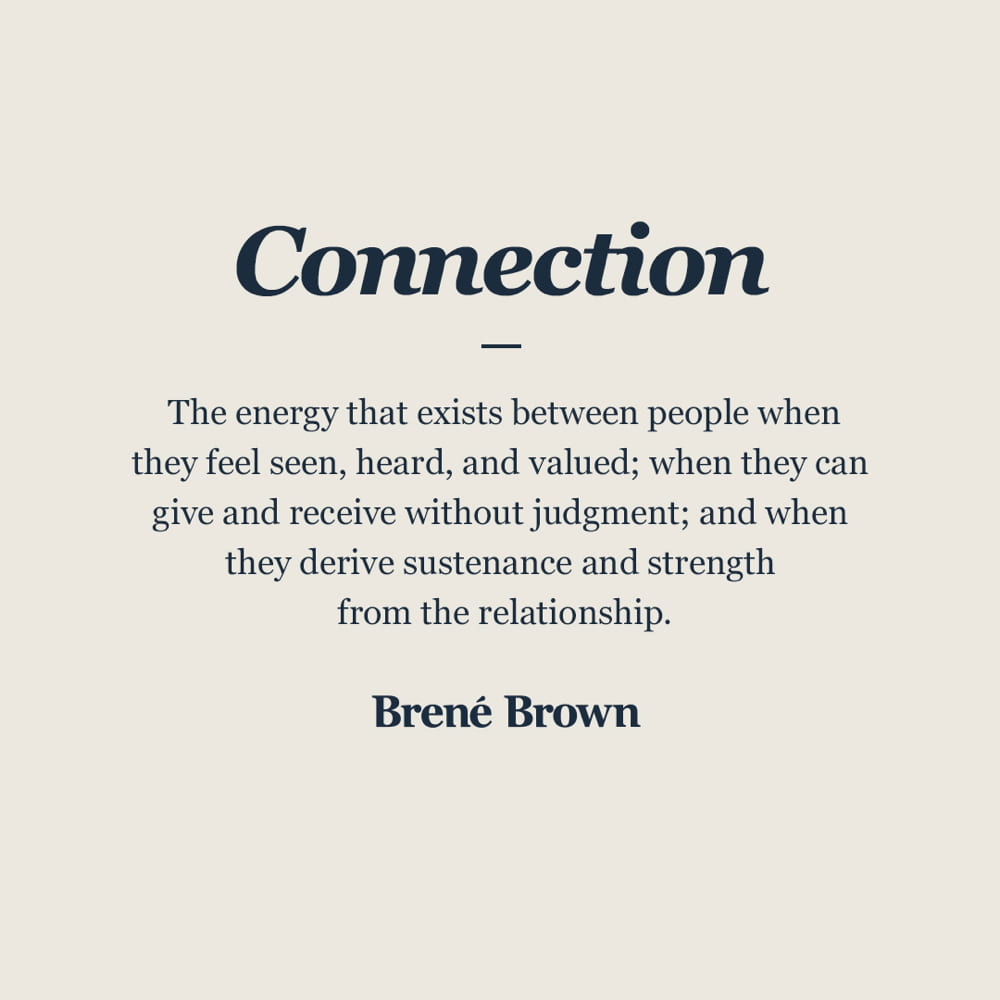
Quote from Brene Brown-Definition of Connection

People don’t usually move out of their comfort zones unless they feel welcome, included, and accepted. Finding a sense of self-belonging within ISTE meant I had to gain confidence and feel accepted for my lack of knowledge about edtech but willingness to learn. I found all of that and more among the ISTE community. Alison Taplay, in a blog post from October, 2018 writes, “(Belonging) is a feeling of connection to others and a connection to place. It means feeling welcomed and accepted. It means feeling safe enough to be me; to show up and contribute! When everyone in a community experiences this sense of belonging, there is a natural shift toward an attitude of taking care of one another.”

GCN Leadership team members 2019-2020

During the year leading up to the 2017 conference, I began to follow others who were involved in edtech and ISTE PLNs. I made sure I received the regular newsletters and updates from ISTE and my ISTE PLNs. I added my name to the Global Collaboration Network and indicated my interest in volunteering for the leadership team; I became an at large member and loved attending the synchronous meetings and supporting the planning of conference activities like the Playground and Scavenger Hunt. I got to know the rest of the team and learned so much from them. In addition, I added my name to the ISTE17 group and learned how to make the most out of the conference (it’s packed with so many things going on at once that it’s easy to get overwhelmed and FOMO if you’re not careful). All of this made me feel valued. Everyone needs to feel valued.

upper right: Leigh, Barbara and me; lower right: Scavenger Hunt team “WonderWomen”

In June 2017 I attended the conference in San Antonio, Texas. ISTE17 was daunting, but I was determined to meet people and make the most of my five day experience. The Badge Summit was my first day. I have always been interested in digital badges as a way to show competency mastery for personal and professional development. I had no idea that I would meet someone I had been following for a while and admired for her knowledge and caring about education and educators. That special person is Barbara Bray. Barbara saw me sitting alone at one of the Badge Summit sessions and, as she told me later, she dislikes seeing anyone sit alone. She joined me at my table and we struck up a conversation. If you know Barbara, you know that it’s immensely difficult to resist chatting with her. She is one of the nicest and friendliest people you will ever meet and so good at networking! After the session finished, she asked if I’d like to join her to attend a special event later that evening. I was thrilled and felt so honored. Here was someone I considered an education icon asking me to join her. I’m quite shy and introverted, so my answer normally would have been, “That’s really nice, but I think I’ll just go back to the hotel.” However, there was something about Barbara that made me feel like we had known each other forever. It was the beginning of our friendship and sisterhood. We’ve been roommates at ISTE since then and keep in touch often even though she’s in California and I’m in Kuwait.

From left: Barbara and me goofing around; upper right: my PLN circle; lower right: passthescopeEDU 4 year anniversary poster

There is something else about Barbara that I want to mention here. She opened doors for me to go through that I never would have had the courage to enter. She connected me with other amazing and caring educators who helped me grow over the past three years. When you’re at ISTE, there are thousands of people around you, but if you recognize someone you’ve been following on social media, time slows down and as you bound across the room to give that person a hug, they welcome you and make you feel special too. Besides the amazing networking opportunities at ISTE, there are a variety of sessions and special events like Flipgrid Live and EdTech Karaoke. But probably my favorite is the GCN Scavenger Hunt. Barbara and I teamed up with three other amazing women, Heidi Carr, Melissa Eddington, and Christy Cate. Even my children were surprised at the things I was willing to do like making a pyramid with the rest of my team (like cheerleaders do), or asking a stranger who sort of looked like me to pose for a photo (in the middle of Chicago’s Chinatown). I don’t think I’ve ever had that much fun!

Upper right: Flipgrid Live 2019; lower right: Jess, Jornea, Ann from Fipgrid selfie with me; upper right: ISTE 2019 sign on Philadelphia Convention Center; lower right: Ilene and Michael Harvey (GCN team) with Misbah and Jamil of Wakelet

In 2018, I became the president-elect of the Global Collaboration Network and just finished my year as President. With so many of our team in different time zones, scheduling synchronous meetings wasn’t easy, but we managed to meet four times and also became active users of Slack (something else I learned about-thank you Simon Helton). ISTE strives to be more international and has members all over the world. They also organize training in the ISTE standards in a variety of venues globally to ensure digital citizenship and equity happens everywhere. Besides stepping out of my comfort zone to join the GCN team and have the courage to network like my mentor, Barbara, I have also started blogging and podcasting about my journey to belonging.

ISTE members welcomed me with open arms and created the opportunity to meet so many awesome people who have made such a difference in my life. Because I feel like I have people I can count on for support at any time, I continue to venture out of my comfort zone. I’m more active on social media and speak out about causes I believe in. I am also learning how to use apps and showing others how to use them. At ISTE, Sharing definitely does mean Caring! A membership in ISTE is a gift that keeps on giving.

My website, podcast, and social media details.

I am not as “woke” as I thought I was

Uplift Town Hall about Black creatives with disabilties

Last week, was a momentous week for me. I learned so much and expanded my knowledge by listening to the voices of other people. My eyes were opened to new ways of looking at different faiths and the precarious world that Black artists with disabilities experience. I listened to those voices while I attended two amazing webinars. The first webinar was an interview of Rabbi David Rosen by founder of the Inter-Heart organization in Kuwait, Nejoud Al Yagout. The second was a series of interviews by Stephanie Thomas founder and CEO of Cur8able with six creatives, Tatiana Lee, Lauren (Lolo) Spencer, Natalie Trevonne, Shaheem, Richard Bell, and Wesley Hamilton. The host and organizer of this truly inclusive event, Marisa Hamamoto is the Founder, CEO, and Artistic Director of Infinite Flow – An Inclusive Dance Company. In today’s post, I want to share my biggest “take aways” from each of these groundbreaking webinars.

Rabbi David Rosen and Nejoud Al Yagout during the Inter-Heart interview

Nejoud Al Yagout is a Kuwaiti author and poet. I recently interviewed her for my podcast, Journey’s to Belonging. She started Inter-Heart because she believes “we are here to befriend one another and absorb the wisdom of each others’ scriptures and engage in love”. Rabbi Brown was the Chief Rabbi of Ireland and the senior rabbi of the largest Orthodox Jewish Congregation in South Africa and is currently the International Director of Interreligious Affairs at the American Jewish Committee. He serves on the board of the KAICIID International Dialogue Center based in Saudi Arabia as the representative of the Jewish faith. In February 2020, Rabbi Rosen attended an interfaith meeting in Saudi Arabia to discuss a way forward for peace and understanding among all religions around the world. Nejoud’s interview was unusual because, although there was a small Jewish population in Kuwait before 1948, there is no longer open representation. Nejoud’s Inter-Heart organization hopes to break down barriers and misunderstandings people have about other religions. Rabbi Rosen was senior rabbi in South Africa during apartheid. It was during this time that he listened and learned how to bring different communities together.

Some of my key “learning” from the hour long interview are:

If I want to be understood, I need to understand others
If God created diversity there must be a reason for it
Interfaith work is a wonderful gift of spiritual significance
We are limited in comprehension to our own place
A holy person is a spiritually modest person
Human solidarity=humanity
Truly spiritual people should be vegan
The more we see the divine in one another, the more we can be better to each other
There is a clear link between racism and religious bigotry
In order to help people understand each other, get them to work together on action projects and joint projects

The second webinar I attended was called Uplift. Marialice Curran (@mbfxc on Twitter), an advocate for assistive technologies, inclusion, and digital citizenship let my PLN know about this wonderful experience. The webinar was organized by Marisa Hamamoto on Zoom. Marisa made sure there were ASL interpreters, closed captions, and that the attendees were aware that we needed to be patient as all aspects were worked out to ensure maximum inclusivity for everyone. In fact, there was a small delay at the start due to technical difficulties since they needed to switch between the two ASL interpreters (Caroline Blaike and Angelie Thomas) and make sure closed captioning worked. After a short delay (Marisa was so gracious the entire time), she introduced Stephanie who spoke about her own struggles in the fashion industry as a Black creative with disability. Then we listened as Stephanie introduced and interviewed an amazing group of artists involved in many different industries and media. Each disability was overcome through perseverance and courage. But there are still obstacles including being the only Black person in the space. Each of their stories was inspiring and shows how I need to be more aware of the challenges related too being disabled and how much harder each of them worked to carve out their unique place in the arts.

The interviews were such a learning experience for me, but I was even more impressed by the amount of effort taken to ensure the Zoom meeting was inclusive and allowed them to express themselves, either through sign language interpreters or closed captioning. I am sure there was a lot more that happened “behind the scenes” to get everyone and everything set for the webinar. I credit Marisa with the idea and her awesomeness at facilitating it all.

After watching Uplift 1, I made a small donation to Infinite Flow an inclusive and innovative dance organization founded in 2015 by Marisa Hamamoto, who survived a stroke that initially paralyzed her from the neck down. Infinite Flow is the first wheelchair ballroom dance company in America. The dancers are abled and disabled. She books groups to visit elementary schools to inspire and educate children about living with a disability. I highly suggest visiting their website (https://www.infiniteflowdance.org) and finding out more.

The current global move of #BlackLivesMatter protests and my own awareness that although I consider myself an ally and “woke”, there is still a lot I don’t know. I am spending this time listening, watching, reading, and learning as I evaluate my own knowledge of inclusivity and equity. I am questioning and being mindful of not getting overconfident that i know as much or more than others with white privilege even though I have #goodancestors. I am also looking for ways I can be more outspoken and supportive to upend the colonialized and institutionalized systems of racism, wherever and whenever it is found.

Screaming on the inside, looking for solutions on the outside

“In the end, we will not remember the words of our enemies, but the silence of our friends.”
Dr. Martin Luther King, Jr.

I cannot remain silent. I will never be silent in the face of racism, prejudice, bullying, discrimination!

I join with all others and scream out to those who contribute to the perpetuation of racism and all other “isms”; READ, LEARN, THINK, REFLECT.

I will speak out against racism wherever and whenever it happens; in America or Kuwait or Europe or…

I lived through the 1960s and remember the backlash against the Civil Rights movement. I remember the riots and rhetoric. It was a significant time in my life and my parents were highly involved in searching for solutions and speaking up. If I stay silent now or ever, I will be disrespecting their legacy. A legacy of tolerance, justice, understanding, and activism.

My father was a Superintendent in the New York State Department of Labor for the Western New York area. His job included seeking job opportunities for minorities (so labeled at the time) and ensuring equality in hiring practices. A trained lawyer, my father was a volunteer at the Buffalo Volunteer Law Project after he retired from public service and represented clients who couldn’t afford representation. He and my mother were members of the National Association for the Advancement of Colored People (NAACP) whose mission is “to secure the political, educational, social, and economic equality of rights in order to eliminate race-based discrimination and ensure the health and well-being of all persons.”

My family and I regularly discussed issues of race and racism and religious discrimination at our dinner table. We were acutely aware of the latter because as a Jewish family in a majority Christian neighborhood, we advocated for equal representation at school music concerts and to have our major holidays recognized as legal holidays.

My mother was a political activist as early as the 1950s. After moving to Buffalo from Long Island, she became involved with the original group that formed the National Women’s Political Caucus. She enrolled in the first Women’s Studies course at SUNY Buffalo in 1971; Women and Contemporary Society. But we also knew we were privileged. We had a roof over our heads, food on our table, clothing to wear, and went on to enroll in university. Stories that my parents told us, were examples to my siblings and me that we had to be aware there were many who weren’t advantaged like we were.

In years past, people asked if we remember where we were when we heard the President John F. Kennedy was assassinated. Yes. I remember where I was on November 22, 1961. I also remember where I was when I found out that Reverend Martin Luther King Jr. was assassinated on April 4, 1968. Hearing the recording of his “I have a dream” speech still makes me cry. Why? Because racism is still prevalent in this world; after more than 50 years of struggle and sacrifice by many!

So what is my message to everyone today? Read, listen, and learn about the history of racist behaviors and racism in the world. Find ways to support causes that work towards equality and against racism. Think about how we lose our own humanity each time someone is threatened, bullied, discriminated against, or murdered because of their race or religion or gender, or ethnicity.

Why does it matter to me? Other than it is embedded in my upbringing, my immediate family includes different religious faiths, gender identities, ethnicities, and skin colors. I was raised Jewish, but converted to Islam before I got married in 1984. My marriage is intercultural and inter-racial. My children are biracial and brown. My sons-in-law are biracial Hispanic and American heritage. My daughter-in-law has Arab roots that also include Jordanian-Palestinian. Has it been easy to live as a family with so many different races, faiths, and ethnicities? Hardly. But each member, including my parents, my siblings, my children, their spouses, and their cousins have worked very hard to recognize that we are still family. We respect each other and hold each other equal. But most importantly, and this includes ME, we listen to each other and continue to learn from each other about our different faiths, ethnicities, gender identities, and race.

On a professional level, as a third grade teacher, I encountered perceived racism in my classroom between students of different Arab heritage. One of my students was very upset and told me she felt excluded when her classmates were outside at recess or working on group activities. Although I didn’t observe these behaviors, I relied on her feelings about the situation and not my assessment of what I thought was or wasn’t happening to her. She felt excluded during activities from the majority of students. She believed she wasn’t included because she was different. I included team building activities in my planning and made sure to manage groups during independent work times to ensure everyone felt included and valued. I also checked in with my students individually to make sure each was comfortable in our classroom.

I had another encounter with racism as director of a foundation program at a private university. A student came to my office and asked to move to a different section. When I asked her the reason for her request, she told me she was receiving messages from other students that made her feel unwanted. I spoke with her instructor who told me there was some interaction among her students that led to a misunderstanding but she was handling it. However, after the second incident was reported to me by the same student, I went into the class, with the instructor’s and student’s permission, and spoke with the whole class. I used examples from my own life; that when I was a student, I felt different and it impacted my ability to learn. We sat and discussed how to make things better for the student who felt marginalized and how to ensure inclusivity and awareness of how our behaviors negatively affect others.

I write and speak about belonging and how children can feel isolated like an outsider if we aren’t aware of the dynamics different races or socio-economic levels create among our students. We must listen and find out how students are feeling. We must act to minimize and eliminate barriers to learning due to racism or any other type of “ism”.

And one final note about words and speaking out: A few months ago, I replied to a tweet by shea martin (@sheathescholar) with the intention of supporting them because I asked them to explain. One of their friends on Twitter replied to me that I should take responsibility for finding out about the topic and that it was exhausting for shea or any other person experiencing a lack of understanding about their race, gender, faith to continuously have to educate me and others. Of course, I apologized and have since done more reading about the topic of gender identity. The reason I mention this here is to underline my responsibility and our responsibility as a community to read and research about gender identity, race, religious faith. I’ve seen quite a few posts this past week reiterating that it is the responsibility of each and every one of us who is privileged to find out more, read more, do more to know more and better understand how to be anti-racist and become an activist by speaking against racism and all the ‘isms’. I am constantly learning.

I am including some links to resources but there are many others.
https://www.leadingequitycenter.com
https://www.goodgoodgood.co/anti-racism-resources
https://www.naacp.org/about-us/game-changers
https://www.history.com/topics/black-history/civil-rights-movement#section_8

Trauma informed practices and social/emotional protocols for returning to school

Photo of pre-school children sitting on the playground in a square designated by chalk lines on the ground. Each child is seated separately.

“The fear of these past few months as Covid-19 has taken over the world will no doubt take some time to get over. Hesitance to return back to normal too quickly is likely a normal reaction, therefore. Aside from the health factors at play, however, we have a real chance now to build back better, rather than to rush back to normal.”

As the school year finishes in many parts of the world, begins in others, and is contemplated and speculated about, my sole concern is about the social and emotional effects of it all. How are we going to cope with the past few months of curfews, stay at home, lockdowns, and an uncertain future? Are we prepared to discuss and deal with it? How are we going to make sure we are all comfortable and feel secure in a totally different school environment than the one we used to know? I’m not so sure. I hardly hear or read of any plans for training educators in trauma informed pedagogy or even focusing on how traumatic this time has been for everyone. I am worried; worried that we will be taking care of the “not getting COVID-19” part of the return to school, but not the social and emotional trauma it has caused. And that means we will try to “do school” with physical distancing and wearing a mask but immediately go back to teaching content that we assume has been lost over the past five months.

We are in an emergency situation that is ongoing and very traumatic. There will be long lasting emotional effects on us all and especially on our children. In fact, just the thought of students going back into a classroom that has them spaced six feet apart, requires them to wear a mask, wash their hands frequently, and eat alone makes me wonder how we can ignore the social and emotional discussions that need to happen before any learning can start. I have failed to read an article about reopening schools anywhere in the world that places emphasis on how they are going to deal with the emotional toll of COVID19 situation on teachers, administrators, parents, and students. Many are concerned about what school will look like, the cost of the “new normal”, and the economic consequences in capitalist societies of not getting back to school so parents can get back to work. I think we need to change our priorities. We should begin looking at trauma informed practices and social/emotional practices for teachers to learn and practice with their students when and as schools reopen.

“MOEs also need to anticipate and prepare for additional challenges resulting from the direct and indirect consequences of COVID-19 and prolonged social isolation, on both the education system and on the school community. These include learning loss, increased risk of dropout, the exacerbation of existing and new inequalities, and the loss of education personnel. UNESCO has been monitoring education responses to COVID-19 globally, collecting and analyzing information and facilitating policy dialogue and experience sharing. Key policy issues include the timing, the conditions and processes for school reopening. The effectiveness of these policy decisions and reopening strategies will depend on the level of preparedness of the education system in terms of infrastructure (health and sanitary measures); teaching staff (ability to provide both psychosocial and academic support); pedagogical preparedness (offering remedial action and alternative modalities to meet learning objectives); learners, families and communities (ability and willingness to return to school and readiness to continue learning.” https://unesdoc.unesco.org/ark:/48223/pf0000373401

I’d like to provide some resources for administrators and teachers to consider as they plan for return to school or as they review what is already happening as school reopens.

One excellent resource is from the Center for Social Emotional Learning (CASEL). As part of their CASEL Cares initiative during COVID-19, resources have been collated and created specifically to address the current crisis. In its initial guide, Leveraging the Power of Social and Emotional Learning: as You Prepare to Reopen and Renew Your Community, the authors offer a framework with guidelines for the community, with all stakeholders represented, to prepare a comprehensive plan for returning to school.

“While much uncertainty surrounds how and when school will reopen, we know that social and emotional learning (SEL) will be critical to re-engaging students, supporting adults, rebuilding relationships, and creating a foundation for academic learning. This unprecedented shift to a new type of learning experience may have a lasting and profound impact on young people’s academic, social, emotional, and life outcomes. School leaders will need to bring together administrators, teachers, school staff, families, youth, and community partners to co-create supportive learning environments where all students and adults can enhance their social and emotional competencies, feel a sense of belonging, heal, and thrive (p. 3).”

On page 4, they note that “(t)he guidance below is organized around four critical actions, which are adapted from what we have learned about systemic SEL in collaboration with researchers and practitioners:

4 critical actions CASEL.org suggests based on researchers and practitioners for returning to school after COVID-19

Each critical action is then described in detail including how all stakeholders can put it into practice. In addition, links to related resources are provided. Although this framework was created with a focus on the United States, all school systems can benefit from this research and practice based guide.

Another important source of guidance for coping with the COVID-19 effects on the social and emotional wellbeing of parents, teachers, and students is the Inter-Agency Network for Education in Emergencies (INEE.org). The work of the INEE spans over many years and supports the United Nations Sustainable Development Goal-SDG #4 promoting the fundamental right to education for all. While its work is primarily focused on marginalized populations including refugees, there is a wealth of ideas and research based on practice in the field that can be applied to the current situation related to COVID-19 since it is “emergency education” we are dealing with and not “business as usual”.

The advocacy brief recently released by the INEE, “highlights some of the potential impacts of school closures on children, with a focus on the most marginalised, including those already living in crisis and conflict contexts. It provides recommendations for governments and donors, together with partners, to ensure that safe, quality and inclusive learning reaches all children and that education systems are strengthened ready for the return to school.” (https://inee.org/system/files/resources/Learning%20must%20go%20on%2C%20COVID-19%20advocacy%20brief_v20200409.pdf)

The INEE also has a specific set of resources including webinars that focus on education during COVID-19. “Schooling may stop, but learning must not.” https://inee.org/covid-19

Modeling empathy and creating a sense of belonging

Empathy has no script
poster courtesy of Veronika Tait

This week I will be doing a live IG with my very good friend and former work colleague, Eva Al Qallaf. Eva is the founder and CEO of Parentool, a consultancy for supporting parents with courses and good advice. She and I have previously chatted about the importance of play for young children and received many terrific responses. This week’s topic is empathy and how we can ensure our children learn about their own feelings and understand others’ feelings. At a time in history when empathy is needed more than ever, I decided to write about how we can model empathy for our children, students, and colleagues thereby increasing our feelings of belonging.

Rarely does an empathic response begin with “at least”. -Brene Brown

Brene Brown describes four qualities of empathy: perspective taking, staying out of judgement, recognizing emotion in other people and then communicating that we have recognized it. She tells us that, “being empathic makes us vulnerable because we have to connect to our own emotions. What makes something better is connection.” And when we have those connections, we feel a sense of belonging. This sense of belonging is necessary for our survival and our sense of well-being. We cannot help others and ourselves if we don’t feel a connection with them. So how can we model empathy? Let’s look at each quality Brown mentions separately.

Perspective taking:
In order to see someone else’s perspective, we first need to be open to seeing and hearing different points of view. According to the socially skilled kids website (https://sociallyskilledkids.com/perspective-taking), “you must have some understanding of others’ thoughts, feelings, motivations, and intentions. You must also have some background information about the other person or be able to make some smart guesses about their background and or how they experience the world.” Their suggestions for four parts of successful perspective taking are-
Set aside your thoughts, feelings, motivations & intentions, momentarily
Consider others’ thoughts, feelings, motivations & intentions
Determine whether or not your behavior should change based on that information
Make any necessary changes

So how do we model that for others? First, we can use opportunities to show others how we think about another person’s perspective. For example, I prefer listening to music from the 1970s but my friend likes classical music. Instead of arguing that my music choices are better than hers, I can ask her why she listens to classical music; how it makes her feel, what is her knowledge of this music, and listen as she tells me her point of view. As I find out more about her perspective, I have a greater appreciation of her preference. So I have (1) stopped thinking that 70s music is the only music we should listen to by setting aside my feelings as I listen to her. That doesn’t mean I have to agree with her. (2) I am showing her that I am considerate of her feelings and ideas. (3) I can try to listen to classical music and decide whether I like it also, and I can add it to my playlist if I want to.

Staying out of judgement
This is a tough one for many of us, especially parents. If a child comes to us with a problem or is feeling upset about something and we ask them to share it with us, we must be ready to react calmly and not show our own judgement of their situation. For example, if a child shares that a classmate was mean to him/her, we must hold our reaction until we fully listen to our child retell what happened. We must validate their feelings and guide them towards a solution. We must also realize that the child may have left some parts of the story out, so questioning for more detail is helpful and also models for them. Listening when your child is upset or crying is not easy. We immediately want to “fix” the problem by telling the child what to do or deciding what we are going to do. However, this isn’t helpful because he/she isn’t able to overcome a similar situation in the future. They will be forever dependent on our solutions.

Recognizing emotion in other people AND Communicating that we have recognized it
The last two characteristics are connected to each other. As I mentioned above, we must listen closely when others are explaining their feelings to us. This validates how they are feeling which encourages them to share and ensures continued dialogue. Once we have listened to them, we need to give them feedback that they’ve been heard and that we understand how they feel even if we don’t agree or wouldn’t react in the same way.

When parents offer their children empathy…
Courtesy of Veronika Kait

As a parent, this is the ultimate test of our ability to model problem-solving and empathy. I have many examples from a lifetime of helping my children while they were growing up and still at home. One example that stands out is when my younger son was left off the soccer roster at school. He came home that day and I remember clearly how sad he looked. I asked him what was wrong and he told me that he had gone to the JV soccer tryouts and had done quite well (he was a very good soccer player). Since he had been on the team in elementary school, he thought that would also help his chances to be on the team even though he was younger than some of the other boys trying out. But he had looked at the list after school and his name wasn’t on it. I could already feel myself jumping to conclusions, making judgements, and figuring out how to solve this problem, but I told myself that this wouldn’t be helpful.

I asked him how he was feeling and he told me he was very upset because one of his classmates, who happened to be the son of the school activities director (and the soccer coach) did make it on the team. Again, I had to stop myself from offering up what I would do and listened as he continued to tell me that he would stop playing soccer as a school activity and would play on the weekends with his friends. I was so tempted to tell him I was prepared to go in and speak to the coach, but instead asked him if he wanted his father or me to meet with the coach and that I respected his decision. He said that he didn’t want to be on the team if this is the way the coach handled things, and I repeated that I understood how he felt and respected his decision.

Many years later, my son and I had an opportunity to chat about this experience. I shared that I believed it stopped him from playing a sport he truly loved, but he repeated that he didn’t want to play if there was a lack of fairness in how decisions were made. I told him how much I admired his courage to choose what’s right over what he really wanted.

My examples of modeling the four characteristics of empathy show that it cannot be taught. It isn’t a course in a classroom, but a lifetime of watching how others behave in ways that value others’ feelings, show our understanding of those feelings, even when we might not agree, and then telling others that we understand how they are feeling. Modeling empathy is a daily and constant practice: we must walk the walk as we talk the talk and if we make a mistake, we must own it and move on. Our children are watching us; our students are watching us. Let’s be an example for them to emulate.

Why wearing a mask doesn’t take away your freedom

The state of Georgia allows businesses to reopen
Photo courtesy of NBC News

On May 9th, the Kuwaiti government announced a total lockdown from May 11 at 4:00 p.m. (AST) until May 30, 2020. We are only allowed to leave our homes to go for a walk from 4:30-6:30 p.m. daily but must wear a mask, observe physical distance protocols, and stay within our residential area. One person per family will be allowed to shop for groceries every six days and must make an appointment to do so.

Some readers may be thinking, “Wow! That sounds very restrictive!” The truth is, these rules are very restrictive. At least with a curfew (which we had until Sunday at 4:00 p.m.), there were eight hours of freedom to move outside your residence (for those who weren’t in home quarantine, like me). So this may sound pretty scary for some. However, let’s look at the bigger picture. Let’s think about the “Common Good”, the community, and others. COVID 19 cases have increased dramatically in the past week in Kuwait. Some violations of the curfew were observed and people arrested. People who gathered, in spite of the recommendations of authorities and experts, infected others. At some point, someone has to say “PAUSE”! In a country of less than five million people, 400-600 new COVID19 cases in a day are way too many.

Medical staff leaving after their shift at the Mishref Fairgrounds testing center
Photo courtesy of Al Arabiya news


I am not saying I am excited about the decision. I don’t think anyone is happy to have their freedom of movement taken away or to be restricted from seeing others outside of their homes. But these are unusual and difficult times. Sacrifices must be made by ALL; not just the essential workers and frontline workers. We need to begin thinking as a community. We need to think of each other. We should be doing this all of the time, but unfortunately, many people haven’t thought of others in a long time. This is apparent from those who refuse to wear a mask even after evidence has clearly shown that it will reduce the transmission of the virus. It’s apparent from the protests about the restrictions imposed on them due to the virus. As I stated above, it’s not something I would choose either, but at times of crisis, we all must make sacrifices if it is for the common good.

Traveling back to Kuwait. Mask on. and ready.

I’m not here to criticize people who are not following the guidelines. I’m not here to call out people who are frustrated and just want to be “done” with this crisis. I am hoping to highlight those who are doing what they are being asked to do. We don’t hear that enough. I’ve been in home isolation for two months; six weeks with my 95 year old mother in Buffalo, NY and 16 days of 28 total days in Kuwait. I’d love to be able to go outside, but I listen to the evidence and the data which clearly shows how contagious COVID19 is. So I continue to stay inside to make sure my mother is safe and my husband is safe. It’s the least I can do. I also want to make sure my friends and other family members stay healthy. I traveled 11 hours on a plane and wore a mask for all 11 hours. The staff wore full body hazmat suits for the entire time. I just wore a mask. Were we comfortable? Absolutely not! Were we keeping ourselves safe and others around us safe also, absolutely, Yes!

We won’t be able to go back to the way we were before the pandemic, and those who think we can do so right now, are seriously mistaken and misinformed. Just because I want my freedom to go out without a mask, walk into a nail or hair salon, gym, supermarket, restaurant, or anywhere doesn’t mean this is what I SHOULD do. If I was in the middle of a war or natural disaster, I’d have to assess the situation and decide what to do to remain safe and how to keep my family, friends, neighbors, and community safe. This crisis is not different from another type of emergency.

https://rifnote.com/2020/04/24/meet-the-icu-nurse-who-silently-stood-in-protest-at-rally-to-reopen-arizona/


The Oxford dictionary defines “empathy” as the ability to understand and share the feelings of another. I’d like to add that empathy is the ability to understand the situation of another. Perhaps it’s not enough for us to put ourselves in another’s shoes. Perhaps we need to live that life of another before we can understand what they are going through. Doctors and nurses all over the world are telling us we need to wear a mask and practice physical distance based on what they are seeing daily in their work with COVID19 patients. When we hear about reopening businesses without being able to require such measures, we should all be worried. We all want our freedom to choose, but sometimes we must choose what is right for our community (the Common Good) and not what we as individuals want. If we have any hope of stopping this pandemic, we must work together. We must all be on the same page. We must all view the Common Good as something that is good for us all.

Thank you to all who are working, volunteering, and sacrificing for the rest of us. Let’s make sure their efforts are not in vain.