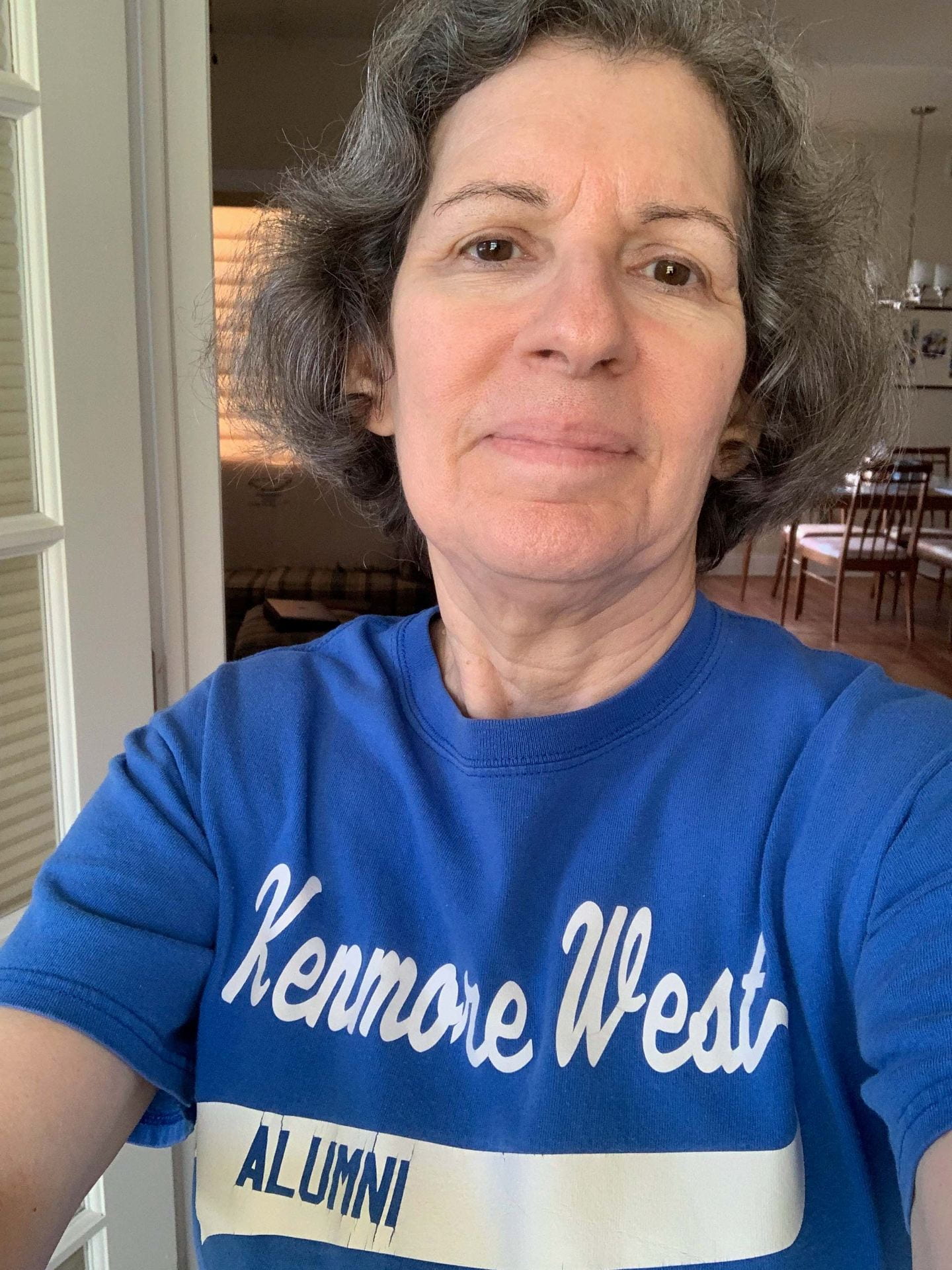
I couldn’t wait to graduate from Kenmore West High School, so I took classes during summer school and had enough credits to graduate a year early in 1973. Most of my classmates graduated the following year. I never felt a sense of belonging while I was in school as a shy introvert. So you might be surprised if I told you that one of the highlights of my trips back to my hometown, Buffalo, New York is dinner with some of my former high school classmates. Let me explain…
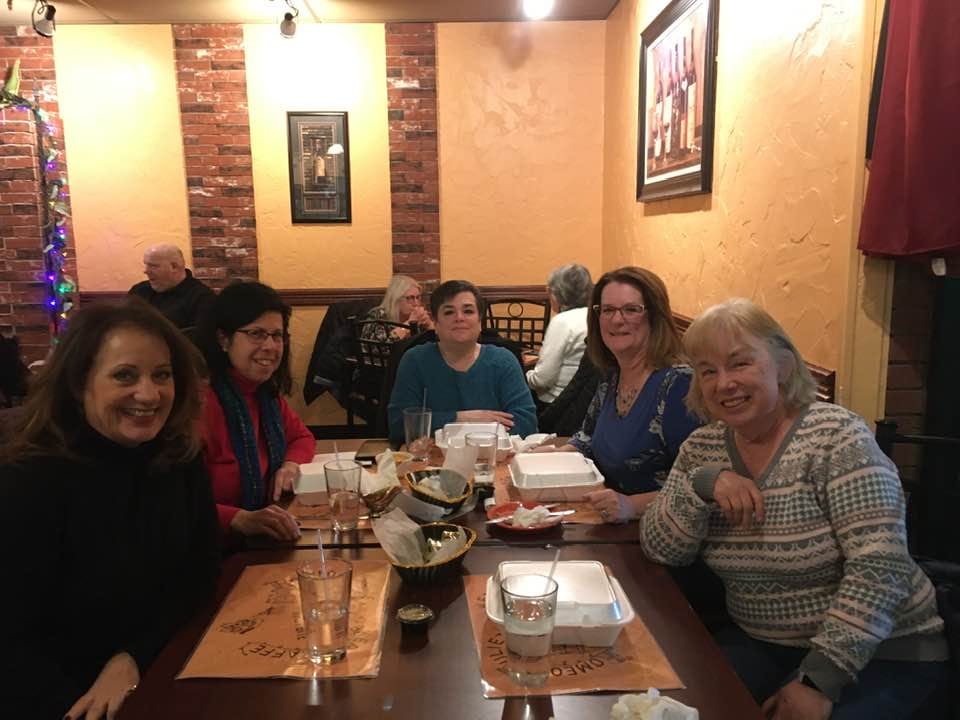
About 17 years ago, one of my classmates, Helene Campton, returned for a visit and to attend our high school reunion. During her visit, two other classmates, Karen, and Pam went out for dinner with Helene and during their conversation, discussed the idea of a monthly dinner with friends from high school. They have been getting together almost every month since. Each month, except during the pandemic, Karen sends an email to everyone on the list, and those who are able to meet for dinner RSVP so she can reserve their seat at the table. The venue and date for the next meet-up are chosen at the end of the previous month’s gathering since they meet at a different restaurant each time. I think there are twenty names on the list but some have moved away and aren’t able to join each month. When they’re in town, Karen makes sure to arrange the date to suit the visiting alumni, including me. I think I’m the one who moved the farthest away, but we’re all able to keep in touch by email.
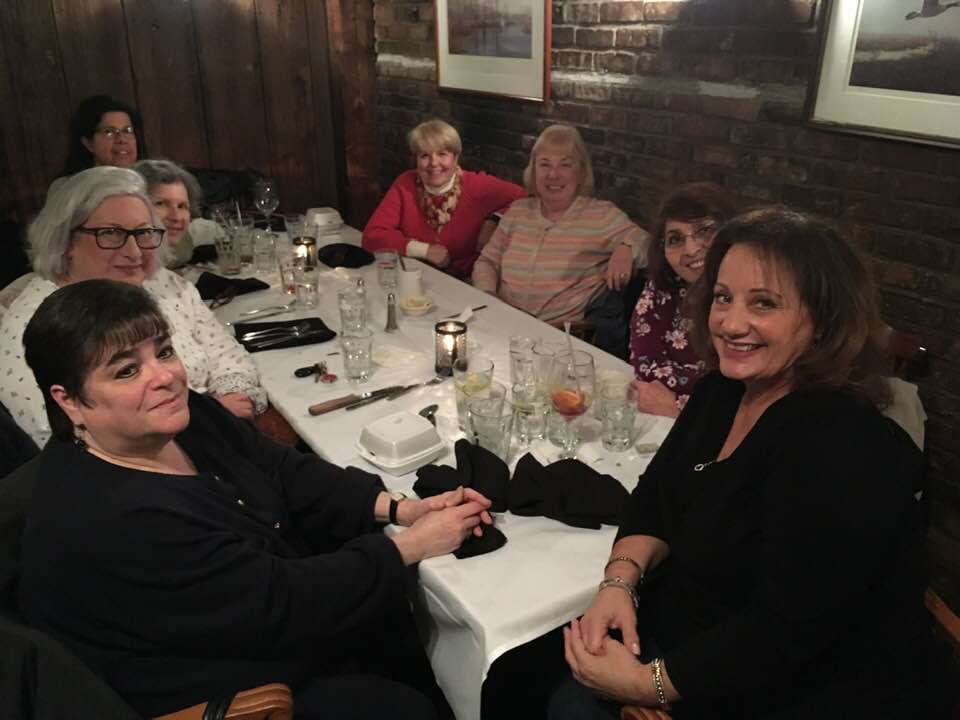
November 2019 KenWest meet-up
Every time I visit, I do my best to arrange my schedule to be sure it includes at least one Kenmore West High School meet up. I’m always greeted warmly by all the ladies and we go around the table catching up on everyone’s news. My post-pandemic visit was no different. I received the warmest reception and they truly made me feel like I’m an integral member of this empowered and empowering group of caring and kind women. As we now enter the “I’m retired and applying for Medicare” phase of our lives, conversations focus on planning for days without work obligations, grandchildren, and how great we look as we age (minus the occasional illness or body part pain).
They say, “Home is where the heart is,” and although I didn’t have that feeling when I was in high school, I can say it now. I am filled with gratitude and feel blessed to have lived and learned that life isn’t static. Just because we had a certain feeling or experience in the past, doesn’t mean we have to repeat it later on. It means that when we look for opportunities with eyes wide open and feel a sense of belonging, we can find friendships through relationships with people we knew in our past, people like my high school classmates who share their joyful moments along with the sad times; month to month and year to year.
Summary of assumptions about Abraham Maslow’s hierarchy of needs and the reality
I have written several posts and an article about misunderstandings related to Abraham Maslow’s hierarchy of needs including the pyramid that he never sketched. I have also mentioned the influence of his research, those of his contemporaries, and the indigenous teachings of the Blackfoot Confederation after Maslow spent the summer of 1938 with them doing fieldwork on his work that contributed to him modifying it over the years. I am now in the midst of editing my upcoming book about belonging and after posting my last article about the topic, I received comments from distinguished educators Ken Shelton and Barbara Bray that pushed me to dig deeper into the influence the Blackfoot teachings had on Maslow and his hierarchy of needs. I’m putting my findings into an order that makes sense to me and hopefully, my readers while giving credit to the experts who have thoroughly researched Maslow’s published and unpublished writing with a particular focus on the Blackfoot teachings. Today’s post is only a portion of what I’ve pieced together based on my searches.
Abraham Maslow is considered the founder of humanistic psychology that focuses on the whole person and includes self-efficacy, maximizing our potential (self-actualization) that leads us to wellbeing. Maslow’s hierarchy of needs is a motivational theory in psychology and comprises five tiers: the most basic human needs are physiological (food and clothing), then safety (job security), love and belonging needs (friendship), self-esteem, and self-actualization. The needs are explained in more detail in this article.
Those who took a course in psychology have probably learned about Abraham Maslow’s hierarchy of needs, but they might not be aware that Maslow did not visualize his theory of motivation as a pyramid. According to Scott Barry Kaufman, in his book, Transcend (2020), the pyramid and hierarchy of needs were created by a management consultant in the 1960s and became popular in organizational behavior courses at business schools. Since he didn’t create a pyramid, there is no basis to believe the Blackfoot tipi was turned upside down by Maslow.
Blackstock graphic of Maslow’s pyramid next to Blackfoot tipi
In a recent interview by Scott Barry Kaufman in the journal, Scientific American, Todd Bridgman, Stephen Cummings, and John Ballard answer questions about the article they published in 2019 in the Academy of Management titled, “Who Built Maslow’s Pyramid: A History of the Creation of Management Studies’ Most Famous Symbol and the Implications for Management Education”. After a thorough search of Maslow’s writings and how Maslow’s theory appears in management textbooks, Bridgman, Cummings, and Ballard came to the conclusion that several management textbook authors during the 1950s and 1960s were responsible for a simplified version of Maslow’s theory and the creation of a pyramid to explain his theory to management students.
The pyramid isn’t the only misunderstanding or simplification of Maslow’s hierarchy. It is generally thought that Maslow believed the needs were linear and each had to be fully met before people could move on to the next. However, according to Maslow, “The human needs are arranged in an integrated hierarchy rather than dichotomously, that is, they rest one upon another. . . . This means that the process of regression to lower needs remains always as a possibility…” (Kaufman, p. xxviii)
Another misunderstanding about Maslow’s hierarchy of needs is how much influence his time with the Northern Blackfoot in Alberta, Canada had on his hierarchy. He spent the summer of 1938 with them as part of an anthropological study, and his field notes show his awareness of the differences between his upbringing and the one he observed. “Nearly all of the Blackfoot, he discovered, displayed a level of emotional security that only the upper percentiles of the U.S. population reached, and Maslow attributed this in large measure to the Indians’ emphasis on personal responsibility instilled from early childhood.” It seems that Maslow’s 1938 fieldwork research moved the direction of his interest to find the core of humanism, but his theory was also influenced afterward by leading psychologists of his time and his research. Therefore, we don’t really know what influences the Blackfoot society had on his work since there were so many other influences on him. We do know there should be more outward recognition of the Blackfoot influence and it should be explicitly stated.
Maslow “was concerned with creativity, freedom of expression, personal growth and fulfillment – issues that remain as relevant today in thinking about work, organizations, and our lives as they were in Maslow’s time. We think there’s an opportunity to create a new Maslow for management studies by returning to Maslow’s original ideas.” Maslow wondered, dreamed, and believed every person had the ability to reach self-actualization, but he searched all his life for what the motivation was. In fact, he became tired of average and believed all humans can reach self-actualization. Maslow believed we all have the potential to excel at our work whether we are talented musicians or menial laborers. “Maslow never proclaimed even the best people to be anything but human, susceptible to all-too-human flaws; but that did not mean he hoped for anything less than the remarkable for everyone. The essential question was not what made Beethoven Beethoven, but why everyone is not a Beethoven. Maslow was not his own dupe and knew well that musical or any other artistic genius is not bestowed equally, but he did hold that every person ought to be able to excel and find fulfillment in his work, whatever it was. Any work done with mastery possessed high dignity in his eyes.”
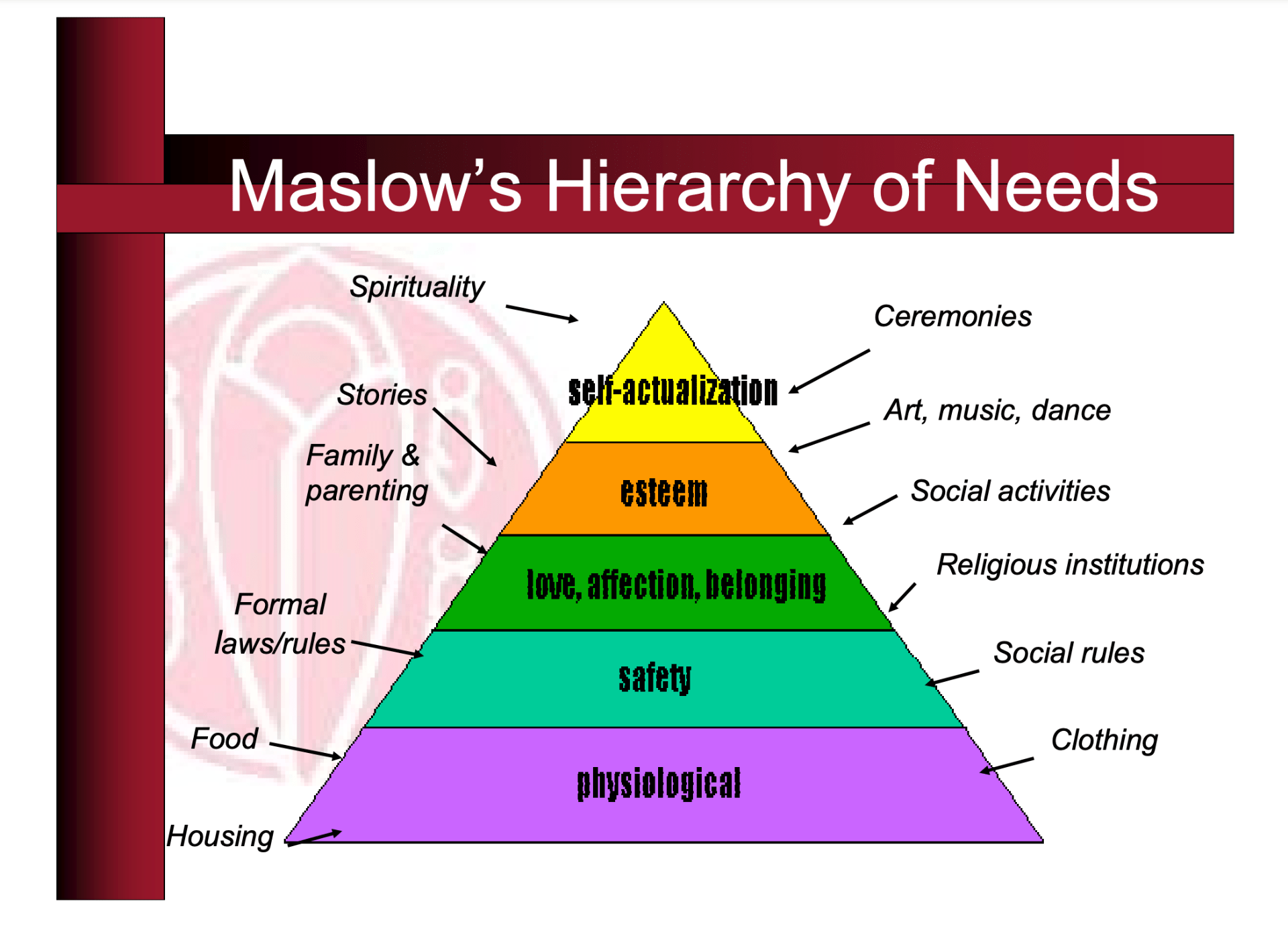
In 2007, Professor Terry Cross, a member of the Seneca Nation and founder of the National Indian Child Welfare Association (US) presented a keynote address, “Through Indigenous Eyes: Rethinking Theory and Practice”. He began the speech with an interpretation of Maslow’s hierarchy of needs in terms of indigenous culture and society and the different world views or collective thought processes of people (see graphic below from his PowerPoint slides)
Cross told the audience that the Western European and American worldview is linear while the native or tribal worldview is balanced and relational. In the Western worldview, time is linear. In the tribal or Native worldview, time is circular or cyclical. He also noted there are differences in each of the worldviews’ theory of change. For Westerners, change is the result of cause and effect while in the relational worldview “change is a constant, inevitable, cyclical, and dynamic part of the human experience that occurs in natural, predictable patterns and can be facilitated to promote desirable and measured outcomes.” (Cross, 2007) In 2011, Dr. Cindy Blackstock, a member of the Gitksan First Nation cites Cross’s work with worldview. In her article, “The Emergence of the Breath of Life Theory”, Blackstock “assumes that a set of interdependent principles known as the relational worldview principles (Cross, 2007) overlay an interconnected reality with expansive concepts of time and multiple dimensions of reality.” Although I haven’t studied earlier references to worldviews, I can see there is a focus on the needs of indigenous communities by researchers within those communities. There is a realization that in order to ensure the well-being of indigenous people, the lived experiences of those looking for solutions should have a similar worldview. In 2014, Karen Lincoln Michel attended a lecture by Dr. Blackstock where she referenced Maslow’s hierarchy of needs and the pyramid. She also bemoaned the lack of credit given to the Blackfoot by Maslow. It seems that until 2019, the pyramid was still associated with Maslow’s work.
Scott Barry Kaufman spent years researching Maslow’s work including unpublished letters and papers. In his book, Transcend (2020), Kaufman notes that Maslow understood there was no linear path to achieving self-actualization. His notes show his belief that people flow in and out of the different levels depending on their life circumstances and experiences. He also confirms that Maslow did not visualize his theory of motivation as a pyramid. It was indeed created by a management consultant in the 1960s.
After Blackstock’s essay was published in 2011, more people began writing about Maslow’s privileged use of Blackfoot teachings without giving them due credit. I have seen an awakening to the discussion, but I believe we’re missing an opportunity to focus on what we can learn from indigenous teachings instead of only criticizing Maslow for not recognizing where he may or may not have taken some of his ideas from and leaving the discussion at that point. I believe we can truly honor and recognize the indigenous teachings by learning about their worldview and their lived experiences.
There is so much to be learned from indigenous communities about living a fulfilling and satisfying life, but I will only touch on each one and provide references and videos for those interested in delving deeper.
The Emergence of the Breath of Life Theory (2011) by Dr. Cindy Blackstock
Breath of Life Theory: “(T)here are significant differences between First Nations* and western worldviews particularly in relation to time, interconnection of reality, and the First Nations belief that simple principles often explain complex phenomena such as the universe or humanity. The basic premise of the theory is that structural risks affecting children’s safety and well-being are alleviated when the relational worldview principles are in balance within the context and culture of the community.”
According to Native American child welfare expert Terry Cross in “the relational worldview model (Cross, 1997; Cross, 2007) the principles are categorized in four domains (cognitive, physical, spiritual, and emotional) of personal and collective well-being:
COGNITIVE: self and community actualization, role, service, identity, and esteem
PHYSICAL: water, food, housing, safety, and security
SPIRITUAL: spirituality and life purpose
EMOTIONAL: love, relationship, and belonging
The breath of life theory (BOL) predicts that, if the relational worldview principles are out of balance within the framework of community culture and context, then risks to the child’s safety and well-being will increase. BOL also suggests that child welfare interventions geared toward restoring balance among the relational worldview models principles will result in optimal safety and well-being for the community and their children.”
“Transformation Beyond Greed: Native Self Actualization” (2014) by Sidney Stone Brown
Sidney Stone Brown is a member of the Blackfeet Nation of Montana and currently the Behavioral Health Director of the Navajo Nation Department of Behavioral Health Services. Stone Brown notes in her address to the American Psychological Association in 2016 that “Foundational to Maslow’s hierarchy of needs theory is the idea – if we meet basic needs it will lead to peak experiences, authenticity, and dignity. So why don’t some individuals become actualized when their basic needs are met? This was a question Maslow searched for also. Stone Brown asks, “Could it be the insecurity of the society in which the individual lives?” Native Self Actualization occurs in a collectivist society while Western society is an individualist society.
Stone Brown was aware of Abraham Maslow’s view of self-actualization as a human need and the influence of his visit to the Blackfoot community in 1938. In fact, she requested access to all of his archives to ensure she was accurate in her portrayal of the work he did based on his visit. “When Maslow was on the Blackfoot (Siksika) Reserve in 1938, he learned from the young and old that giving back is not threatening to progress or wellbeing. Giving back protects the next generation. It prepares each person for their spiritual purpose and allows each person to become spiritually actualized. Peter Little Light, Blackfoot Medicine Man, would have spoken of these ways to Maslow, according to his step-grandson Clement Bear Chief, to convey to him the Blackfoot worldview. Maslow must have learned of the Blackfoot worldview about the purpose and meaning of life. And according to this worldview, becoming whole always involves service to others, putting others before ourselves.” (APA presentation. 2016)
Stone Brown’s work over the past twenty years includes creating and validating the Native Self Actualization Placement Assessment (NSPA). The NSPA is based on two major worldviews (traditional and contemporary) and is used for behavioral health services. Cultural worldviews represent the way a person views and relates to others. As she states in her speech to the APA in 2016, “Honoring all within the context of each person(s) unique mixture of traditional and contemporary skills allows each person to find their personal meaning for life.” You can find more information about Sidney Stone Brown, the NSPA, and her book on her website.
I will leave you with two final thoughts. First, from Kay Sidebottom:
“Why do we continue to ignore indigenous wisdom on which many of our educational theories rely? Along with the Blackfoot nation, which other thinkers are we failing to acknowledge in our teaching? What might happen if we begin to privilege other ways of knowing and being in the world? And – how can educators truly work to decolonise their curricula within neo-liberal systems which permeate and reinforce colonist practice? Taking a restorative approach requires us to explore these questions with humility, honesty and the willingness to confront our own role in the denial and promotion of colonialist practices. It asks us to be truth-seekers and to provide space for healing, for those who have been harmed by our systems.” (2019)
And finally, from Dr. Cindy Blackstock:
“It’s understanding one’s place in the world and acknowledging it. It’s realizing each day that I have been blessed with basic necessities and giving thanks for them. It’s doing my part to help my community and the greater good. Hopefully, these teachings practiced by my generation will inspire the next generation to take hold of them so they will endure.” (Blackstock, 2011)
*First Nation is a term used to identify Indigenous peoples of Canada who are neither Métis nor Inuit. This term came into common usage in the 1970s to replace the term “Indian” and “Indian band” which many find offensive.
My blog today is in memory of my mother-in-law, Om Naji (mother of Naji). Today is World Water Day. You may be wondering what that has to do with Om Naji, so I’ll tell you a story to clarify.
When I first moved to Kuwait from Buffalo, New York in 1984, I was 29 and thought I had a pretty good idea about how to live life, take care of myself, and others. It’s funny that we think we know everything but find out later we had a perception of life based on our experiences. My experience was a privileged one in an older suburb of Buffalo with tree-lined streets and houses that ran on oil heat. We had four seasons: beautiful in Summer, leaves changing colors in Fall, and falling off the trees into Winter, snowy, cold winters, and rainy Spring that brought us beautiful flowers and singing birds.
Then I moved to Kuwait. The changes in seasons feel like there are only two, Summer and Winter, with summer being long and very hot while winter was short and sometimes felt like Fall. There were no leaves that changed color and fell because palm trees never drop leaves. In fact, it was rather boring for kindergarteners to tell about the weather during calendar time because most days were like the days before; sunny, warm, and dry. Let’s talk about the dry part. Kuwait is in the middle of a desert. Fresh, clean water is scarce. Of course, I knew this when I moved here, but I don’t think I realized the full impact of that until Om Naji saw me washing the dishes in her house one day and scolded me for letting the water run.
Om Naji (in Arabic but here’s the translation): “Ilene, you shouldn’t let the water run while you’re wiping the dishing with soap. Instead, turn the water off, wipe all the dishes in the sink, then turn the water on and rinse them at the same time.”
Me (a bit stunned that she corrected me which rarely happened): “But this is the way I’ve always washed dishes.”
Om Naji: “I grew up in Kuwait at a time when water was delivered to our house from ships that brought it from Basra, Iraq. Water is precious to us here in the desert, so we need to conserve it.”
At that moment, I realized how privileged I was while growing up thinking that I didn’t need to conserve water. In Kuwait, there are only a few freshwater wells. The Arabian Gulf is saltwater, so desalination plants were built to provide drinking water. However, according to the information available, there is a global shortage of clean water, especially in developing nations and we shouldn’t take that for granted. According to the World Bank, “estimates indicate that 40% of the world population live in water-scarce areas, and by 2025, about 1.8 billion people will be living in regions or countries with absolute water scarcity.” Climate change has had and will continue to have negative effects on water sources and we need to be mindful of what that will mean 5, 10, 20 years from now.
There are eleven indicators for Sustainable Development Goal # 6, including clean water, hygiene, wastewater treatment, water quality, water treatment, and water use efficiency to name several. Globally, we all need to be more mindful of how much water we use and make sure everyone is aware that we need to conserve. We are all part of the problem and solution, so let’s work together as a community for the common good.
Photo of Kuwait water towers landmark Photo credit to Richard Bartz
Om Naji’s words come to my mind every time I brush my teeth and turn the faucet off as I swipe the toothbrush up and down. And, of course, while I wash the dishes. Kuwait’s landmarks are water towers.
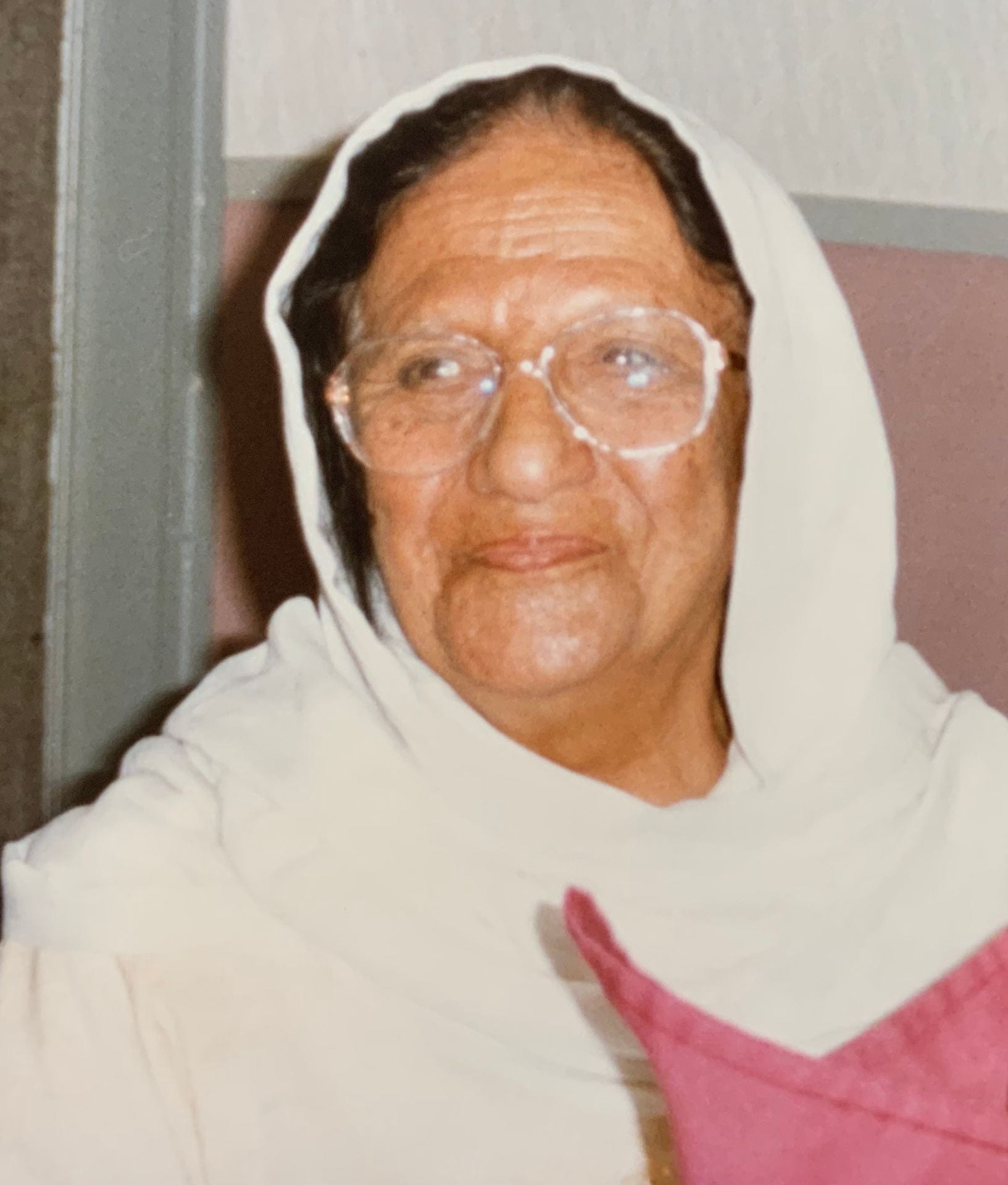
Photo from 1997 of my mother-in-law, Lateefah Al Ajeel
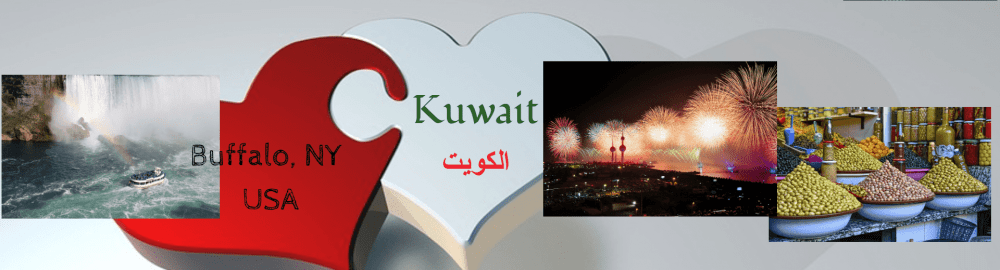
Buncee depicting my sweetheart and me on a boat in Dubai. Hearts and lovebirds surround us. Kuwait Towers, symbol of Kuwait and Niagara Falls symbolizing Buffalo, NY
In March 1978, I met my soulmate and the love of my life. He was a Kuwaiti graduate student completing his intensive English requirement before starting his graduate studies in Oral Pathology when we met by accident at our university’s student center. I had already been accepted into an MBA program in Miami, Florida which meant I was moving from Buffalo, New York where I grew up and we met. At the time, I definitely wasn’t looking to meet a life partner. Little did I know…
I often met my girlfriend, a fellow student at the university, in the student center on the North campus. She tutored foreign students in the intensive English program at the university in her free time and on that particular day, as we walked by one of the tables, she stopped to say hello to some of the students she knew. This group happened to be mostly Arabic speakers and were soon joined by a short, rather shy young man who looked older than the undergraduate students we’d been chatting with. It turns out, he was a graduate student and also taking the English course before entering his full-time Oral Pathology degree program. He shyly said hello to everyone and mentioned he was heading home in his car if any of the students needed a ride. As they left, my friend and I said goodbye. We didn’t think anything else about the encounter until a few days later when we bumped into some of the same students at a Lebanese restaurant near another part of the campus. After greeting each other and sharing which foods were our favorites, the short grad student invited my girlfriend and me to his apartment for a gathering of some friends. We told him we’d try to attend since we were looking for a bit of socializing in our free time.
The gathering was small and it was only six more weeks before I moved to Miami, Florida for grad school, so I was social but not very involved in a conversation with any of the guests except my friend. Then the shy, short grad student came over to me and asked me if I was enjoying the party. I didn’t want to seem unfriendly, so I told him I was interested in knowing more about where he was from. As an undergraduate history major, I enjoyed learning about different places, the culture, and customs. In my new friend’s case, I knew where Kuwait was on the map, but I didn’t know much more than that. In rather broken English, he told me about Kuwait and asked questions to get to know me. I still wasn’t interested in any kind of relationship but was happy to have someone to chat with. As a shy 22-year-old, I felt awkward in social situations, but there was something about this shy Kuwaiti that made me feel less awkward. Before we left the party, he invited my friend and me to an international student activity the following week. Suffice it to say, by the time I left for Miami we were more than just friends.
The year I spent in Miami was filled with studying and working part-time to support myself. It was also a year of long-distance phone calls and snail mail including postcards. I had decided I didn’t want to travel during my December holiday because I was working and also hated the snowy, cold weather in Buffalo. Instead, my boyfriend flew to Miami to visit me. We enjoyed our time together and became closer. I admired his caring towards me and compassion towards others. He told me he had two more years to complete his graduate program and then he would move back to Kuwait. Although I had deep feelings for him, I couldn’t imagine myself moving so far away from home, something that was always in the back of my mind. Moving forward in our relationship seemed out of reach.
Towards the end of my degree program, I began looking for a job. I preferred to stay in the southern United States where it was warmer and there were more opportunities for employment. I settled on an offer from a bank in Atlanta, Georgia. My boyfriend visited me there and we continued to keep in touch on the phone. After about a year in Atlanta, my boyfriend, who was close to finishing his degree, proposed to me. He initially said he could make a life in America but it would make more sense if we were both in the same place while he completed his degree. At the time, I wasn’t very happy at my job, so even though I said I would never move back to Buffalo, I resigned from my job, took a job in a bank in Buffalo, and headed home. Within a year, my fiance had completed his degree and moved back to Kuwait. In spite of thinking he could manage life in America, he returned home. His mother became ill and he needed to be back in Kuwait to travel with her to Germany for treatment. I had already quit my job and packed my worldly possessions to follow him and get married there, but plans were put on hold until he returned from Germany. In the meantime, many of my friends told me I shouldn’t trust him to follow through on his promise. However, I believed him and in the six years we had been together, he’d never given a reason to doubt his promise.
At the end of September 1984, he called me from Kuwait and told me he was arranging a flight to London where we would meet up after almost a year apart and spend a few days before heading to Kuwait. I appreciated the chance to break up the trip and to see a place I’d always dreamed of visiting. Our days in London were spent enjoying live theater, visiting museums, and eating yummy food at wonderful restaurants. Then it was time to travel to Kuwait to get married and settle down. It wasn’t the first time I had been to Kuwait. My fiance invited me to see his home and meet his family in 1980 to make sure it was a place I would be happy. Truth be told, I would have been happy anywhere as long as we were together.
It has been more than thirty-six years since I moved to Kuwait and I have never regretted my decision. My husband and I have had our ups and downs like all married couples, but our friendship and love for each other has carried us through every difficult situation. If you had told me in February 1978 that I would be living in Kuwait and returning to Buffalo, New York in the middle of winter to visit my family who still lives there, I wouldn’t have believed you. But that’s exactly what happened and because I feel a sense of belonging in both places, I feel fulfilled and so blessed.
Guess what? Abraham Maslow didn’t create a pyramid to symbolize the hierarchy of needs because he didn’t believe the needs were linear steps. If you’re interested in a more detailed description, stay tuned for my book that will be published by EduMatchⓇ later this year.
The phrase Maslow Before Bloom has become very popular in light of an increased focus on social and emotional learning (SEL) and trauma-informed pedagogy. Educators believe that focusing on, and following Maslow’s hierarchy will support children’s need to feel safe and will set them up for success in their learning. However, while educators might know about Abraham Maslow’s hierarchy of needs, they might not be aware that Maslow did not visualize his theory of motivation as a pyramid. According to Scott Barry Kaufman, in his book, Transcend (2020), the pyramid and hierarchy of needs were created by a management consultant in the 1960s and became popular in organizational behavior courses at business schools.
Kaufman spent years researching Maslow’s work, including unpublished letters and papers. Maslow understood there was no linear path to achieving self-actualization. His notes show his belief that people flow in and out of the different levels depending on their life circumstances and experiences. Maslow was the founder of the humanistic psychology movement that focuses on the whole person and includes self-efficacy, maximizing our potential that leads us to wellbeing. Unfortunately, what we learned in our Introduction to Psychology course about Maslow’s theory was not exactly what he wrote about or believed. Due to his death at age 62, Maslow never completed his research, so Kaufman searched through his published and unpublished writings to make sense of Maslow’s theory. Below is a table that compares general misconceptions about Maslow’s theory and what Kaufman (2020) found out.
The hierarchy of needs is step by step; we need to reach one before we can go to the next
There is no hierarchy since we can go back and forth between different needs throughout our lives.
The ultimate goal in Maslow’s hierarchy is to reach self-actualization, defined as living to your highest individual potential
Maslow believed those who were most self-actualized pursued their life’s purpose; something they are devoted to, a goal that is very important to them.
The needs were individualistic as the ultimate goal
Maslow believed humans seek connection and community and what humans have most uniquely to contribute to this world.
The needs are mentally prioritized in order of importance
Maslow didn’t create a pyramid. It was created by business school professors to help students understand humanistic psychology as it relates to organizational behavior.
We begin with a deficit mindset: The first four needs (physiological, safety, belonging, self-esteem) can all be considered deprivation needs. If these needs are not satisfied, those shortcomings will motivate people to focus on meeting their highest-priority needs.
Maslow realized the needs were not independent of each other since people can work on needs simultaneously.
Maslow’s theory was not based on much research, it was more of a philosophy
Maslow’s work was very well researched including his interest in the work of Carl Rogers, Alfred Adler, Ruth Benedict, and Max Wertheimer. He also conducted numerous studies and spent time learning about indigenous practices from the Blackfoot Confederation in Canada.
Maslow did not believe human needs are hierarchical or isolated from each other. According to Maslow, “The human needs are arranged in an integrated hierarchy rather than dichotomously, that is, they rest one upon another. . . . This means that the process of regression to lower needs remains always as a possibility…” (Kaufman, p. xxviii) For example, children whose parents were affected by the adverse economic situation during the pandemic in 2020 were fed, clothed, and had a roof over their heads until their family was unable to purchase food for the month after their father lost his job. According to the World Food Program (WFP), (t)he coronavirus pandemic will see more than a quarter of a billion people suffering acute hunger by the end of (2020)”. Perhaps they had food security prior to the pandemic so their basic physiological needs were satisfied, but now they are worried about where their next meal will come from or going without food for several days. In this case, their basic needs become the focus even though they were already feeling secure and had self-esteem before the crisis.
A closer look at the first three tiers of Maslow’s hierarchy shows they are all part of feeling safe and self-confident which is essential to belonging and the basis for wellbeing. He also believed people are motivated to reach self-actualization. This has always been understood to be an individual endeavor; however, Maslow’s writings towards the end of his life mention transcendence. Transcendence relates to what is known as being in the zone or a state of flow that leads to peak experiences like an altered state of total absorption in what you’re doing or creating with effortless concentration.
Transcendent experiences are the focus of such a wide variety of world cultures — notably Eastern cultures and shamanistic traditions — that it would be an omission to ignore such a pursuit from any model of human development, like the hierarchy of needs. In his later thinking, Maslow realized how to reconcile the Western, individual-centric idea of self-actualization and the Eastern traditions of altered states or meditation. (Big Think, 2019)
According to Kaufman,
(t)ranscendence… rests on a secure foundation of both security and growth, is a perspective in which we can view our whole being from a higher vantage point with acceptance, wisdom, and a sense of connectedness with the rest of humanity. (p. xxxiv)
Not everyone reaches transcendence. There is an elusive nature about being in flow, unaware of anything happening around you. Kaufman (2020) explains, “Self-actualizing people are, without one single exception, involved in a cause outside their own skin, in something outside of themselves. They are devoted, working at something, something which is very precious to them—some calling or vocation in the old sense.” In the last years of his life, Maslow described transcendence as the peak experience of being “fully human.” We can only reach it if we find our purpose and passion; that is, our personal self-actualization and the ability to see how our endeavors connect to and support our community and the common good.
Sources:
Anthem, P. (2020, April 16). Risk of hunger pandemic as coronavirus set to almost double acute hunger by end of 2020. World Food Program. https://www.wfp.org/stories/risk-hunger-pandemic-coronavirus-set-almost-double-acute-hunger-end-2020
Davis, M. (2019, September 9). What does self-actualization mean in different cultures? Big Think. https://bigthink.com/culture-religion/cross-cultural-self-actualization?rebelltitem=2#rebelltitem2
Kaufman, S. B. (2020). Transcend. Penguin Random House, LLC. https://leen.loc.gov/2019055448
Kaufman, S. B. (2019, April 23). Who created Maslow’s iconic pyramid? Scientific American. https://blogs.scientificamerican.com/beautiful-minds/who-created-maslows-iconic-pyramid
Ilene’s #oneword 2020 poster showing the word Community and some app logos like Flipgrid, Buncee, Wakelet
When I chose my #oneword last January, I had no idea how the year would unfold. Now that I look back, I couldn’t have chosen a better word. 2020 has been all about belonging, self-belonging, personal, and professional belonging. It’s also been a word so many others have talked around and about this year. It’s the reason I started my podcast, Journeys to Belonging, and write my book. I started both in 2020.
My journey to belonging began before 2020 but has come into focus with all that’s happened this past year.
In January, my son announced he was getting married in March. For those who’ve been following my story, you already know it has a happy albeit unexpected ending. Plans were made to have their wedding in Kuwait which meant a two-week window of opportunity to schedule the religious ceremony and the men’s/women’s parties (yes, we have separate celebrations in Kuwait based on tradition). The dates were dictated by their Spring break from MBA studies in Pittsburgh. Both the bride’s family and ours began working on the details. Of course, flights were scheduled by my eldest son and daughter who are also living abroad. During the third week of February, my eldest, who lives in Thailand, called me and said he heard there was a possibility that passengers entering Kuwait from Thailand would be quarantined for two weeks (he was only able to stay for 5 days due to work obligations). I told him we still had time to find out more and to wait a few more days. Then my son, the groom called. He was worried about his older brother getting stuck in Kuwait and he and his fiancee were concerned they wouldn’t be able to return for their final semester which would jeopardize their graduation in May.
Self-belonging
Back to me…I love my children and miss them a lot because they’re so far away. I had a personal dilemma: choose my heart or my brain? I chose my brain which told me there was too much at risk for them to travel to Kuwait and have to stay in quarantine. In the meantime, we consulted with the bride’s parents and took a decision to cancel the wedding in Kuwait. Here’s where my self-belonging comes in. Ever since my children graduated from high school and moved away, I’ve struggled with feelings of loss, some form of grief at losing the most important part of me, my family. Some days it’s hard for me to get going because I miss them so much. But I knew this was the right decision and my self-confidence, self-worth, and patience took over. Head over heart! Then opportunities started to appear. My BFF in Kuwait suggested that I change my flight to the U.S. which was originally scheduled for March 14th (post-wedding) to an earlier date. “No need to stay in Kuwait any longer, and you can have a longer visit wiith your mother.” At first, I was reluctant but then I agreed with her. As hindsight is 20/20, I now realize if I’d kept my original flight reservation, I’d have been stuck in Kuwait; that’s the date they closed the airport to commercial traffic to keep the virus from entering with arriving passengers. It also meant my children would have all been stuck here until August 5th when Kuwait International Airport re-opened.
Lessons learned:
Give yourself grace and allow yourself to feel all the feelings, even if you’re sad, angry, or anxious.
Seek out others you know will listen and understand when you need to share how you’re feeling.
Try to find a bright side or a way forward that will make you feel better, more positive.
Open yourself up to opportunities that will help you refocus your energies towards your short term goals.
Personal belonging
I was able to spend two months with my mother (who still lives on her own in spite of being 96) in Buffalo, New York AND we were able to watch my son get married virtually. Of course, my husband watched from Kuwait, as did the bride’s family, and my children watched from Boston and Thailand. A bonus was having my brother join us from Atlanta, Georgia; online. It wasn’t ideal but we still celebrated the moment, as a family, together. Since I was only three hours by car from Pittsburgh, my son and daughter-in-law were able to visit before Buffalo went into its first lockdown. They only stayed for 36 hours, but we used it to the fullest. Once they’d left and we were confined to my mother’s house (she’s in the high-risk group) we began figuring out how to keep ourselves occupied. We bought an Instant Pot and I started cooking. My mother was always the cook when I visited, so it was nice to share the responsibility of making dinner with her. I helped her figure out how to get her groceries, clean the house, and make sure she didn’t get too bored. This was really important because I needed to return to Kuwait where my husband was by himself and quietly hoping I’d be able to spend the month of Ramadan with him. I’m grateful I feel a sense of belonging in both places I call home but it was still a difficult decision to make when the Kuwaiti Embassy called me and said I had a place on a special return flight leaving on April 24th. At that point, I knew my mother was prepared to manage on her own with help from neighbors and family nearby since we’d arranged everything while I was staying with her. I knew when I returned, I’d be in quarantine for 28 days, but it was important to be in my house in Yarmouk, Kuwait, and spend Ramadan at home with my husband.
Lessons learned:
Good things can come from bad situations if we keep our eyes and ears open to see them.
Reflecting on what happened in the past can help us see why we were set on a path that seemed to be the wrong one, but turned out to be okay (sometimes even better than we’d planned).
Professional belonging
My professional belonging has continued all year thanks to my amazing #PLNs and the internet. The people I’ve met through social media are my lifeline, especially this year. In addition, I started my podcast right before I traveled to the U.S. and continued to interview guests while I was in Buffalo. I had many stories for my blog, then decided to write a book about my journey to belonging, and what others can learn from my experiences. I was encouraged by many people to tell my story and especially by my soul sister, Barbara Bray. It’s been wonderful having conversations with her all year about how we can support other educators based on our experience and just be there when they needed someone to listen. Actually, it’s been wonderful having meaningful and heartfelt discussions with so many I’ve never met face to face. I never in my life thought I’d be so vulnerable with people I’ve never met, but, I’m sure you’ll agree, it seems like we’ve known each other for a very long time. I learned so much from my PLN members and hope I’ve given back even a small portion of that.
Lessons learned:
Build your PLN! Surround yourself with people who support other educators, share their experiences (good and bad), and from who you can learn.
Participate in Twitter chats, Facebook educator groups, and subscribe to youtube channels of those whose content you can learn from and interact with.
Listen to edupodcasts and other podcasts. There is so much wonderful content being created! Listen to one or two and see if they resonate with you. Some of my favorites are (but there are so many more):
Boosting Achievement with Carol Salva
EdSurge podcast
Education Today with Scott Nunes
Empowering LLs with Tan Huynh
Getting Smart with Tom Vander Ark
Good Ancestor podcast with Layla F. Saad
House of #EdTech with Dr. Chris Nesi
Journeys to Belonging with Dr. Ilene Winokur
Leader of Learning with Dr. Dan Kreiness
KQED Mindshift podcast
OnEducation
The Literacy Advocate podcast
Rethinking Learning podcast with Barbara Bray
Innovator’s Mindset with George Couros
An Unconventional Teacher with Jon Hinthorne
Throughline from NPR
Hidden Brain from NPR
The Daily
Leading Equity with Dr. Sheldon Eakins
And be sure to listen to https://voiced.ca for really excellent and quality content like:
The Staffroom Podcast with Pav Wander and Chey Cheney
Personal Playlist Podcast (P3) with Noa Daniel
EduCrush podcast with Natalie Vardabasso
I Wish I Knew EDU with Ramona Meharg
Hurley in the Morning with Stephen Hurley (live every weekday morning)
It’s been a tough year for all but especially for educators, parents, and students. We’ve picked each other up when we were down, calmed each other when we were anxious, and shared advice about how to keep moving forward. We’re a special community.
I was listening to The Daily podcast episode that features listeners and what good things happened to them in 2020. If you haven’t listened to it, I highly suggest it. Change your perspective and change your life.
Democracies around the world are experiencing movements that seem to take them back a hundred years or more. Protests on the streets of Warsaw, Poland; Portland, Oregon; and Beirut, Lebanon signal the restlessness and impatience of some citizens with the lack of government or compassion for their needs. In spite of democratically conducted elections, many are feeling disenfranchised and dissatisfied with the current status quo. In my search for answers about why people are feeling such a division, I came upon the connection between belonging and democracy. The theory supporting the connection blurs the lines between feeling a sense of belonging and identity or fitting into a specific group. However, I think there is a lot we can learn if we want to heal the divisions which are taking us in dangerous directions right now.
A 2019 study by the Center for Public Impact surveyed Canadians about their sense of belonging to neighborhood, community, and nation related to their belief in democracy. “While sense of belonging to Canada, province/territory, or neighborhood are all associated with an increase in Canadians’ commitment to democracy, a closer look suggests that attachment to the local community has even more impact than feelings of belonging at the national level. For example, those with a very strong sense of belonging to their neighborhood are almost three times more likely to believe that elected officials care what they think compared to those with a very weak sense of belonging, and are twice as likely to attend a public consultation meeting.” We cannot meet all the members of our community, but if we feel we belong within it, we care about what happens to neighbors we haven’t and perhaps will never meet.
“The survey also found that more than four in every five Canadians feel a sense of belonging to their country, while 73 percent feel attachment to their local community. Moreover, Canadians who have a stronger sense of belonging hold more positive views of democracy than those with weaker attachment. They are also more likely to trust our democratic institutions and actors, they are more engaged in democratic and community activities, and they are more likely to believe that their actions can make a difference. In fact, when measured across twenty-five indicators of the strength of Canada’s democratic culture, the average increase is 17 percentage points compared to those with a weak sense of belonging.
What’s going on? It’s possible to speculate that feelings of belonging nourish a sense that “we’re all in this together.” From here, the link to democracy is not that tenuous; having a sense of belonging forges relationships that can be activated and re-activated when problems arise that require neighbors, friends, or colleagues to work together to find solutions. SFU’s Centre for Dialogue is not alone in seeing the link. As stated by the Centre for Public Impact in its Finding Legitimacy initiative: Belonging to our communities and seeing that we can all contribute to and gain from them not only enhances the legitimacy of governments but can also increase our understanding of others.”
As I pondered this information, I was reminded about the experience of Kuwaitis and their democracy. December 5th is the current date for the next Parliamentary elections that are held every four years. Registration by candidates ended yesterday and there are currently more than 300 men and women vying for 50 spots. The recent death of the country’s ruler, Sheikh Sabah Al Ahmed Al Sabah witnessed a peaceful transition of the former Crown Prince, Sheikh Nawaf Al Ahmed Al Sabah to ascend as Emir, and the peaceful appointment of the new Crown Prince, Sheikh Misha’l Al Sabah. The Kuwaiti Constitution was written with the input of Kuwaiti citizens in 1962 after its independence. Just like any democracy, Kuwaitis disagree and sometimes there are protests when feelings are strong about an issue; however, they respect the government institutions and the workings of the judicial system. Things aren’t perfect since democracy can be messy and especially when emotions are running high, but it works.
So that led me to wonder what might be the differences between other democracies and Kuwait’s. I had that “aha” moment after reading about the results of the 2019 study done by CPI in Canada. Kuwaitis are a very close-knit society in spite of differences in opinions resulting from conservative versus liberal ideologies. There is a sense of belonging to the community and nation. One example I remember that underlines the patriotism of Kuwaitis is what happened at the start of the Iraqi invasion on August 2, 1990. The Iraqi government took over all of the radio and television stations and broadcast they were looking for someone to form a government under the Iraqi regime to rule Kuwait. In the early hours of the Iraqi troops entering Kuwait, members of the armed forces and the royal family made sure Sheikh Ahmed Al Jaber Al Sabah, the Emir at the time, and the Crown Prince, Sheikh Saad Al Abdullah Al Sabah escaped to Taif, Saudi Arabia to set up a government in exile. In the late 1980s, there were groups in the Parliament who disagreed with some of the policies of the Emir and his government, so it could have been possible that someone volunteered to be the new “leader”. No Kuwaiti stepped forward, and as soon as the Emir and Crown Prince set up in Taif, communication between Kuwaitis and the government continued without missing a beat.
In spite of the danger of getting caught and tortured or killed, Kuwaitis found ways to funnel information about what was happening inside Kuwait to the government in Taif and for messages to be received in Kuwait to support the Resistance movement. There are many stories about the bravery of Kuwaitis during this time. They worked together as a community to ensure Kuwaitis and residents received basic needs such as food, garbage was removed, and funds were distributed to those who didn’t have access since the banks were shut down for the duration of the invasion. Non-Kuwaiti residents, especially Americans and Brits were direct targets of searches that occurred in every house and apartment. Kuwaitis made sure they were hidden and their needs were taken care of. They were all part of a community and compassion was high on the agenda of each person who stayed in Kuwait during the invasion.
The community is part of the fabric of Kuwait. Each suburb has a cooperative society that includes a supermarket and other shops such as barbershop, photography studio, and pharmacy. Residents of the area own shares in the co-op and each year the profits are shared equally among the shareholders. Each co-op has an elected board and is accountable to the Ministry of Social Affairs and Labor. The cooperative movement in Kuwait is one of the oldest in the world, established in the 1930s. There are many other examples of belonging and community in Kuwait. Life isn’t perfect and we are struggling to get through the current situation like every country in the world, but the democratic model is working, so we need to ask ourselves what is different here that can be learned by others. And now there is research to back it up. Feeling safe, leads to belonging, leads to practicing democratic principles such as healthy participation in the electoral process and compassion for other people.
If the plan doesn’t work, change the plan, not the goal.
Life is funny. In spite of the best-laid plans, life happens and our plans go, Poof! As they say in Yiddish, “Mann Tracht, Un Gott Lacht”, “Man Plans, and God Laughs.” For the world as a whole, life has been upended and everyone is speaking about a “new normal” once the pandemic recedes. Today’s post is about how we can look at the result of our upside-down lives and continue feeling positive and moving forward.
I’m a planner. I live my life thinking about what I”m going to do next, when does this or that make sense to do, and what deadlines I need to set. So, when I started thinking about retiring a few years ago, my first thoughts were what I was going to do with my “free” time since I knew, as an A-type personality, it needed to be filled with something. Perhaps not every minute, but a good part of the time. I made a list in order of highest priority:
Travel with my husband and to visit family and friends around the world
Volunteer to support refugee teachers online
Start blogging about my experiences living in Kuwait
Read for pleasure
Travel? Let’s see how that went.
When I worked full time, I rarely took vacations. They were usually attached to conferences or other work-related activities. However, I was always in a rush to return to work, as if the department would stop if I wasn’t physically in the building. In 2018, I realized that I didn’t want to continue that pace, and at age 62, life was passing me by. Whenever relatives or friends talked about a place they visited, I realized I’d never been there. But the final reason for retiring was my daughter’s wedding. She was getting married in the U.S. and decided on a date in December 2018, the week before our semester was ending. I pleaded with her to change it since I knew I couldn’t leave for more than the travel time and festivities (a total of five days), but she and her fiance were set on it, so I arrived on Thursday, they were married on Saturday, and I returned to Kuwait on Monday. You might be wondering why I didn’t ask permission to extend my stay; I did and my immediate supervisor replied, “Can’t they wait another week?”. That was the last straw. I handed in my resignation with the intention of retiring after his reply.
That’s why traveling became my top priority. In fact, when people asked why I retired, I replied that I needed to visit my children, who all live outside of Kuwait, my 96-year old mother, and my siblings. Also, I hadn’t spent much time traveling with my husband who retired in 2006. During the first eight months of my retirement, I traveled to the U.S. and stayed for two months. After spending a few weeks in Kuwait, I packed my suitcase again and traveled for three weeks with my husband to Switzerland and Lebanon. At the end of October 2019, I packed summer and winter clothes to spend a few days visiting my dear friend, Barbara Bray in California, flew with her to Palm Springs for a conference, and headed to Buffalo, New York to spend the rest of November with my family. It was the first time I celebrated Thanksgiving with them in 11 years. Even my husband joined us! We returned to Kuwait at the beginning of December. As a planner, I already had a plan to return to the U.S. in March to attend and present at the TESOL International Convention in Colorado, and then fly to Buffalo to visit my family.
So far, so good, right? Then at the end of December, my younger son announced his engagement and that he and his fiancee planned to return to Kuwait at the end of February to get married. They were both graduate students at Carnegie Mellon University. We were excited for him and all was set to go. I arranged my departure for the second week of March after they, and my other children who planned to fly into Kuwait for the ceremony, had left Kuwait. And then guess what? We started hearing that passengers arriving in Kuwait might be required to quarantine, especially from places like Thailand. My oldest son is in Thailand and he worried that he might get stuck in Kuwait and not be able to return to his job and husband. We assessed the situation and decided to change our plans. Everyone would stay where they were, and my son and his fiancee would get married in Pittsburgh and family would attend virtually. By then, I was in Buffalo since once I knew I didn’t have to wait to travel, I moved my departure up by a week. That was a good decision since I was originally scheduled to fly on March 14 at 4 a.m. The following week, the government announced Kuwait’s airport would close as of midnight on March 14th.
Just because you made a plan, doesn’t mean that’s what’s going to happen. Taylor Swift
While I was staying at my mother’s house, I waited for news about the reopening of Kuwait’s airport, so I could return. After two months of waiting, it was obvious the situation was far more serious than we originally thought, and if I wanted to return, I needed to be repatriated by the Kuwaiti embassy. My husband was by himself with no way to meet up with me, and my mother was at a point that she could manage being on her own. So on April 23, I flew to JFK, and on April 24th, I headed home. I was happy to be heading home but disappointed I couldn’t spend a few days in Boston to see my daughter, who I haven’t seen since last Thanksgiving. My son and daughter-in-law drove up to visit my mother and me the weekend after they got married. I haven’t seen them since March 14th, and I don’t remember the last time I saw my eldest son and his husband.
So it’s true that we plan and God laughs. There have been moments in the past nine months when I’ve thought about my top reason for retiring and how I’m not able to travel anywhere right now. It’s ironic that I finally decided to take care of my needs and it isn’t going the way I planned. But then I remember that I still have my other priorities (volunteering, reading, and writing) and that we’re all in the same boat. Everyone’s plans were turned upside down. I look at the positive side and see that I’m using the time to blog, I started a podcast, I host the WakeletWave chat each month with Kristina Holzweiss, I’m writing a book about belonging, and I am mentoring and supporting several amazing refugee leaders in Kakuma settlement, Kenya.
Lesson learned? We can plan and then we can laugh when our plans don’t go as we intended. That certainly helped me re-organize my priorities to ensure I’m “busy” and happy.
Hi! Today I’m using my post to check in with everyone. How are you doing? I’m seeing there are many in my PLN who are struggling to stay afloat. I hear you, I see you, and I feel like I need to support you in some way.
In today’s post, I’m listing a few ways to manage self-care by staying in the present, not trying to predict the future, and not lamenting the past. I hope my tips are helpful. They are based on my life experiences without school, and also my expertise in finding a sense of belonging.
Almost everyone in the world is back at school, although many are doing it remotely while others are in classrooms, and others are trying to do both (hybrid). I am so grateful I retired last year. I don’t think I would have been able to cope with all the stresses educators are facing right now. And not only educators; I feel blessed that I don’t have any children in school right now. There is so much to deal with. And then if you’re an educator and also a parent, that’s a whole different stress level.
I am blessed not having to deal with school stressors, but that doesn’t mean I’m not thinking of all the ways to support you all. As a retired educator with more than 25 years of experience in all sorts of stressful situations including wars, I have lots to share with everyone who is going through it right now. Below are some suggestions for self-care and mindfulness to keep yourself balanced and centered.
Proactive ways to take care of yourself:
Remind yourself every morning what is within your control.
For example, if you are teaching remotely and some of your students aren’t signing on regularly or you haven’t heard from a student, consider what you can do to try and contact them. Perhaps a phone call to the student’s parents, or checking in with the appropriate person at your school (counselor, team lead, principal) will get them to “attend”. If you’ve tried that and it didn’t work then think of other ways to communicate what the student is missing (including the engaging activities you’ve planned), or use the LMS or apps like Seesaw, Flipgrid, Wakelet, Buncee to entice them.
If you’ve reflected on your efforts and nothing seems to be working, do what’s in your control. Concentrate on teaching the ones who are showing up.
Surround yourself with colleagues who are proactive, problem-solvers, and hopeful.
When we have negativity and complaining around us, it’s hard to resist getting into that mode of thinking. So it’s important to express to others that you need those around you to be centered and focused on the tasks at hand and not worrying about what the world could be if it was perfect.
Be a good listener for others and make sure it’s mutual.
A good listener hears and internalizes what the other person is saying and validates what they’ve heard by giving feedback that is compassionate and says, “I hear you and I understand what you’re saying”.
Recall what you’re grateful for.
List a few things you appreciate and focus on how it makes your life better or happier. One idea is to create a gratitude jar for small slips of paper that you can write down what you’re grateful for. Then on the days you can’t think of anything or feeling down, you can take a few out and read them and remember.
Show someone kindness.
You can show kindness in many ways like a smile (even with a mask on we can see you’re smiling) or a kind word.
Reach out to others and ask how they’re doing.
Some people don’t reach out when they need a helping hand or someone to just listen to them share their thoughts or worries. Be the person who asks how they’re doing. Send them a message or call on the phone.
These are just a few ways to practice self-care that don’t take a lot of time but can become habits that boost you when you’re feeling stressed or anxious. It’s been hard for me too, although I’m not working full time. I am safe and well, but I’m missing my family. I haven’t seen my daughter since last November and my eldest son for even longer. My 96-year-old mother wonders when/if she will see me again…
This is my self-care routine:
When I wake up every morning, I remind myself what day it is (without a routine, the days kind of run into each other). Then I think about what my plan is for the day, and what I’m going to eat for breakfast. This is all under my control and distracts me from thinking about all the things I’m unable to do as we are still in the midst of the pandemic. During the day, I remind myself multiple times what I am grateful for and look forward to seeing my children every Saturday on Zoom and my mother, brother, and sister weekly on Skype. In between, I reach out and message my PLN on Twitter and FB, and I send Whatsapp messages to friends I haven’t heard from in a while just to check on them. I listen when they’re upset, worried or anxious and send words of kindness and compassion, so they know I’ve heard them. If they ask, I offer advice. I believe that’s my role right now as I navigate my retirement which was supposed to be filled with travel to visit family and friends. It’s much more constructive if I spend my time helping others find their way to wellbeing which makes me feel so much better.
Let me know if you find these tips helpful. Leave a note in the comments.
AIHD2 volunteer explaining WHO COVID19 prevention procedures to members of the Kakuma community.
I’ve heard the phrase “One person can make a difference”, but I never really believed it until now.
In the past year, I’ve been supporting three refugee leaders who have centers in Kakuma camp, Kenya. My support includes mentoring them and financing specific projects they proposed. It all began with a Whatsapp message in a refugee teacher group. The message, from Ebengo Honore, was a plea for help to create an IT program for youth (age 14-25) at his center, African Initiative for Human Development (AIHD). I replied in the group wondering about the cost of laptops. After seeing there was a possibility I could help him, I started messaging him directly. He shared with me how he’d begun to lose hope and feeling disconnected from the rest of the world. His message broke my heart. He also told me that many of those who completed high school didn’t have a chance to go to college. Online certificate programs were the only way for them to acquire skills needed when searching for a job later on. They could get work as freelancers doing remote work.
I decided to take a chance and support him but I asked him to write a proposal with a budget. My goal is always supporting and mentoring to ensure that whoever I help takes responsibility. Honore’s idea was to procure donations to purchase laptops, increase internet capacity, and hire facilitators to teach the basics of using a computer and Microsoft applications like Word. That was August 2019.
Students in AIHD2 program learning digital literacy
He worked on his proposal and sent it to me. I asked him for some changes to it, and we started the program in late September 2019 with my donation to purchase 10 laptops, upgrade the internet connection, and purchase solar panels to boost electricity. Honore road the bus to the nearest big city, Nairobi; a 12-hour ride to purchase all the items. While he was there, he sent me photos of his purchases and updated me on progress. Then he took the long nighttime journey home and let me know he’d arrived safely. He also expressed his gratitude that someone had finally empowered him to help his community.
Map showing the route from Kakuma camp to Nairobi, Kenya
Honore and I have continued to work on a variety of projects and programs at AIHD2 including:
1) digital literacy
2) freelancing and digital entrepreneurship; including courses from Codacademy
3) Leadership, Peace, and Conflict Resolution
4) online higher education
7) COVID19 Wellnesss campaign in Kakuma and Kalobeyei camps
In the past year, AIHD2 has empowered many youth and adults who are able to work remotely, mediate disputes between different nationalities, faiths, and families, and are knowledgeable about using the internet and basic computer skills.
A few weeks after Honore sent his proposal to me, another refugee leader in Kakuma contacted me. Kitala Fabrice had opened a center for women and young girls called There is Hope Africa (THA). He had ideas for two vocational programs: hairdressing or tailoring to empower the women with skills they can use to support themselves and their families. When women are employed, incidences of domestic violence decrease because the women are able to support themselves and provide for their children. Jobs are hard to find in the camp. Kitala sent me both proposals and after discussing them, we decided to start the hairdressing program. Equipment was purchased, trainers hired, and rigorous screening of potential trainees proceeded.
Hairdressing trainee practicing one of the techniques
Completed hairstyle
Since then, more than 120 trainees (two cohorts) have graduated from the three-month training program and several graduates have begun businesses with micro-loans. In addition, during the first cohort’s training, Kitala noticed that young mothers were bringing their small children and babies with them since they didn’t have anyone to watch them while they were at training. Kitala submitted another proposal to start a daycare for the trainees with some toys and a daily healthy meal for each child. Several trained staff were hired to supervise the children and soon the daycare was ready. It had a positive influence on the training since the women could focus on what they needed to learn and practice before being tested on each technique. Hairstyles are very specific to countries and cultures, so the trainees learn a technique and then practice on each other.
Children at the daycare are excited to play with their new toys and games.
Plans for building a daycare center and expanding to other vocational programs are currently being reviewed. An initial fundraising campaign is currently underway. To donate.
In February 2020, I received a message on Facebook Messenger from another refugee in Kakuma. Matabishi Narukako John, the founder of Kakuma Vocational Center (KVC), heard I was supporting Honore and Kitala and wondered if I would consider supporting his center. He was looking for something a bit different, though. He wanted to teach children design thinking and creativity. He wanted hands-on activities for them to make and learn from that process. I told him that I couldn’t support him financially but I had recently watched a webinar by BitSpace Chicago, project-based courses to teach exactly what he wanted. I told him I would message them and ask if they could offer the course for free or at a reduced fee. Bit Space was kind enough to offer a reduced cost for two courses: Make It, Race It and Make It, Play It. I am grateful to Bit Space for its commitment to Corporate Social Responsibility. I requested a budget from Mata based on the supplies and materials listed for each course. After we modified the list to essentials, I agreed to fund the first cohort and he purchased the items.
Students learning how to use woodworking tools to make a Bit Space game
So far two groups have completed the courses and created wooden games they designed. There is currently a new cohort attending the courses. The first cohort presented their completed projects and earned a certificate. Some were able to sell their games to other children in the camp.
To find out more about Mata’s programs that will now include a Maker Space to create robots, check out his fundraiser. To donate to KVC MakerSpace.
In the last few months, these refugee leaders and I teamed up to take an Acumen course about NGO fundraising. It was a 6-week course and we met each week as a team to discuss mission statements, vision, goals, and how to become better storytellers. We all learned so much! We also benefited from a session with my daughter whose work involves design thinking and goal setting. I’m so proud to be a part of the journey with three amazing refugee leaders who are making a difference in their community. They need our support and to feel connected with the outside world. They also need to learn skills to ensure they can support themselves and train other refugees to support themselves. In this way, we can do our part to improve the world for ourselves and others.
Now I believe that one person CAN change the world. I also learned that at a certain point we need to work together to be sure the work continues and expands.
Student working on building his design for Make It, Race It by Bit Space.